
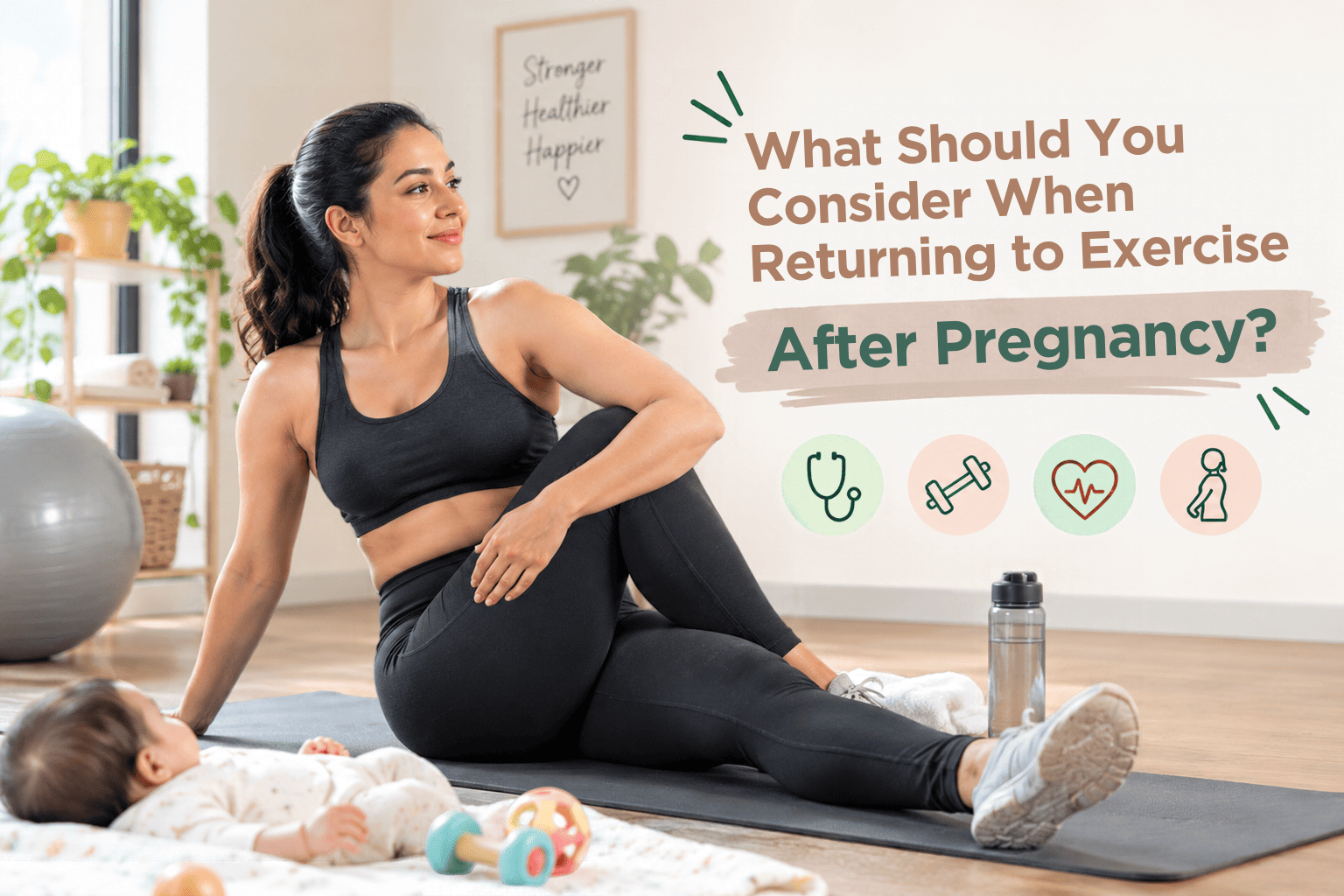
What Should You Consider When Returning to Exercise After Pregnancy?
Having a baby changes more than your daily routine. Pregnancy and childbirth place considerable physical demands on your body, and returning to exercise can feel very different from getting back into training after an ordinary break.
You might be keen to start running again, return to the gym or simply feel stronger when carrying your baby. At the same time, you may notice changes in your abdominal muscles, pelvic floor, posture, balance or general energy levels.
Returning to exercise after pregnancy should be gradual and based on your recovery, symptoms, birth experience and current physical capacity.
There is no universal date when every woman is ready to resume exercise. Your recovery is individual, and the right approach depends on how your body is responding.
Your body has been through significant changes:
During pregnancy, your body adapts to support a growing baby. Your centre of mass changes, abdominal muscles stretch, joints and connective tissues experience changing demands, and the pelvic floor supports increasing weight.
Childbirth adds another layer of physical demand, whether you have a vaginal birth or caesarean section.
After birth, these structures need time to recover. Sleep disruption, feeding positions, lifting and caring for a newborn can also influence how your body feels.
This is why returning to your previous exercise routine may require more planning than simply picking up where you left off.
1. Consider how your body has recovered from birth
Your birth experience is an important part of deciding how and when to return to exercise.
Recovery can differ depending on whether you experienced:
a vaginal birth
a caesarean birth
an assisted delivery
significant tearing or other birth-related complications
pelvic floor symptoms
ongoing abdominal or pelvic discomfort
A caesarean birth, for example, involves abdominal surgery, so the incision and deeper tissues need appropriate healing time.
A vaginal birth can also involve significant pelvic floor and perineal changes.
Neither experience automatically determines how quickly you will recover. Your symptoms, healing and individual medical advice are more important than comparing your timeline with someone else’s.
If you experienced complications or have ongoing concerns, speak with your GP, obstetrician or midwife before increasing your activity.
2. Give your pelvic floor some attention
The pelvic floor is a group of muscles and connective tissues that support the bladder, bowel and reproductive organs.
Pregnancy and childbirth can affect how these muscles function.
Some women experience changes such as:
urinary leakage when coughing, sneezing or exercising
a feeling of heaviness or pressure around the pelvis
difficulty controlling wind or bowel movements
discomfort during certain activities
difficulty coordinating pelvic floor contractions and relaxation
These symptoms are worth discussing with a healthcare professional.
Importantly, pelvic floor recovery is not always about doing more strengthening exercises. Some people have difficulty relaxing or coordinating these muscles, while others may need help rebuilding strength and endurance.
A pelvic health physiotherapist can assess your pelvic floor function and provide individual guidance.
3. Understand what is happening with your abdominal muscles
You may have heard of diastasis recti, which describes separation between the two sides of the rectus abdominis muscles along the connective tissue at the centre of the abdomen.
Some degree of abdominal separation is common during pregnancy.
After birth, the abdominal wall gradually changes as tissues recover and the muscles regain function. However, the process varies between individuals.
You might notice:
a change in the shape or appearance of your abdomen
reduced abdominal strength
difficulty controlling your trunk during certain movements
a visible bulge or doming along the middle of your abdomen during exercise
These changes do not automatically mean you cannot exercise.
Instead, they may indicate that your current exercise selection or intensity needs adjusting.
A suitably qualified healthcare professional can help assess your abdominal function and guide an appropriate progression.
4. Start with movement before returning to intense training
It can be tempting to jump straight back into your previous routine, especially if you exercised regularly before pregnancy.
However, your current capacity may be different.
For many women, returning to activity begins with gentle, comfortable movement rather than immediately attempting running, heavy lifting or high-intensity workouts.
Depending on your recovery and healthcare advice, early activity may include:
short, comfortable walks
gentle mobility exercises
relaxed breathing exercises
appropriate pelvic floor coordination exercises
simple movements to rebuild general strength
The goal is to establish a comfortable starting point.
You can then gradually introduce more demanding activities as your body tolerates them.
5. Be mindful of high-impact exercise
Running, jumping, skipping and high-intensity fitness classes place different demands on the body from walking or gentle resistance training.
These activities can involve repeated impact and increased demands on the pelvic floor and abdominal muscles.
If you return to them before you have developed sufficient strength and capacity, you may notice symptoms such as urinary leakage, pelvic heaviness or discomfort.
This does not mean high-impact exercise is permanently off limits.
It means your return should be based on readiness rather than a fixed deadline.
A gradual progression might involve building walking tolerance, developing strength, introducing lower-impact conditioning and eventually considering running or jumping when appropriate.
A pelvic health physiotherapist can help determine whether you are ready for higher-impact activity.
Can chiropractic care support your return to exercise after pregnancy?
Some women experience back, neck, hip or pelvic discomfort as they adjust to the physical demands of caring for a newborn and gradually returning to activity.
Depending on the symptoms and individual circumstances, a chiropractor may assess musculoskeletal concerns and discuss appropriate management options.
An assessment may consider your health history, birth experience, current symptoms, movement and everyday physical demands.
Chiropractic care does not replace postnatal medical care or a pelvic floor assessment where one is needed.
If you are experiencing pelvic floor symptoms, significant abdominal concerns or complications following birth, a GP or pelvic health physiotherapist may be the more appropriate starting point.
The aim is to identify the right support for your particular needs rather than assume one type of care is suitable for every postnatal concern.
FAQ
How soon can I exercise after giving birth?
The timing depends on your birth experience, recovery and individual health circumstances. Gentle movement may be appropriate early for some women, while more demanding exercise requires additional recovery and preparation. Follow the advice of your maternity care team.
When can I start running after pregnancy?
Running is a high-impact activity, so it is important to consider pelvic floor function, abdominal strength, symptoms and overall recovery first. Many women benefit from an individual assessment with a pelvic health physiotherapist before returning to running.
Can I do abdominal exercises after pregnancy?
Yes, but the type and intensity of exercise should suit your recovery and abdominal function. A gradual progression from appropriate early exercises towards more demanding movements may be recommended.
Is it normal to leak urine when exercising after pregnancy?
Urinary leakage can occur after pregnancy and childbirth, but it should not simply be accepted as something you have to live with. A pelvic health physiotherapist can assess your pelvic floor and recommend appropriate management.
Why does my back hurt when I return to exercise after having a baby?
Back discomfort may have several contributors, including changes in strength, movement patterns, exercise load and the physical demands of caring for a newborn. Persistent or worsening pain should be assessed.
Do I need to wait until my six-week postnatal check before exercising?
A six-week check is an important opportunity to discuss recovery, but it is not an automatic clearance for every type of exercise. Your readiness depends on your symptoms, healing and individual circumstances. More demanding activities may require additional assessment and preparation.
If you are returning to exercise after pregnancy and experiencing back, neck, hip or joint discomfort, an individual assessment may help you understand what is contributing. Wellbeing Chiropractic has clinics across Melbourne, Sydney and Brisbane. You can book an appointment to discuss your symptoms and explore appropriate musculoskeletal care alongside advice from your postnatal healthcare team.

Author
Jian Sim
I’m Dr Jian Sim, principal chiropractor at our Clyde North clinic and Wellbeing’s Chiropractor of the Year for 2025. Macquarie University trained me through the Bachelor and Masters of Chiropractic Science, and my practice grew from a research-informed conviction: care improves when it is measured. Structured assessments map how physical load and life stress are showing up in your spine before any plan gets built, imaging is recommended only where clinically indicated, and progress is judged in function rather than feelings alone. Consultations run in English, Mandarin, Cantonese, Indonesian or Taiwanese, and the target never changes, measurable, lasting change in how your body works.