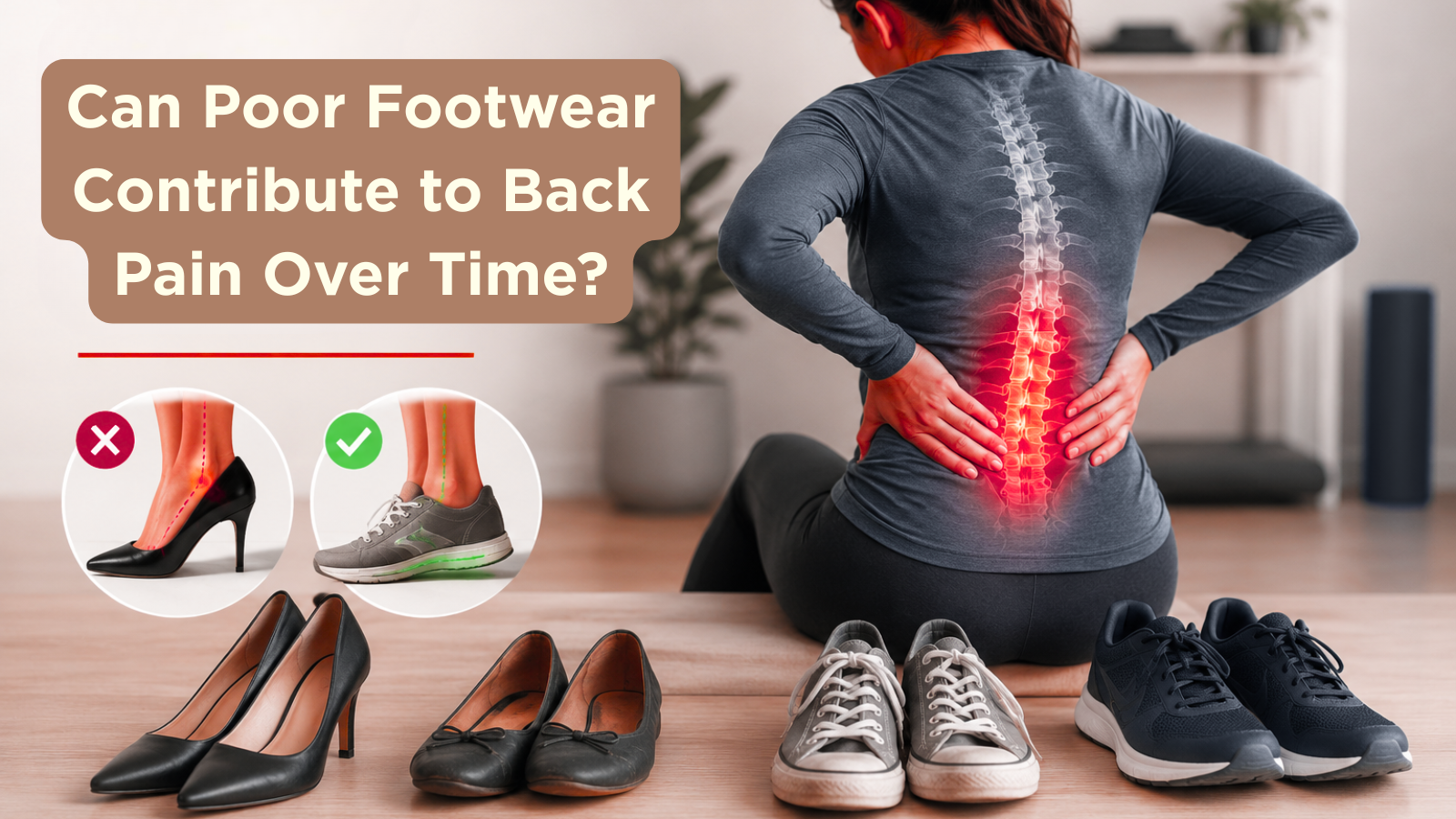
Many people think about posture, desk setup or exercise when addressing back pain, but footwear is often overlooked. The shoes you wear each day can influence how your body moves, absorbs force and supports alignment from the ground up.
Poor footwear back pain concerns are more common than many people realise, especially for those who spend long hours standing, walking or commuting. While shoes are rarely the sole cause of back discomfort, unsupportive footwear may contribute to strain over time.
Understanding the connection between your feet and spine can help you make more informed choices about daily comfort and movement.
How your feet affect spinal health:
Your feet form the foundation of your body’s movement and posture. Each step you take creates force that travels through the ankles, knees, hips and spine.
When footwear lacks support or changes the way you naturally move, this may influence:
Over time, these changes can place additional stress on certain areas of the body.
What types of footwear may contribute to discomfort?
Different shoes affect people differently, but some footwear styles may offer less support than others.
Unsupportive flat shoes:
Very flat shoes with minimal cushioning or arch support may increase strain for some individuals, particularly during long periods of standing or walking.
This can sometimes contribute to:
High heels:
High heels shift body weight forward and can alter spinal posture. Wearing them regularly may place extra demand on the lower back and surrounding muscles.
The impact depends on factors such as:
- heel height
- duration of wear
- individual posture and mobility
Worn-out shoes:
Even supportive shoes can lose their effectiveness over time.
Signs footwear may no longer provide adequate support include:
- uneven sole wear
- reduced cushioning
- leaning inward or outward when placed on the floor
Old footwear may affect walking patterns without you noticing.
The connection between walking mechanics and back pain:
Your body works as a connected system. If movement at the feet changes, the effects may travel upward.
For example:
- reduced foot support may alter knee positioning
- changes at the knees can influence hip movement
- altered hip mechanics may affect spinal loading
This does not mean shoes directly cause back pain in every case. However, footwear can be one contributing factor among many, including posture, work demands, activity levels and previous injuries.
What to look for in supportive footwear:
The “best” shoe depends on your individual needs, daily activities and foot structure. However, some general features may help support comfort.
Look for appropriate support:
Supportive footwear often includes:
- stable soles
- adequate cushioning
- arch support suited to your foot type
- enough room through the toe box
Consider your daily routine:
Someone standing all day may need different footwear compared with someone who mainly works at a desk.
Think about:
- how long you are on your feet
- the surfaces you walk on
- whether you commute regularly
- your activity levels outside work
If back discomfort is ongoing, it can be helpful to assess contributing factors beyond the spine alone.
A chiropractor in Melbourne may:
- assess posture and movement patterns
- evaluate how lifestyle habits may influence symptoms
- provide tailored care based on your individual presentation
Management approaches vary depending on your history, symptoms and examination findings.
FAQ
Can shoes really contribute to back pain?
They may contribute in some cases, particularly if footwear affects posture, walking mechanics or comfort over long periods.
Are flat shoes bad for your back?
Not necessarily for everyone, but very unsupportive flat shoes may contribute to discomfort for some individuals.
How often should I replace my shoes?
This depends on usage, activity levels and shoe quality. Visible wear and reduced comfort can be signs it may be time for replacement.
Should I wear supportive shoes at work?
If you spend long periods standing or walking, supportive footwear may help reduce strain and improve comfort.
If ongoing back discomfort is affecting your daily routine, it may help to better understand the factors contributing to your symptoms.
Wellbeing Chiropractic offers care across Melbourne, Sydney and Brisbane. You can book an appointment to better understand your symptoms and support your recovery.