
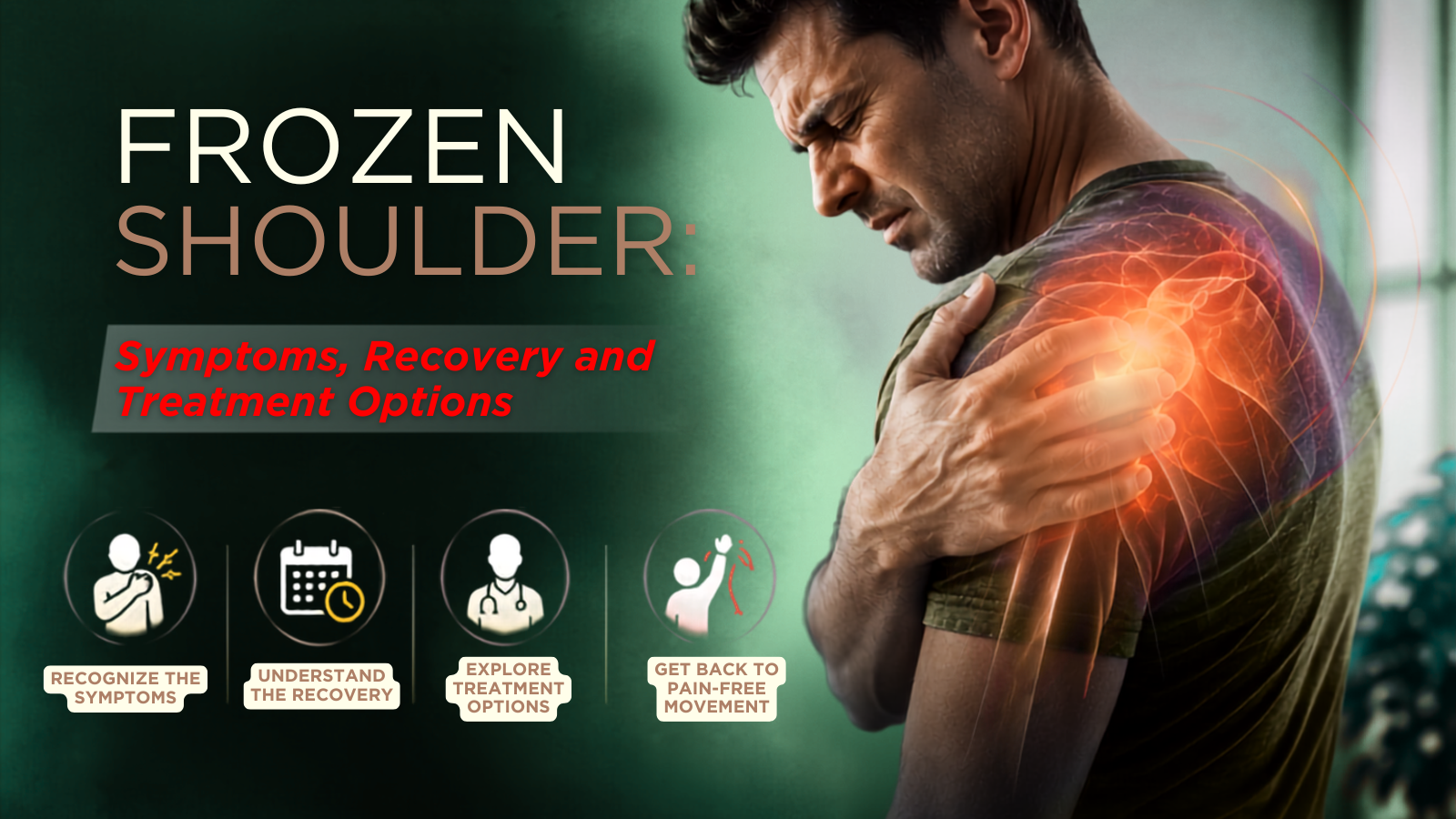
Frozen Shoulder: Symptoms, Recovery and Treatment Options

Many shoulder problems are painful.
Frozen shoulder is different.
For many people, the biggest frustration isn’t just the pain. It’s the gradual loss of movement.
Simple tasks such as fastening a bra, reaching into a cupboard, putting on a jacket or washing your hair may become increasingly difficult. Often there isn’t a memorable injury that explains why it started. Instead, the shoulder slowly becomes stiffer over weeks or months.
If this sounds familiar, you may have heard the term frozen shoulder, also known as adhesive capsulitis.
Understanding how frozen shoulder develops and what recovery may involve can help set realistic expectations and guide appropriate management.
One of the unusual features of frozen shoulder is that many people cannot identify exactly when it began.
You might first notice:
At first, it may seem like a minor strain.
Over time, however, movement gradually becomes more restricted, and everyday tasks that were once easy can become challenging.
The shoulder is surrounded by a capsule of connective tissue that helps support and stabilise the joint.
With frozen shoulder, this capsule becomes irritated and progressively stiffens, reducing the amount of movement available.
Exactly why this occurs isn’t always clear.
For some people, it develops without an obvious reason. For others, it may occur after a period of reduced shoulder movement, such as following an injury or surgery.
Frozen shoulder is not something you cause by moving the wrong way or sleeping awkwardly one night.
One reason frozen shoulder can feel confusing is that symptoms tend to change over time.
Rather than staying the same, the condition commonly progresses through different phases.
During the early phase, pain is often the most noticeable symptom.
People commonly describe:
Although movement may still be possible, it often becomes progressively more uncomfortable.
As time passes, pain may begin to settle, but movement often becomes much more restricted.
Many people struggle with activities such as:
At this stage, stiffness usually becomes the main concern.
For many people, shoulder movement gradually begins to improve over time.
Recovery is often slow and varies considerably between individuals.
Some people notice steady improvements, while others experience progress in small stages.
Many people with frozen shoulder report that sleep becomes one of the biggest challenges.
Lying on the affected shoulder may be uncomfortable, but even sleeping on the opposite side can sometimes aggravate symptoms.
Poor sleep may also reduce recovery and increase sensitivity to pain, making the shoulder feel more uncomfortable during the day.
Finding a comfortable sleeping position using pillows for support may help some people, although what works best differs from person to person.
When one shoulder stops moving normally, the rest of the body naturally adapts.
People often begin to:
These compensation patterns may contribute to additional muscle tension through the neck, upper back or opposite shoulder over time.
This is one reason why practitioners often assess more than just the shoulder itself.
Frozen shoulder is primarily diagnosed through a detailed history and physical examination.
Your chiropractor or healthcare provider may assess:
The aim is to determine whether your symptoms are consistent with frozen shoulder or whether another shoulder condition may be contributing.
Following an appropriate assessment, chiropractic care may form part of a broader management approach for frozen shoulder.
Depending on the stage of recovery and your individual presentation, care may include:
Management plans are individualised and adjusted as recovery progresses.
Frozen shoulder often improves gradually rather than overnight.
Many people become discouraged because they expect progress to occur within a few weeks.
Instead, recovery commonly occurs over a much longer timeframe.
Focusing on small improvements in movement, comfort and function often provides a more realistic measure of progress than expecting immediate changes.
Early signs often include shoulder pain, particularly at night, followed by gradually increasing stiffness and reduced range of motion.
Usually not. Symptoms often develop gradually over weeks or months rather than after one specific injury.
Recovery varies between individuals. Frozen shoulder often improves gradually over time, although the overall recovery period can be lengthy.
Gentle movement may be appropriate for many people, but the best approach depends on the stage of the condition and should be guided by a healthcare professional.
Following an appropriate assessment, chiropractic care may help support shoulder mobility, function and movement as part of an individualised management plan.
If shoulder stiffness is making everyday activities difficult, don’t ignore it. Book an appointment online with Wellbeing Chiropractic clinics across Melbourne, Sydney and Brisbane, our experienced chiropractors can assess your shoulder movement and develop a personalised care plan to support your recovery and help you regain confidence in your movement.
Author
Dr. Conrad Hor is an experienced and passionate chiropractor with strong clinical knowledge, having worked at clinics in Sydney and Melbourne. Conrad graduated from Macquarie University with a Master’s in Chiropractic and Sydney University with a Bachelor’s of Sport and Exercise Science. Conrad delivers manual chiropractic and lower-force chiropractic care for people of all ages and health backgrounds. He works closely with his patients to ensure they become active participants in their care.
Select a location to book your $49 May assessment
Select a location to book your $49 May assessment
Select a location to book your $49 May assessment
Select your Victoria clinic to book your $49 new patient visit.
$49 New Patient Assessment ● First Adjustment Included*
*Adjustment included when your chiropractor confirms care is clinically appropriate for you. If chiropractic isn’t the right fit, we’ll tell you that too.
Select your New South Wales clinic to book your $49 new patient visit.
$49 New Patient Assessment ● First Adjustment Included*
*Adjustment included when your chiropractor confirms care is clinically appropriate for you. If chiropractic isn’t the right fit, we’ll tell you that too.
Select your Queensland clinic to book your $49 new patient visit.
$49 New Patient Assessment ● First Adjustment Included*
*Adjustment included when your chiropractor confirms care is clinically appropriate for you. If chiropractic isn’t the right fit, we’ll tell you that too.