You’ve been staring at your computer for most of the day.
Your shoulders feel tight.
Your neck is stiff.
Then, sometime in the afternoon, a dull headache begins to develop.
If this sounds familiar, you’re certainly not alone.
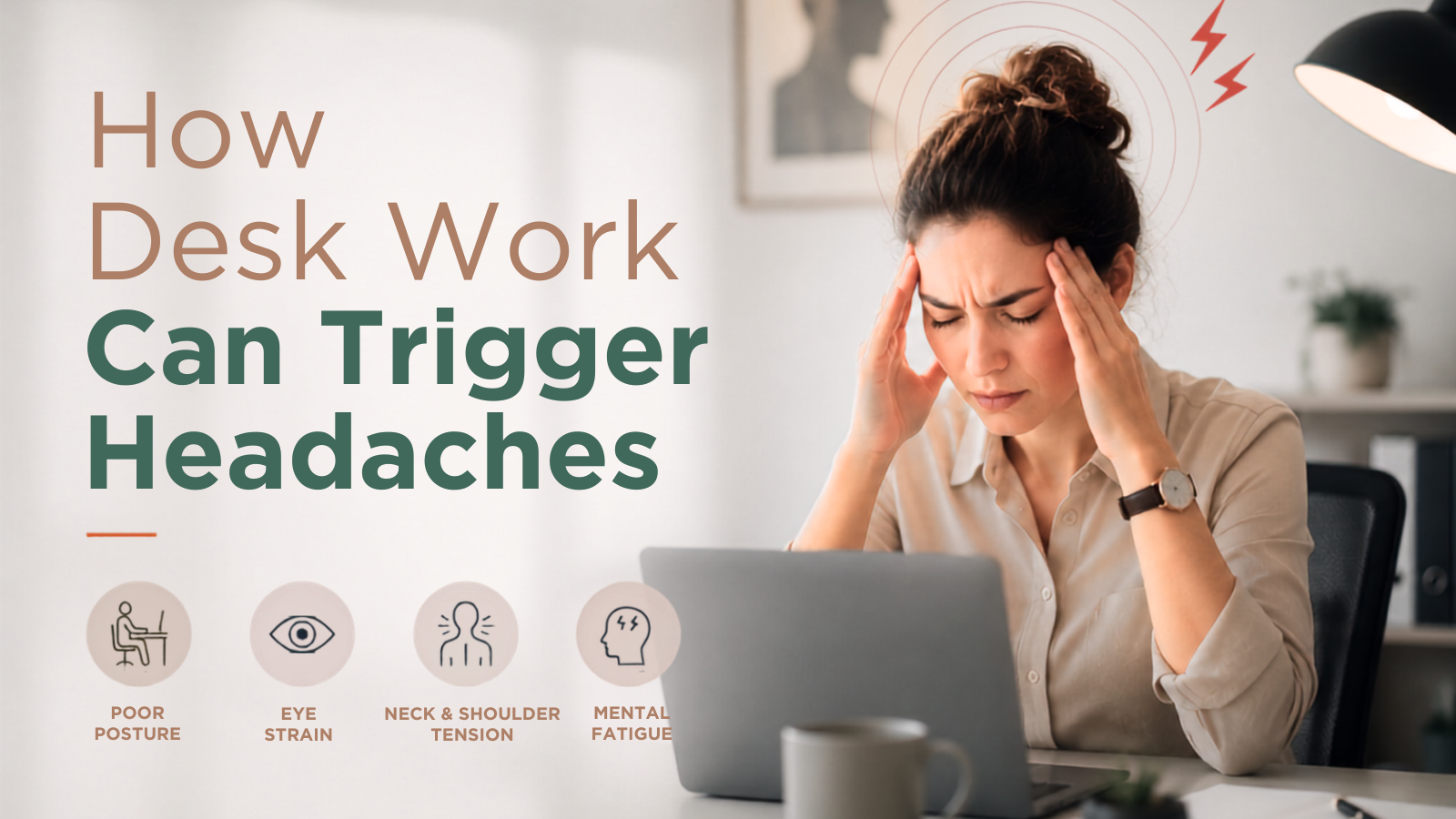
Many office workers notice headaches becoming more frequent after long hours at a desk. While headaches can have many different causes, prolonged computer work, muscle tension and reduced movement may all contribute for some people.
Understanding how desk work may influence headaches is the first step towards finding practical ways to reduce strain and support healthier movement throughout the working day.
It’s Usually Not the Computer Itself:
People often blame their computer for causing headaches.
In reality, it’s rarely the screen alone.
Instead, it’s often the combination of how we work that places extra demands on the body.
Think about a typical workday.
You might spend hours:
Each activity may seem harmless on its own.
Together, however, they can create sustained muscle tension and reduce the amount of movement your body gets during the day.
Your Neck Works Harder Than You Think:
Your head weighs several kilograms and is supported by the muscles of your neck and upper back.
When you’re sitting upright and moving regularly, those muscles share the workload efficiently.
However, during prolonged desk work it’s common for the head to gradually drift forward.
You may not even notice it happening.
Over time, the muscles at the back of the neck and across the shoulders often work harder to support this position, which may contribute to muscular fatigue and tension.
For some people, this tension is associated with headaches that develop later in the day.
Headaches Don’t Always Start in the Head:
One of the surprising things about tension-type headaches is that the discomfort people feel in their head may actually be influenced by muscles elsewhere.
Tight muscles around the:
can sometimes refer discomfort into the head.
This is why rubbing your temples doesn’t always provide lasting relief if the underlying tension is coming from your neck or shoulders.
Concentration Can Change Your Posture:
When you’re focused on work, your body often changes without you noticing.
You might:
- lean closer to the screen
- shrug your shoulders
- clench your jaw
- stop changing position
- breathe more shallowly
These habits are common during periods of concentration.
The longer they continue, the greater the workload on muscles supporting your head and neck.
Working From Home Has Introduced New Challenges:
Many Australians now spend at least part of the week working from home.
While flexible work has many benefits, home workstations aren’t always ideal.
Some people work from:
- kitchen tables
- dining chairs
- couches
- laptops without external monitors
These temporary setups may encourage awkward postures when used for prolonged periods.
Small ergonomic improvements can sometimes make a noticeable difference.
Why Movement Is More Important Than Perfect Posture:
There’s a common belief that finding the perfect sitting posture will prevent headaches.
In reality, even an excellent posture can become uncomfortable if maintained for several hours.
The body generally responds better to variety than perfection.
Changing positions regularly, standing during phone calls or taking short walking breaks often places less ongoing demand on the muscles supporting your neck and shoulders.
FAQ
Can sitting at a desk cause headaches?
Prolonged sitting, reduced movement and muscle tension around the neck and shoulders may contribute to headaches in some people.
Why do I get headaches after working on a computer?
Computer work may contribute to muscle tension, eye strain and prolonged postures, all of which can play a role in headache development.
Can poor posture cause headaches?
Poor posture may increase muscular workload around the neck and upper back, which may contribute to tension-type headaches for some individuals.
Should I stop working if I get headaches?
Not necessarily. Taking regular movement breaks, improving workstation setup and seeking professional advice if headaches persist may be helpful.
Can chiropractic care help with headaches?
Following an appropriate assessment, chiropractic care may help support neck mobility, movement quality and musculoskeletal function as part of an individualised management plan.
If headaches regularly appear after a day at your desk, it may be time to look beyond the symptoms. Book an appointment online with Wellbeing Chiropractic clinics across Melbourne, Sydney and Brisbane, we’ll assess your posture, movement and work habits to create a personalised plan that helps you stay comfortable and productive.