
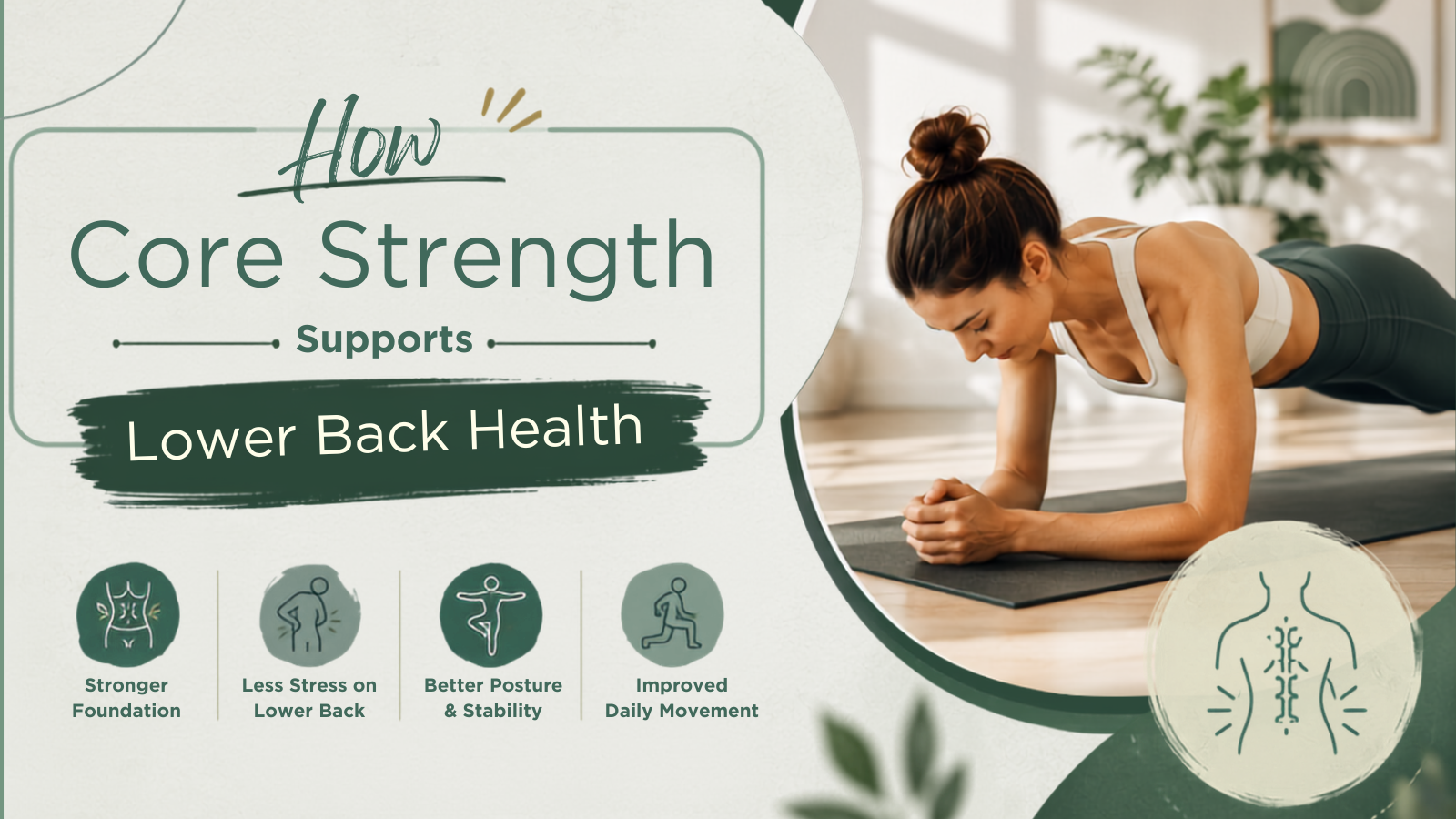
How Core Strength Supports Lower Back Health

When people hear the term core strength, they often picture six-pack abs or endless planks.
In reality, your core is about much more than appearance.
It’s a group of muscles that work together to support your spine, help you move efficiently and provide stability during everyday activities. Whether you’re lifting groceries, walking the dog, getting out of bed or playing sport, your core plays an important role.
If these muscles aren’t working effectively, other parts of your body, including your lower back, may need to work harder to compensate.
That doesn’t mean a weak core is the cause of every episode of back pain, but improving core function may help support healthy movement and reduce unnecessary strain for some people.
Many people think the core only includes the muscles at the front of the abdomen.
In reality, it is a much larger system that includes muscles around the:
These muscles work together to provide support before and during movement.
Rather than acting like a rigid brace, they constantly adjust as you bend, twist, reach and lift throughout the day.
Imagine carrying a heavy box.
Before your arms even lift the weight, your core muscles begin working to help stabilise your spine.
The same thing happens when you:
Strong, well-coordinated core muscles help share the workload so that no single part of the body has to do everything on its own.
Your lower back is designed to move, but it also relies on surrounding muscles to provide support.
When the muscles around your trunk aren’t functioning efficiently, the lower back may experience increased physical demands during certain activities.
For some people, this may contribute to:
Core strength is only one part of the picture, but it often works alongside flexibility, mobility, fitness and recovery to support spinal health.
Some people can lift heavy weights but still have poor movement control.
Others may not be particularly strong yet have excellent stability during everyday tasks.
Core function isn’t simply about how much weight you can lift.
It’s about how effectively your muscles coordinate to support movement.
This is why quality of movement is often more important than performing the hardest exercises.
Modern life doesn’t ask much of our core muscles.
Many Australians spend hours:
While sitting itself isn’t harmful, remaining in the same position for long periods means the muscles that support posture aren’t challenged in the same way as they are during regular movement.
Over time, this may contribute to reduced endurance and movement efficiency.
You don’t need to be an athlete to benefit from better core function.
Core strength supports many ordinary activities, including:
Improving the way these muscles work may help make everyday movement feel more comfortable and efficient.
If someone experiences recurring lower back pain, healthcare practitioners often assess much more than the spine itself.
They may also consider:
The goal is to understand how the entire body works together rather than focusing only on where pain is felt.
Following an appropriate assessment, chiropractic care may form part of a broader approach to supporting lower back health.
Depending on your presentation, care may include:
Management is individualised according to your symptoms, goals and examination findings.
Improving core function isn’t about completing one challenging workout.
It’s usually the result of small, consistent habits over time.
These may include:
Like any part of fitness, long-term consistency generally produces better results than occasional bursts of intense exercise.
A weak or poorly functioning core is not the cause of every episode of lower back pain, but it may contribute to reduced spinal support and movement control in some individuals.
The core includes muscles around the abdomen, lower back, pelvis, hips, diaphragm and pelvic floor that work together to support movement and stability.
Not necessarily. The most appropriate exercises depend on your individual needs, movement patterns and overall fitness.
Following an appropriate assessment, chiropractic care may include exercise recommendations and movement advice to support core strength and overall spinal health.
Progress varies between individuals and depends on factors such as consistency, activity levels and the type of exercises performed.
If recurring lower back pain is affecting your daily life, book an appointment online with Wellbeing Chiropractic clinics across Melbourne, Sydney and Brisbane, our chiropractors can assess your movement, identify contributing factors and create a personalised care plan to support your core, spine and long-term musculoskeletal health.
Author
Dr Josh Tyquin is an experienced & sought-after Chiropractor who is the principal Chiropractor at Wellbeing Chiropractic Hawthorn. He was first introduced to Chiropractic during childhood after suffering a sporting injury. It was after this positive personal experience Josh decided to pursue a career in Chiropractic.
Select a location to book your $49 May assessment
Select a location to book your $49 May assessment
Select a location to book your $49 May assessment
Select your Victoria clinic to book your $49 new patient visit.
$49 New Patient Assessment ● First Adjustment Included*
*Adjustment included when your chiropractor confirms care is clinically appropriate for you. If chiropractic isn’t the right fit, we’ll tell you that too.
Select your New South Wales clinic to book your $49 new patient visit.
$49 New Patient Assessment ● First Adjustment Included*
*Adjustment included when your chiropractor confirms care is clinically appropriate for you. If chiropractic isn’t the right fit, we’ll tell you that too.
Select your Queensland clinic to book your $49 new patient visit.
$49 New Patient Assessment ● First Adjustment Included*
*Adjustment included when your chiropractor confirms care is clinically appropriate for you. If chiropractic isn’t the right fit, we’ll tell you that too.