
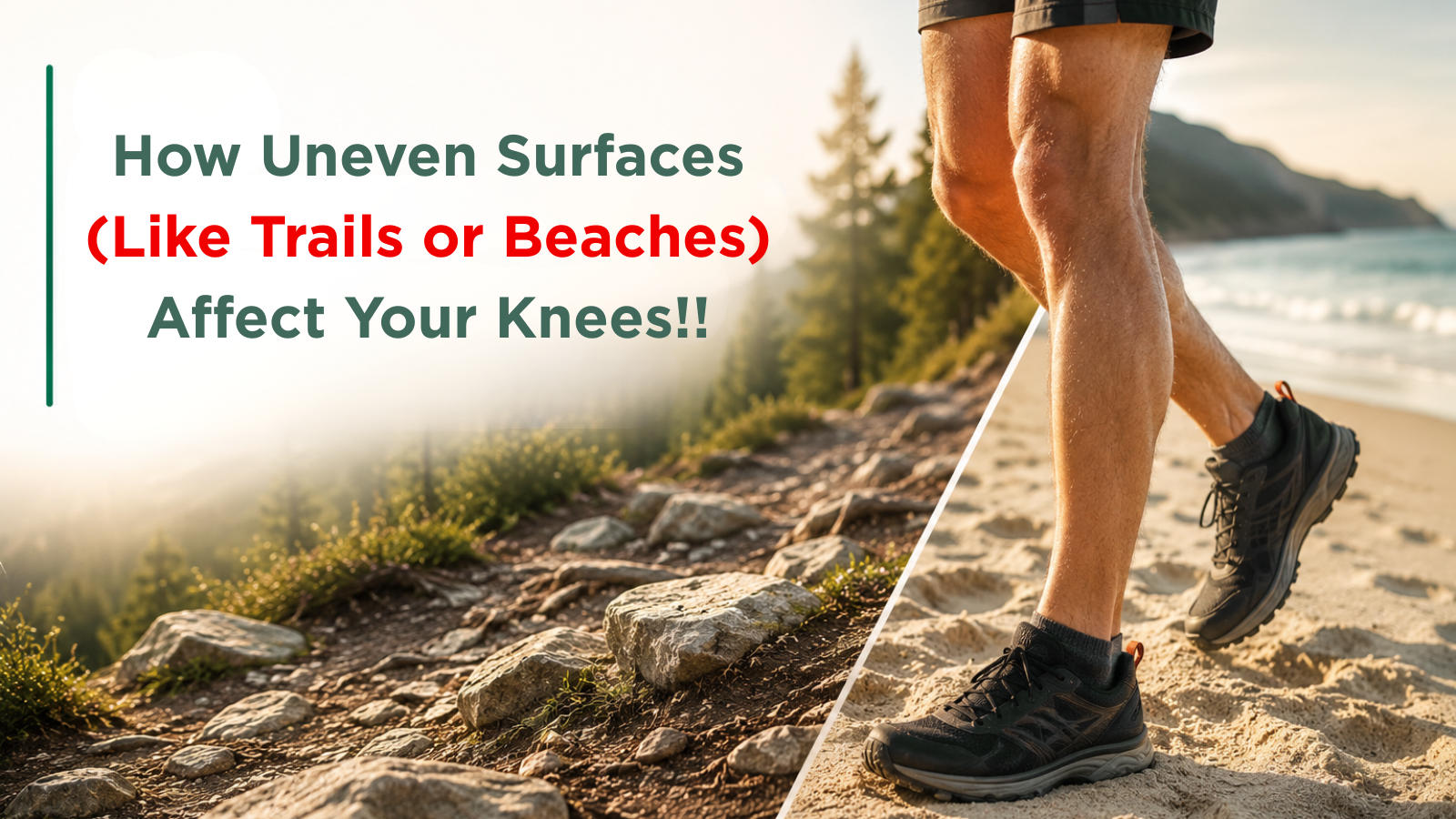
How Uneven Surfaces (Like Trails or Beaches) Affect Your Knees

Walking along the beach or hiking on nature trails can be a great way to stay active, enjoy the outdoors and challenge your body in different ways. However, uneven surfaces can also place additional demands on the knees and surrounding muscles.
For some people, activities on sand, trails or rocky ground may contribute to knee discomfort, stiffness or fatigue, particularly if the body is not well prepared for the changing terrain.
Understanding how uneven surfaces affect your knees may help you better manage physical strain, improve recovery and reduce the risk of recurring discomfort.
Flat, stable ground allows the body to move in relatively predictable patterns. Uneven terrain is different because the surface constantly changes beneath your feet.
Examples of uneven surfaces include:
These environments require the body to make continuous adjustments to maintain balance and stability.
As a result, the muscles around the knees, hips, ankles and core often work harder to control movement and absorb force.
The knees play an important role in stability and shock absorption during walking, hiking and running.
On uneven ground, the knees may experience:
For some individuals, this may contribute to irritation, fatigue or temporary discomfort around the knee joint and surrounding tissues.
The impact often depends on factors such as fitness levels, mobility, footwear, recovery and previous injury history.
Walking or running on sand may feel softer than pavement, but it can actually increase physical demand on the body.
Soft sand shifts underfoot, which means the muscles and joints must work harder to stabilise each step.
This may lead to:
Sloped beaches may also create uneven loading between the left and right legs, potentially contributing to strain over time.
Some people notice knee soreness after long beach walks, especially if they are not accustomed to walking on sand regularly.
Knee health is closely connected to strength and stability throughout the body.
The hips, glutes, core and ankles all contribute to how the knees move and absorb force.
If certain muscles are weak or movement patterns are limited, the knees may compensate during uneven terrain activities.
For example:
Improving strength and mobility may help some individuals better tolerate uneven surfaces over time.
People with a history of knee, ankle or hip injuries may notice discomfort more quickly on uneven ground.
Previous injuries can sometimes affect:
Even after symptoms improve, the body may still compensate in subtle ways during challenging terrain.
This is one reason why gradual return to activity and recovery strategies are often important.
Some signs that uneven surfaces may be affecting your knees include:
Persistent symptoms should be professionally assessed to better understand potential contributing factors.
Chiropractic care may form part of a broader approach to managing movement-related discomfort and supporting musculoskeletal health.
After an appropriate assessment, care may include:
The aim is often to help support movement quality, mobility and physical function based on the individual’s presentation and activity demands.
For active individuals who regularly hike, trail run or walk on beaches, identifying movement limitations early may help reduce recurring strain.
Walking on sand may increase physical demand on the knees and surrounding muscles because the surface shifts underfoot and requires greater stability and control.
Hiking can place extra strain on the knees, especially during downhill walking or on uneven terrain. Fatigue, mobility limitations and previous injuries may also contribute.
Not necessarily. Uneven terrain can help challenge balance and strength, but sudden increases in activity or poor movement control may contribute to discomfort for some individuals.
Yes. The hips and glutes help support knee alignment and movement. Weakness or reduced control in these areas may increase strain on the knees during activity.
After an appropriate assessment, chiropractic care may help support mobility, movement quality and musculoskeletal function depending on the individual’s needs and presentation.
Experiencing knee discomfort after hiking, trail walking or beach activity? Book an appointment online with Wellbeing Chiropractic clinics across Melbourne, Sydney and Brisbane for an individual assessment tailored to your movement and recovery needs.
Author
Dr Josh Tyquin is an experienced & sought-after Chiropractor who is the principal Chiropractor at Wellbeing Chiropractic Hawthorn. He was first introduced to Chiropractic during childhood after suffering a sporting injury. It was after this positive personal experience Josh decided to pursue a career in Chiropractic.
Select a location to book your $49 May assessment
Select a location to book your $49 May assessment
Select a location to book your $49 May assessment
Select your Victoria clinic to book your $49 new patient visit.
$49 New Patient Assessment ● First Adjustment Included*
*Adjustment included when your chiropractor confirms care is clinically appropriate for you. If chiropractic isn’t the right fit, we’ll tell you that too.
Select your New South Wales clinic to book your $49 new patient visit.
$49 New Patient Assessment ● First Adjustment Included*
*Adjustment included when your chiropractor confirms care is clinically appropriate for you. If chiropractic isn’t the right fit, we’ll tell you that too.
Select your Queensland clinic to book your $49 new patient visit.
$49 New Patient Assessment ● First Adjustment Included*
*Adjustment included when your chiropractor confirms care is clinically appropriate for you. If chiropractic isn’t the right fit, we’ll tell you that too.