
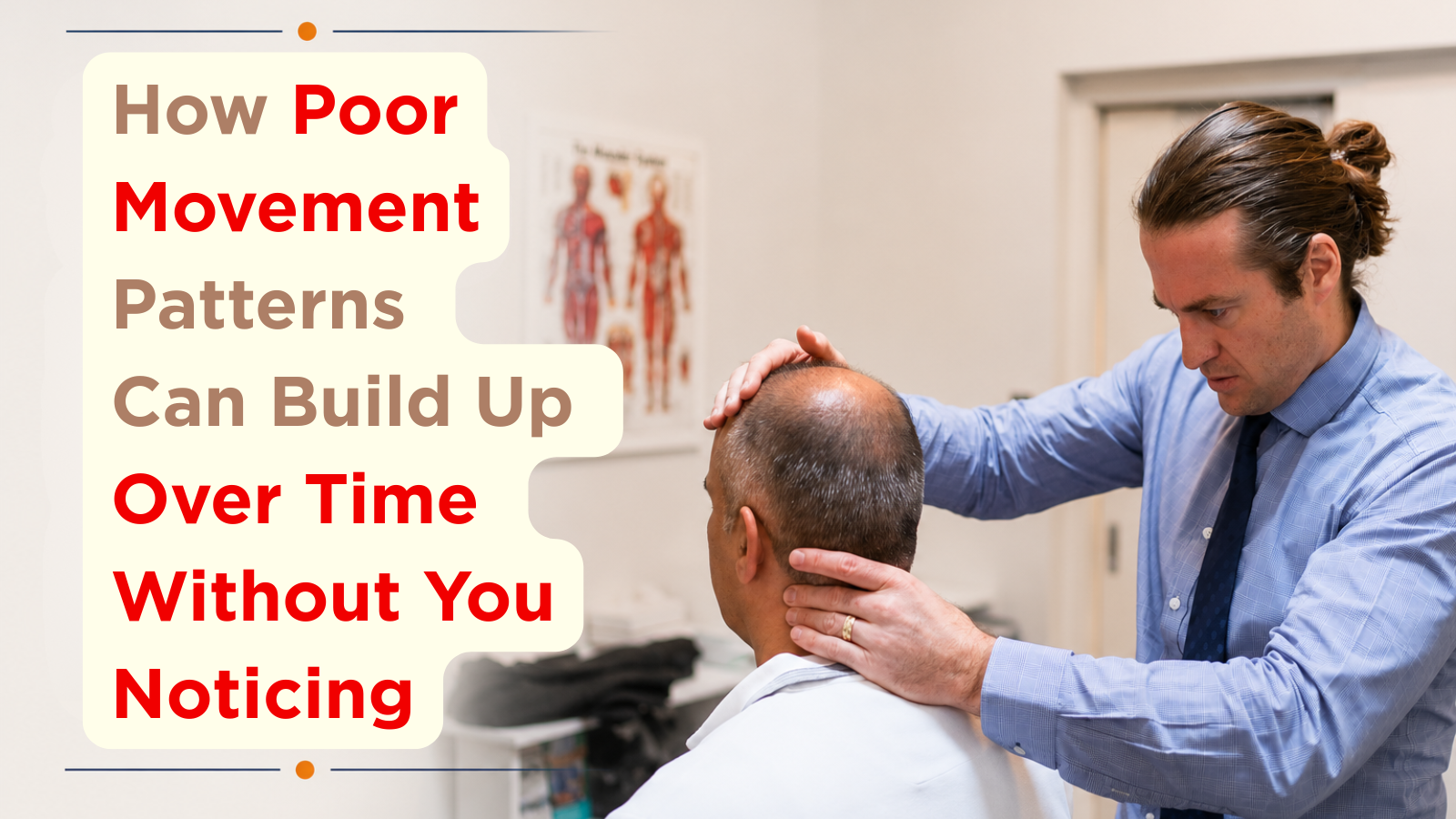
How Poor Movement Patterns Can Build Up Over Time Without You Noticing

Most people do not suddenly wake up one day with poor movement habits.
In many cases, movement patterns gradually develop over months or years through everyday routines, posture habits, injuries, work demands and repetitive activities.
Because these changes happen slowly, people often adapt without realising it.
A slight shift in posture, favouring one side while lifting, sitting for long periods or moving differently after an injury may not seem significant at first. But over time, these patterns can sometimes place extra stress on muscles, joints and surrounding tissues.
Eventually, the body may begin signalling that something is not coping well through stiffness, tension or recurring discomfort.
Movement patterns are the ways your body naturally performs everyday activities.
This includes:
Ideally, movement is balanced and efficient. But when certain muscles become tight, weak, overloaded or restricted, the body often compensates by moving differently.
These adaptations are not always harmful initially. In fact, the body is very good at finding temporary ways to keep moving despite fatigue, injury or restriction.
The problem is that compensation patterns may gradually become habitual.
One reason movement problems build up slowly is because the body adapts remarkably well.
People often become accustomed to:
Because these habits feel “normal”, they may go unnoticed until symptoms begin appearing.
Many people are surprised to realise they have been moving differently for years before discomfort develops.
Previous injuries may continue affecting movement patterns long after pain has settled.
For example:
Even subtle protective movements can gradually shift how the body distributes load during daily activities.
Sometimes the original injury improves, but the compensation pattern remains.
Modern lifestyles often encourage repetitive movement and prolonged sitting.
Many people spend large portions of the day:
When the body spends less time moving through varied ranges of motion, stiffness and imbalance may gradually increase.
The issue is often not one single posture or movement, but repetition without enough variation.
Some signs that movement habits may be contributing to strain include:
These signs do not necessarily indicate serious damage, but they may suggest the body is compensating in ways that are becoming harder to sustain comfortably.
Poor movement patterns usually develop slowly rather than causing immediate pain.
The body often tolerates compensation for quite a long time before symptoms appear.
This is why people frequently say things like:
In reality, there may have been small contributing factors accumulating over time beneath the surface.
In many cases, movement awareness and gradual habit changes may help improve how the body feels and functions.
This may involve:
The goal is usually not perfect posture or perfect movement, but creating more adaptable and efficient movement patterns over time.
Chiropractic care may help identify movement restrictions, posture habits and areas of muscular tension after appropriate assessment.
At Wellbeing Chiropractic, chiropractors may assess:
Care recommendations depend on the individual and their presentation.
Poor movement patterns are repetitive ways of moving or holding posture that may place unnecessary strain on muscles, joints or surrounding tissues over time.
Yes, posture habits may influence how the body distributes load and moves during everyday activities.
The body often compensates for strain over long periods before symptoms become noticeable, which is why discomfort may seem to appear slowly.
In some individuals, old injuries may continue influencing movement patterns even after the original pain has improved.
Chiropractors may assess posture, mobility and movement habits to identify factors that could be contributing to ongoing tension or discomfort.
If recurring stiffness, posture-related tension or ongoing discomfort has been gradually building over time, the team at Wellbeing Chiropractic can provide an individual assessment tailored to your movement patterns and lifestyle habits.
Whether you’re looking for a chiropractor in Melbourne, Sydney or Brisbane, our clinics offer personalised care designed to support mobility, posture and long-term movement health. Book an appointment with your nearest Wellbeing Chiropractic clinic to get started.
Author
Dr. Conrad Hor is an experienced and passionate chiropractor with strong clinical knowledge, having worked at clinics in Sydney and Melbourne. Conrad graduated from Macquarie University with a Master’s in Chiropractic and Sydney University with a Bachelor’s of Sport and Exercise Science. Conrad delivers manual chiropractic and lower-force chiropractic care for people of all ages and health backgrounds. He works closely with his patients to ensure they become active participants in their care.
Select a location to book your $49 May assessment
Select a location to book your $49 May assessment
Select a location to book your $49 May assessment
Select your Victoria clinic to book your $49 new patient visit.
$49 New Patient Assessment ● First Adjustment Included*
*Adjustment included when your chiropractor confirms care is clinically appropriate for you. If chiropractic isn’t the right fit, we’ll tell you that too.
Select your New South Wales clinic to book your $49 new patient visit.
$49 New Patient Assessment ● First Adjustment Included*
*Adjustment included when your chiropractor confirms care is clinically appropriate for you. If chiropractic isn’t the right fit, we’ll tell you that too.
Select your Queensland clinic to book your $49 new patient visit.
$49 New Patient Assessment ● First Adjustment Included*
*Adjustment included when your chiropractor confirms care is clinically appropriate for you. If chiropractic isn’t the right fit, we’ll tell you that too.