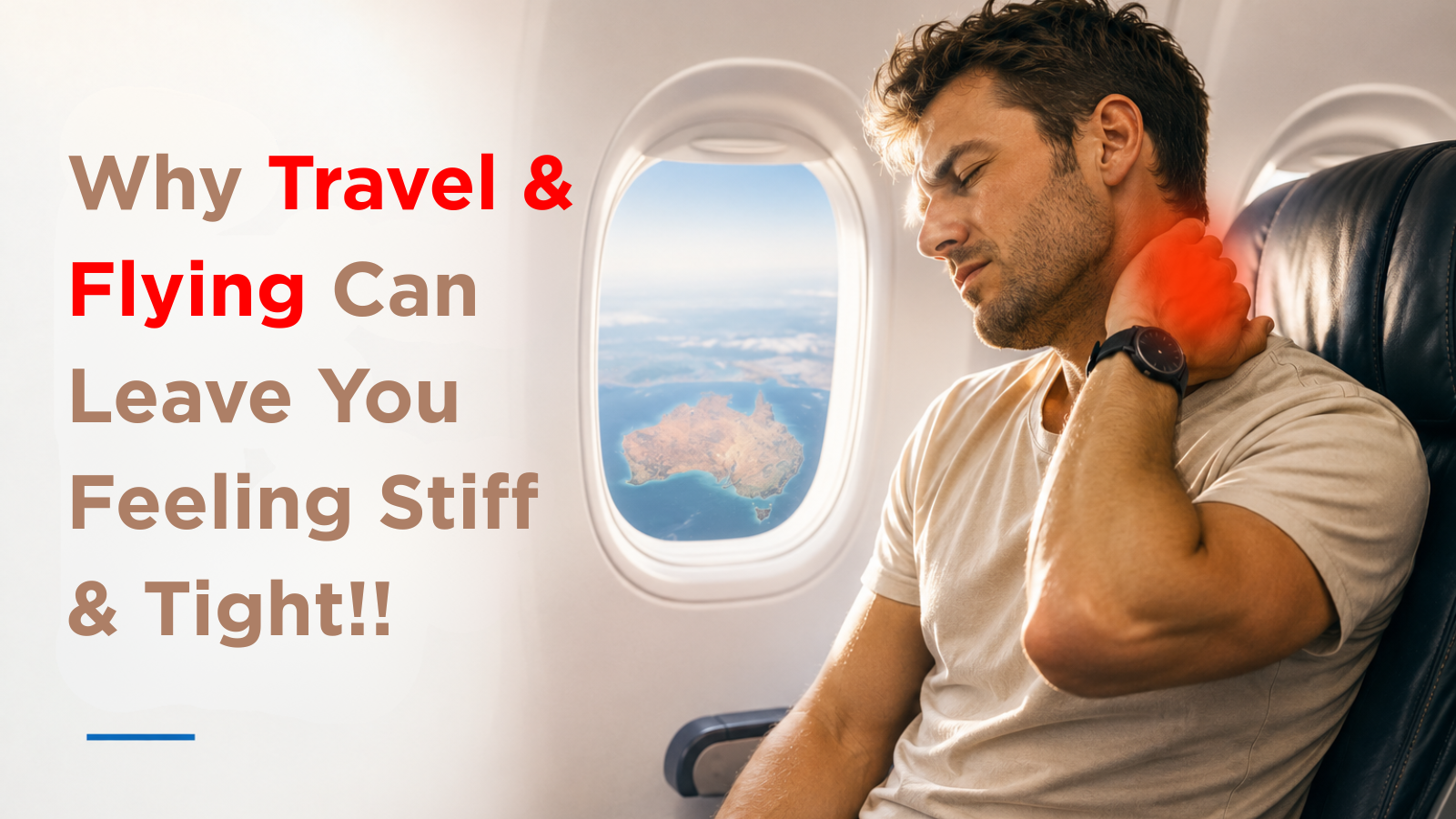
Travelling can be exciting, whether it involves a weekend getaway, a business trip or an overseas holiday. However, many people notice that long flights, road trips and extended travel days can leave the body feeling stiff, tight and uncomfortable.
Neck tension, lower back stiffness and tight hips are common complaints after prolonged travel. Sitting for extended periods, carrying luggage and disrupted routines may all influence how the body feels during and after a trip.
Understanding why travel can affect mobility and muscle tension may help you prepare better and reduce physical discomfort while travelling.
Why Does Travel Cause Stiffness?
The body is designed to move regularly throughout the day. Travel often involves long periods of sitting with limited movement, particularly during flights or extended car trips.
Remaining in one position for hours at a time may contribute to:
- Muscle tightness
- Reduced circulation
- Joint stiffness
- Postural fatigue
- Reduced mobility
These effects can become more noticeable during longer trips or in people who already experience neck or back discomfort.
How Flying Can Affect the Body:
Air travel presents several unique physical challenges.
Prolonged Sitting:
Plane seats often provide limited space and support, particularly on longer flights. Sitting in a confined position for extended periods may place stress on the lower back, neck and hips.
Reduced Movement:
Many travellers remain seated for most of a flight, which may contribute to stiffness and reduced circulation.
Looking down at phones, tablets or laptops while flying can place additional strain on the neck and upper back.
Carrying Heavy Bags:
Lifting luggage into overhead compartments or carrying heavy bags through airports may also contribute to muscle tension and strain.
Common Areas That Feel Tight After Travelling:
Lower Back:
The lower back commonly becomes stiff after prolonged sitting, especially when posture changes little over several hours.
Sleeping in awkward positions or looking down at devices during travel may contribute to neck tightness and shoulder tension.
Hips:
Sitting for long periods can reduce hip mobility and contribute to tight hip flexor muscles.
Legs and Calves:
Reduced movement during flights or long drives may leave the legs feeling heavy or tight afterwards.
Why Existing Pain May Feel Worse During Travel:
People with pre-existing neck pain, back pain or mobility restrictions may notice symptoms becoming more noticeable during or after travel.
Factors that may contribute include:
- Reduced movement
- Poor sleep
- Physical fatigue
- Stress
- Carrying luggage
- Long periods sitting in uncomfortable positions
Even healthy individuals may experience temporary stiffness after extended travel days.
Some people seek chiropractic care after travelling to help address stiffness, movement restrictions and musculoskeletal tension.
After an appropriate assessment, care may include:
- Joint mobilisation
- Manual therapy
- Soft tissue techniques
- Postural advice
- Mobility recommendations
Recommendations are tailored to the individual based on their symptoms, travel demands and examination findings.
Supporting Comfortable Movement While Travelling:
Travel is often unavoidable, especially for work, family or holidays. While some temporary stiffness can be common, maintaining movement and posture awareness may help support a more comfortable travel experience.
Small strategies such as taking movement breaks, stretching regularly and managing luggage loads can often make a meaningful difference.
Preparing the body before travel and prioritising recovery afterwards may also help support mobility and reduce post-travel discomfort.
FAQ
Why do I feel stiff after flying?
Long periods of sitting, reduced movement and postural strain during flights may contribute to muscle tightness and joint stiffness.
Can flying cause back pain?
Prolonged sitting and awkward posture during travel may aggravate lower back discomfort in some individuals.
How can I reduce stiffness during long flights?
Standing regularly, stretching, improving posture and staying hydrated may help reduce travel-related stiffness.
Why does my neck hurt after travelling?
Looking down at devices, sleeping in awkward positions and prolonged sitting may contribute to neck tension during travel.
Can chiropractic care help after travelling?
Chiropractic care may help support mobility and musculoskeletal function depending on the individual and their presentation.
If you are experiencing ongoing stiffness, neck tension or back discomfort after travel, the team at Wellbeing Chiropractic can provide an individual assessment tailored to your needs.
With clinics across Melbourne, Sydney and Brisbane, our chiropractors work with travellers, office workers and active individuals to better understand movement restrictions, posture habits and musculoskeletal factors that may be contributing to discomfort. Appropriate care may include hands-on treatment, mobility support and practical advice designed around your lifestyle and travel demands.