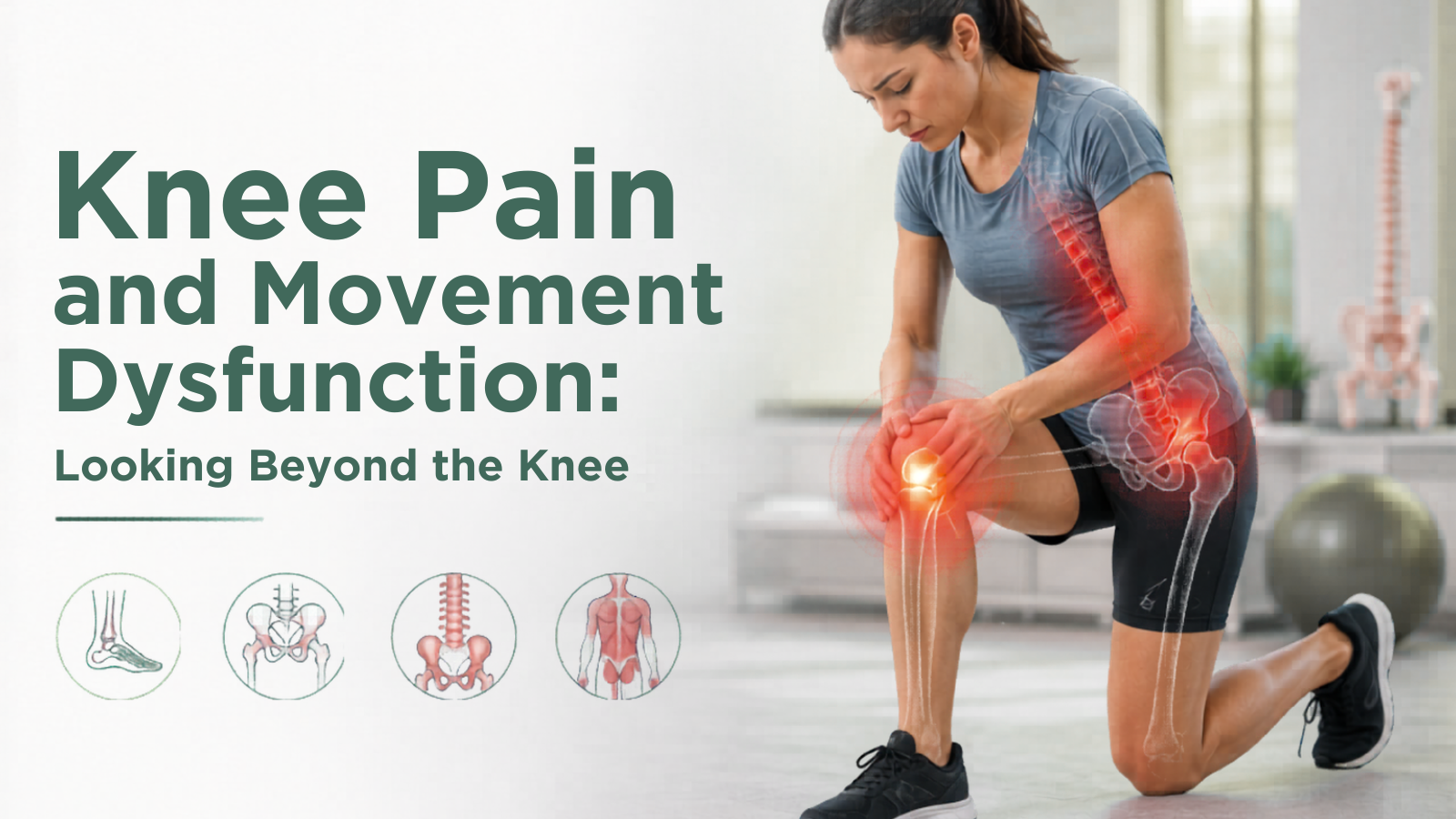
Knee pain is one of the most common musculoskeletal complaints affecting Australians of all ages. Whether it occurs during walking, running, climbing stairs, exercising or simply getting up from a chair, knee discomfort can significantly impact daily life.
When pain develops, many people naturally focus on the knee itself. However, the knee is often influenced by what is happening above and below it. In some cases, the underlying issue may not originate in the knee at all.
This is why healthcare practitioners frequently assess movement throughout the entire lower body rather than focusing solely on the painful area.
Understanding how movement dysfunction can contribute to knee pain may help explain why comprehensive assessment is often important for long-term management.
Why the Knee Depends on Other Parts of the Body:
The knee sits between the hip and the ankle and acts as a key link in the movement chain.
Every step you take requires coordinated movement between:
- The hips
- The pelvis
- The knees
- The ankles
- The feet
When one area is not moving efficiently, the knee may compensate by absorbing additional forces.
Over time, these altered movement patterns may contribute to discomfort, stiffness or increased physical strain.
This is one reason why knee pain is not always purely a knee problem.
What Is Movement Dysfunction?
Movement dysfunction refers to changes in the way the body moves that may place additional stress on certain joints, muscles or tissues.
Movement dysfunction does not necessarily mean injury is present.
Instead, it may involve:
- Reduced mobility
- Poor movement control
- Muscle imbalances
- Altered walking patterns
- Compensation strategies
- Reduced stability
These changes may influence how forces are distributed through the body during everyday activities.
How Ankle Mobility Can Affect Knee Pain:
The ankle is another important contributor to healthy knee function.
Limited ankle mobility may influence:
- Walking mechanics
- Running technique
- Squatting movements
- Stair climbing
- Landing from jumps
When ankle movement is restricted, the knee may be forced to adapt to maintain mobility and balance.
Over time, these compensations may contribute to increased stress around the knee region.
Why Foot Mechanics Matter:
The feet provide the foundation for movement.
Changes in foot mechanics can influence how forces travel through the ankles, knees and hips.
Factors that may affect movement include:
- Reduced foot mobility
- Changes in arch function
- Footwear choices
- Walking and running patterns
This does not mean every knee problem begins at the foot, but it highlights the importance of assessing the entire movement chain.
Some people experience temporary improvement only for symptoms to return later.
Recurring knee discomfort may be influenced by:
- Persistent movement limitations
- Poor recovery habits
- Sudden increases in activity
- Inadequate strength and conditioning
- Unaddressed biomechanical factors
Simply reducing pain without addressing contributing movement patterns may increase the likelihood of recurring symptoms.
Chiropractic care may form part of a broader approach to managing knee-related musculoskeletal concerns.
Following an appropriate assessment, care may include:
- Joint mobilisation where appropriate
- Soft tissue techniques
- Mobility exercises
- Strength and stability recommendations
- Movement retraining
- Postural and biomechanical advice
- Recovery strategies
The goal is often to support movement quality, physical function and long-term musculoskeletal health.
Management recommendations are tailored to the individual’s symptoms, goals and examination findings.
FAQ Section
Can hip problems cause knee pain?
Yes. Reduced hip mobility or strength may influence knee alignment and movement patterns, potentially contributing to knee discomfort.
How does ankle mobility affect the knee?
Limited ankle mobility may alter walking, running and squatting mechanics, which can increase stress on the knee.
Is knee pain always caused by a knee injury?
Not necessarily. Knee pain can be influenced by movement dysfunction, strength deficits, mobility limitations and biomechanical factors elsewhere in the body.
Why does my knee pain keep coming back?
Recurring knee pain may be related to ongoing movement limitations, physical demands, recovery habits or unaddressed contributing factors.
Can chiropractic care help with knee pain?
After an appropriate assessment, chiropractic care may help support movement quality, mobility and musculoskeletal function depending on the individual’s presentation and goals.
Experiencing recurring knee pain or movement limitations?
Book an appointment online with
Wellbeing Chiropractic clinics across
Melbourne,
Sydney and
Brisbane for a comprehensive assessment that looks beyond the knee to identify the factors influencing your movement and comfort.