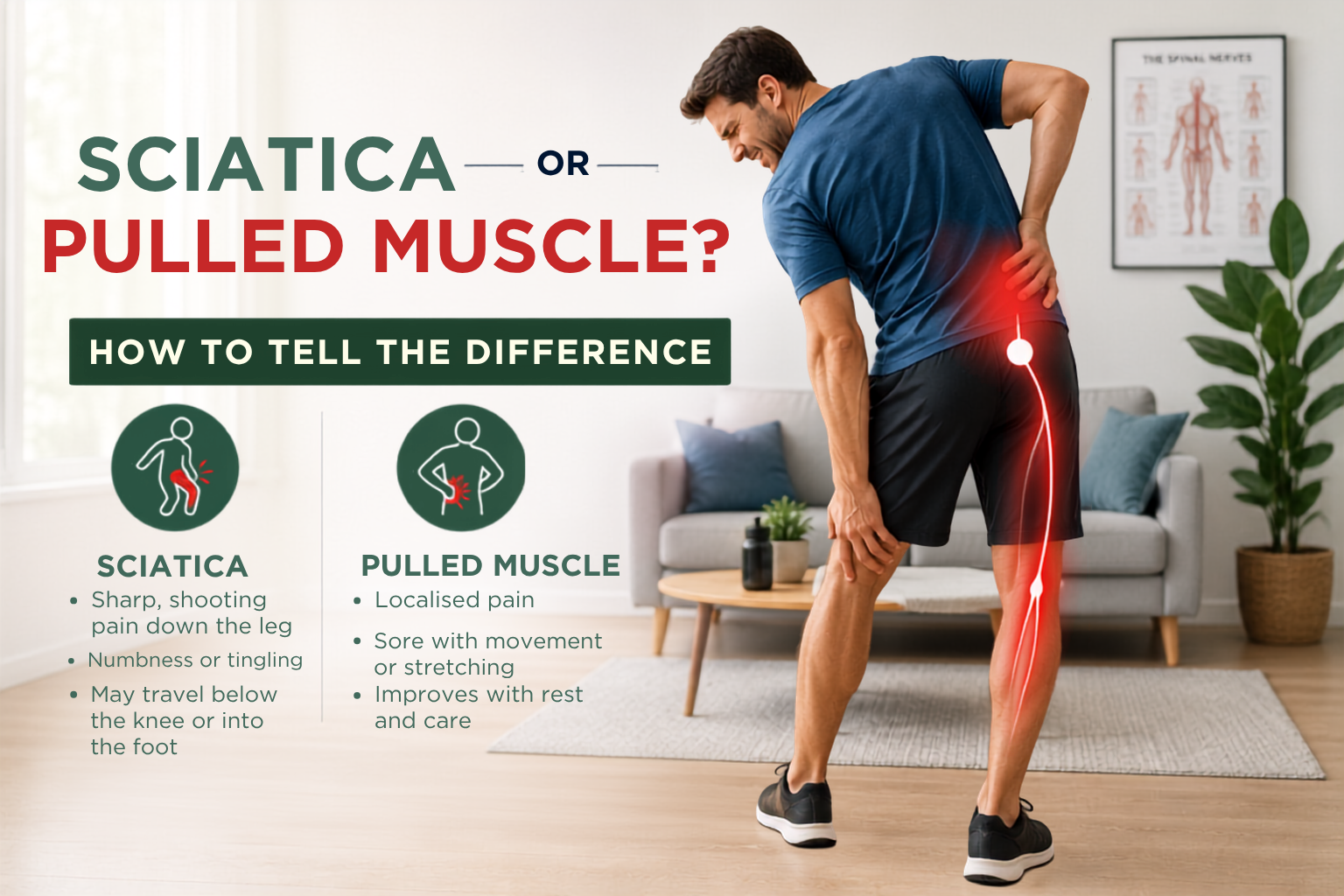
You bend down to pick something up and suddenly feel pain in your lower back.
A few hours later, you’re wondering whether you’ve pulled a muscle or if it’s something more serious like sciatica.
It’s a common question.
The challenge is that both conditions can cause lower back discomfort, making it difficult to know exactly what’s happening without a professional assessment.
While they may share some similarities, sciatica and muscle strains usually behave quite differently. Paying attention to where the pain travels, how it feels and what movements make it worse can provide useful clues.
They Can Start in Similar Ways:
Whether it’s after gardening, lifting a heavy box, playing sport or simply twisting awkwardly, both sciatica and a muscle strain can begin unexpectedly.
In the early stages, people often experience:
- lower back pain
- stiffness
- difficulty moving
- discomfort when changing positions
Because the initial symptoms can overlap, it’s easy to mistake one condition for the other.
Where the Pain Travels Matters:
One of the biggest differences is where the pain is felt.
A Pulled Muscle:
A muscle strain usually causes discomfort that stays close to the injured muscle.
You may notice pain:
The discomfort is often localised rather than travelling a long distance.
Sciatica typically involves irritation of the sciatic nerve.
Pain may begin in the lower back or buttock before travelling further down the leg.
Some people experience symptoms in the:
- buttock
- back of the thigh
- calf
- foot
The pain doesn’t always travel the full length of the leg, but it often extends further than a typical muscle strain.
The Type of Pain Often Feels Different:
People frequently describe muscle pain and nerve-related pain in different ways.
A muscle strain may feel:
- sore
- tight
- aching
- tender when touched
Sciatica is more commonly described as:
- sharp
- burning
- shooting
- electric
- radiating down the leg
Everyone experiences pain differently, so these descriptions are only general guides.
Numbness or Tingling Can Be an Important Clue:
Muscle strains don’t usually cause changes in sensation.
If you notice:
- tingling
- pins and needles
- numbness
- altered sensation
particularly in the leg or foot, it may suggest that a nerve is involved.
These symptoms should be professionally assessed.
Certain Movements May Trigger Symptoms:
A pulled muscle often becomes more noticeable when you:
- bend
- lift
- twist
- stand up after sitting
Sciatica may also be aggravated by movement, but many people notice symptoms becoming worse after:
- prolonged sitting
- driving
- coughing or sneezing
- walking long distances
The exact pattern varies from person to person.
Following an appropriate assessment, chiropractic care may form part of a broader approach to managing musculoskeletal conditions affecting the lower back.
Depending on your presentation, care may include:
- manual therapy where appropriate
- soft tissue techniques
- mobility exercises
- strengthening recommendations
- movement education
- posture and ergonomic advice
- guidance on returning to activity
Management is individualised according to your symptoms, examination findings and lifestyle.
FAQ
How do I know if I have sciatica or a pulled muscle?
Sciatica often causes pain that travels into the buttock or leg and may include tingling or numbness. A pulled muscle usually causes more localised pain and tenderness.
Can a pulled muscle feel like sciatica?
Yes. In the early stages, both conditions can cause lower back pain and stiffness, making them difficult to tell apart without an assessment.
Does sciatica always travel down the leg?
Not always. Some people experience symptoms only in the buttock or upper thigh, while others notice pain extending to the foot.
Should I stretch a pulled muscle or sciatica?
The most appropriate exercises depend on the underlying cause of your symptoms. Stretching isn’t suitable for everyone, particularly during the early stages of some injuries.
Can chiropractic care help with sciatica or muscle strains?
Following an appropriate assessment, chiropractic care may help improve mobility, movement quality and musculoskeletal function as part of an individualised management plan.
If you’re unsure whether your symptoms are due to sciatica or a muscle strain, book an appointment online with Wellbeing Chiropractic. With clinics across Melbourne, Sydney and Brisbane, our experienced chiropractors can assess your movement, identify contributing factors and develop a personalised plan to help you move with greater comfort and confidence.