Running is one of the most popular forms of exercise in Australia. From weekend joggers to marathon runners, many people enjoy running for fitness, stress relief and overall wellbeing.
But when lower back or hip pain starts to appear during or after runs, it can quickly become frustrating.
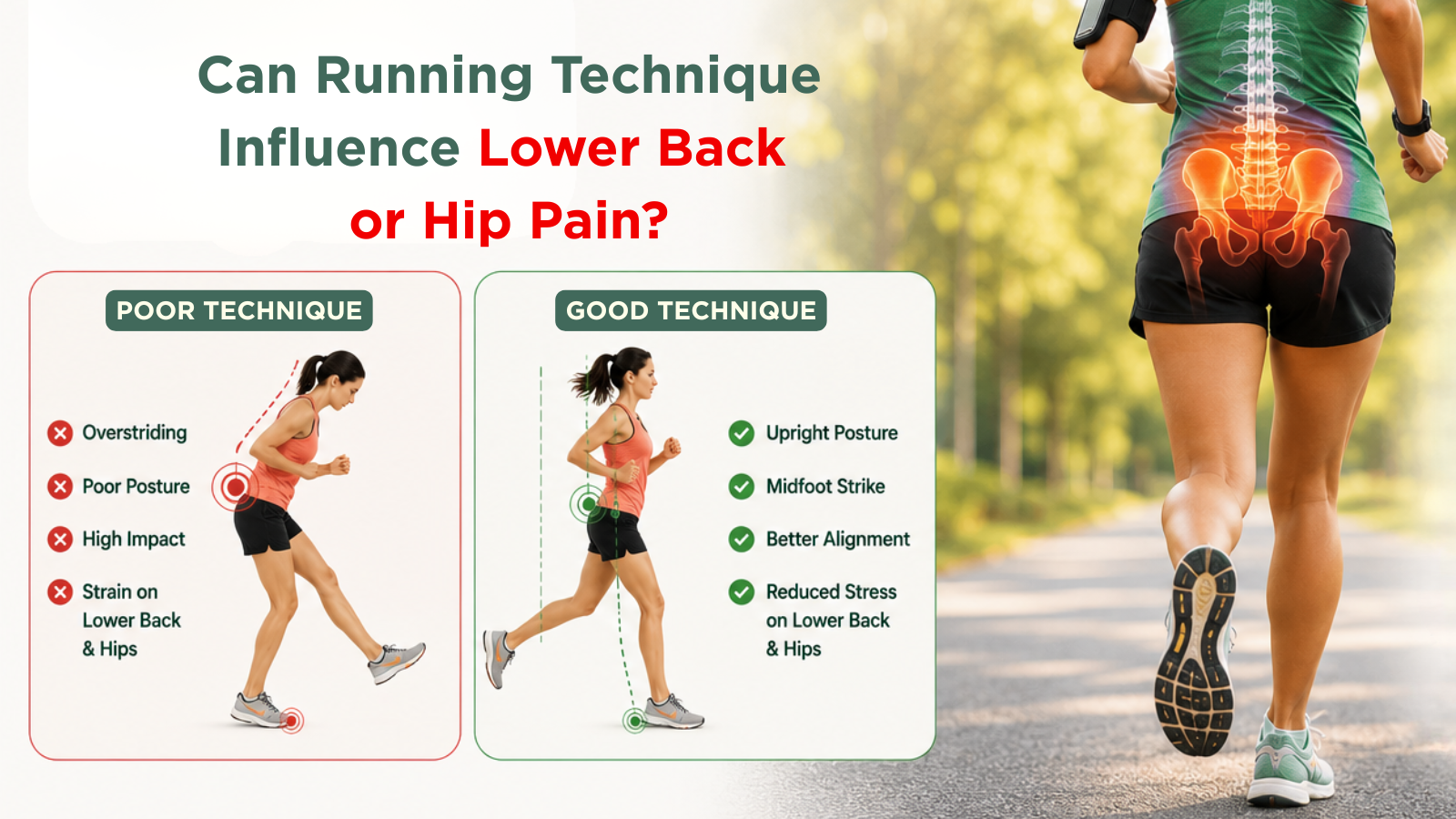
In some cases, running discomfort may be linked to training load, recovery or previous injuries. However, running technique and movement patterns can also play a role in how stress is distributed through the body.
While there is no single “perfect” running style for everyone, certain movement habits may place extra strain on the lower back, hips and surrounding muscles over time.
How Running Places Stress on the Body:
Running involves repeated impact and force transfer through the feet, legs, pelvis and spine.
With every stride, the body absorbs and redistributes force through muscles, joints and connective tissues. If movement patterns become inefficient or certain areas are overloaded, discomfort may gradually develop.
The lower back and hips are particularly important because they help:
- Stabilise the pelvis
- Transfer force between the upper and lower body
- Support balance and coordination
- Absorb impact during movement
When these areas are not functioning efficiently, some runners may notice stiffness, tension or pain developing during training.
Can Running Technique Contribute to Lower Back Pain?
In some runners, yes.
Lower back discomfort may sometimes be influenced by factors such as:
- Overstriding
- Poor pelvic control
- Reduced hip mobility
- Forward-leaning posture
- Excessive trunk rotation
- Muscle imbalances
- Sudden increases in training volume
For example, overstriding occurs when the foot lands too far in front of the body. This may increase braking forces and alter how impact travels through the hips and spine.
Similarly, limited movement through the hips can sometimes cause the lower back to compensate excessively during running.
Not every runner with lower back pain has a technique issue, but movement patterns can be one contributing factor worth assessing.
Signs Your Running Technique May Need Attention:
Some signs that movement patterns could be contributing to discomfort include:
- Lower back pain during longer runs
- Hip tightness after running
- Feeling uneven while running
- Persistent stiffness despite rest
- One-sided soreness
- Recurring discomfort after increasing training load
- Difficulty maintaining posture late in runs
These signs do not necessarily indicate a serious injury, but they may suggest the body is not tolerating current running habits particularly well.
Can Footwear Affect Lower Back or Hip Pain?
Running shoes may influence comfort and movement patterns, although the relationship is highly individual.
Factors such as:
- Cushioning
- Heel height
- Stability
- Shoe fit
- Running surface
may affect how forces travel through the body during running.
A shoe that works well for one runner may not suit another runner’s movement style or training demands.
If discomfort develops after changing footwear, it may be worth reviewing whether the shoes are appropriate for your needs.
Chiropractic care may help some runners manage movement restrictions, joint stiffness and muscular tension after appropriate assessment.
At Wellbeing Chiropractic, chiropractors may assess:
- Running-related movement patterns
- Joint mobility
- Pelvic mechanics
- Hip and spinal function
- Muscle tension and flexibility
Lifestyle and training habits
FAQ
Can poor running technique cause lower back pain?
Running technique may contribute to lower back discomfort in some individuals, particularly when combined with factors such as fatigue, reduced mobility or sudden training increases.
Why do my hips hurt after running?
Hip discomfort after running may be influenced by muscle tightness, reduced strength, training load or movement patterns. The cause varies between individuals.
Should I stop running if I have back pain?
This depends on the severity and nature of the symptoms. Persistent or worsening pain should be professionally assessed before continuing high training loads.
Can chiropractors help runners?
Chiropractors may help assess movement patterns, mobility and posture in runners and provide individualised care recommendations based on examination findings.
If running-related lower back or hip discomfort is affecting your training or recovery, the team at Wellbeing Chiropractic can provide an individual assessment tailored to your movement, lifestyle and running habits.
Whether you’re looking for a chiropractor in Melbourne, Sydney or Brisbane, our clinics offer personalised care designed to support mobility, recovery and long-term movement health. Book an appointment with your nearest Wellbeing Chiropractic clinic to get started.