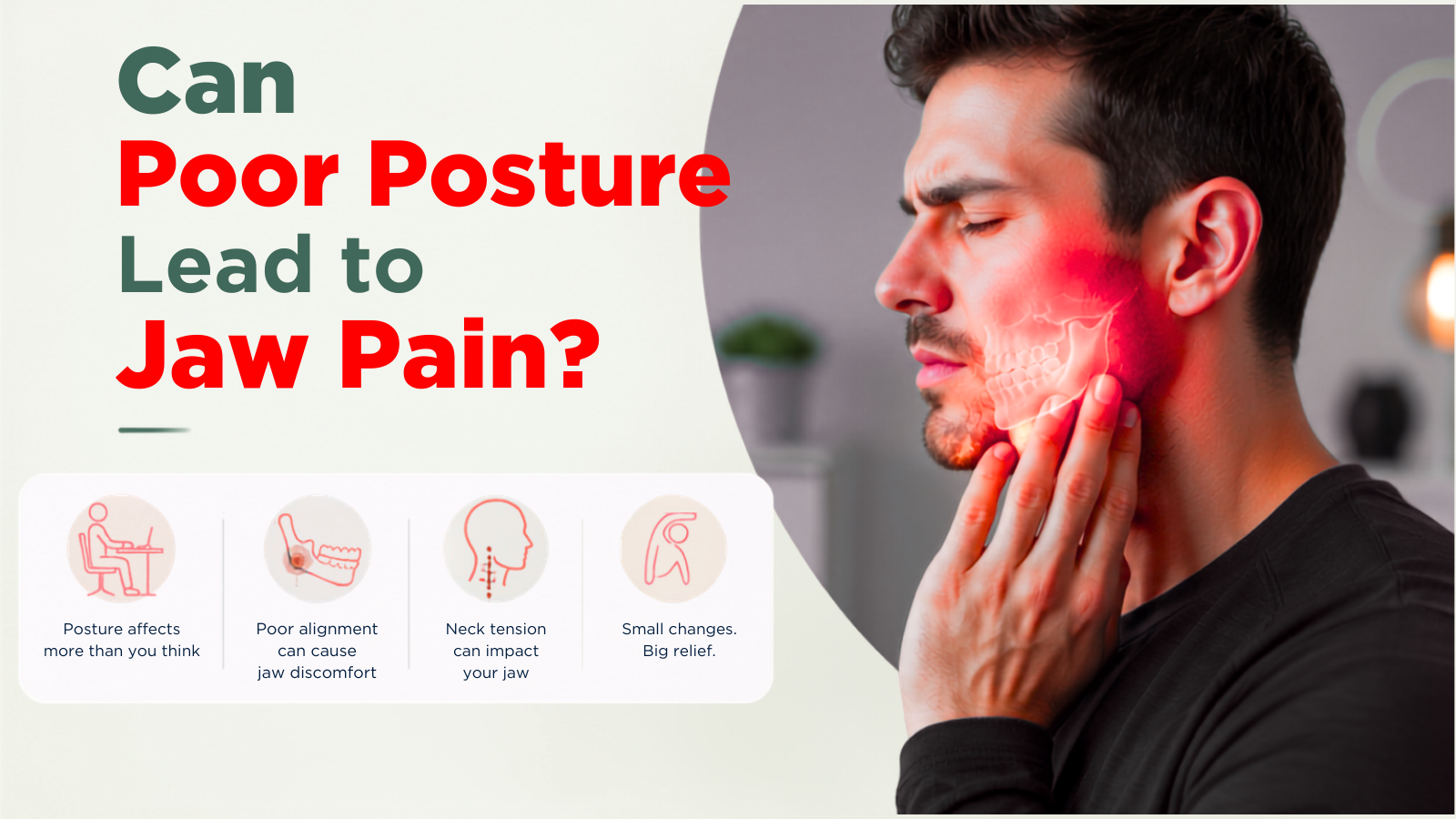
When people experience jaw pain, they often assume the problem starts in the jaw itself.
They may wonder if they’re grinding their teeth at night or if something is wrong with the jaw joint.
While these can certainly be contributing factors, another possibility is often overlooked:
The way you hold your head and neck throughout the day.
Your jaw doesn’t work in isolation. Every time you talk, chew, yawn or swallow, the muscles around your jaw coordinate with your neck, shoulders and upper back.
If these areas aren’t working well together, the jaw may have to work harder than it should.
Think About Where Your Head Is Right Now:
Before reading any further, pause for a moment.
Where is your phone?
Are you looking down?
Is your head sitting slightly forward?
Are your shoulders rounded?
For many Australians, this position is repeated hundreds of times every day while:
- checking emails
- scrolling on a phone
- working at a computer
- reading
- driving
- watching television
One glance isn’t a problem.
It’s the accumulation of these postures over months and years that may influence how the muscles around your jaw and neck function.
Your Head Is Heavier Than You Think:
An adult head weighs several kilograms.
When your ears sit roughly above your shoulders, that weight is shared efficiently through your spine and surrounding muscles.
However, as the head gradually moves forward, muscles around the neck and upper shoulders often have to work harder to support it.
Those same muscles have close relationships with the muscles involved in jaw movement.
This is one reason some people experience jaw discomfort alongside neck tension.
Why Jaw Pain and Neck Pain Often Occur Together:
The jaw and neck share more than just proximity.
They share muscles, connective tissues and nerve pathways that work together during everyday activities.
If the neck becomes stiff or overloaded, the jaw may compensate.
Likewise, increased jaw tension may influence muscles around the neck and upper shoulders.
This is why people sometimes notice:
occurring at the same time.
Could Your Workstation Be Contributing?
If you spend much of your day at a desk, small workstation habits may influence muscle tension around your neck and jaw.
For example:
- a monitor that’s too low
- reaching forward for the keyboard
- cradling the phone between your shoulder and ear
- leaning towards the screen
- working from a laptop without raising the display
Individually, these habits may seem insignificant.
Repeated daily, however, they may contribute to increased muscular workload.
Why Does My Jaw Click?
Jaw clicking is surprisingly common.
For some people, it occurs without pain or difficulty moving the jaw.
For others, it may occur alongside stiffness or discomfort.
A clicking jaw doesn’t automatically indicate a serious problem, but if it is accompanied by pain, locking or reduced movement, it’s worth seeking a professional assessment.
Following an appropriate assessment, chiropractic care may form part of a broader approach to managing jaw-related musculoskeletal symptoms.
Depending on your presentation, care may include:
- gentle manual therapy where appropriate
- soft tissue techniques
- mobility exercises
- posture and ergonomic advice
- movement education
- strategies to reduce muscle tension
Recommendations are individualised based on your symptoms, movement patterns and examination findings.
When Should You Get Jaw Pain Assessed?
It’s worth arranging an assessment if:
- jaw pain keeps returning
- chewing becomes uncomfortable
- your jaw locks or catches
- you experience frequent headaches
- neck pain accompanies jaw discomfort
- symptoms affect your daily activities
Early assessment may help identify contributing factors before symptoms become more persistent.
FAQ
Can poor posture cause jaw pain?
Poor posture may contribute to increased muscle tension around the neck and jaw, which can influence jaw discomfort in some individuals.
Can neck pain affect the jaw?
Yes. The neck and jaw share muscular and neurological connections, so dysfunction in one area may influence the other.
Why does my jaw hurt after working at a computer?
Prolonged forward head posture, muscle tension and reduced movement during desk work may contribute to jaw discomfort for some people.
Does posture affect TMJ symptoms?
Posture may influence the muscles and joints surrounding the temporomandibular joint (TMJ), although TMJ symptoms often have multiple contributing factors.
Can chiropractic care help with jaw pain?
After an appropriate assessment, chiropractic care may help support jaw, neck and upper back mobility as part of an individualised management plan. If jaw pain,
neck tension or recurring
headaches are affecting your daily life,
book an appointment online with
Wellbeing Chiropractic clinics across
Melbourne,
Sydney and
Brisbane, we’ll assess how your jaw,
neck and
posture work together to create a personalised plan that supports better movement and long-term comfort.