
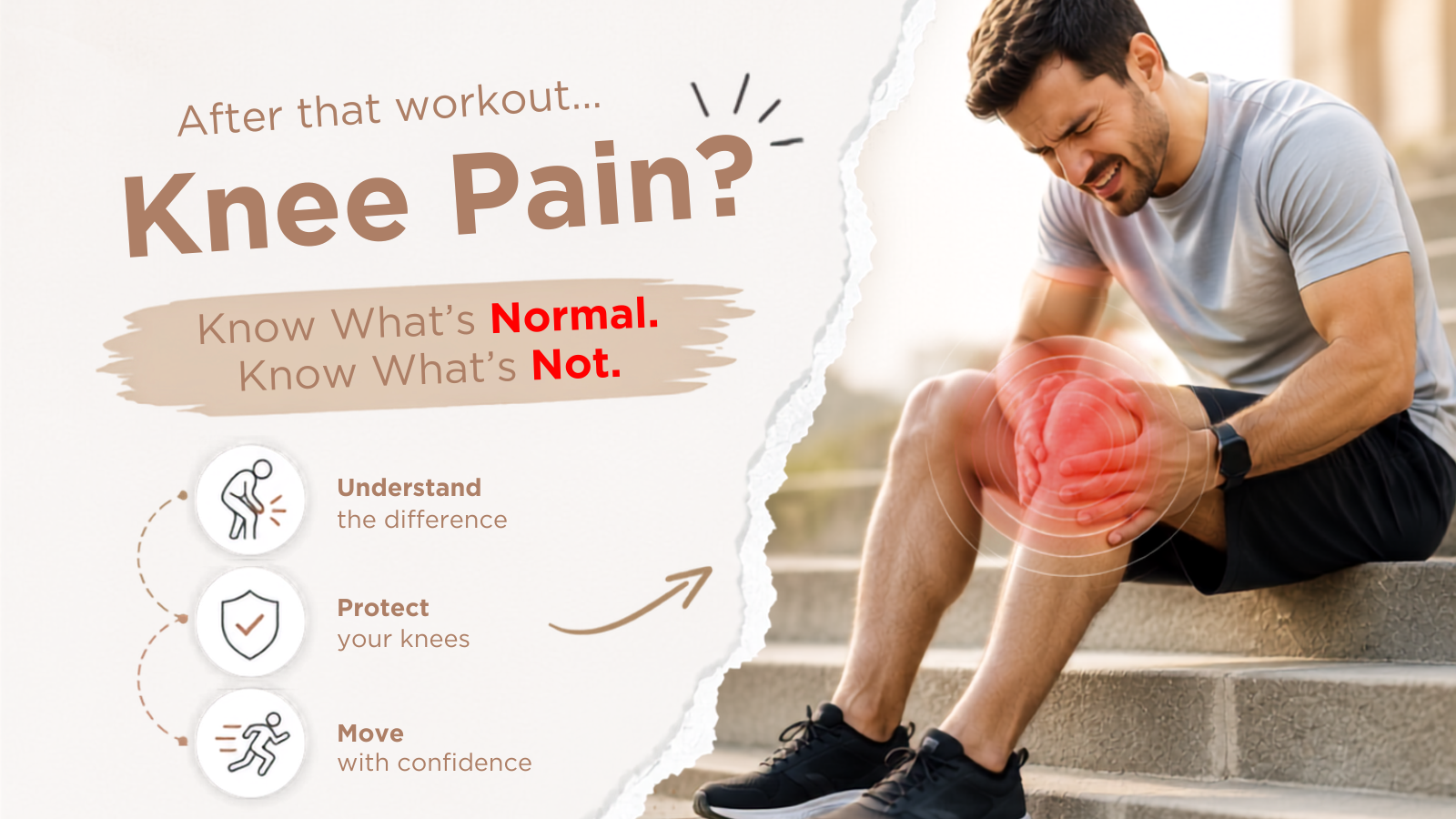
Knee Pain After Exercise: What’s Normal and What’s Not

You’ve finished a workout feeling great.
Then later that evening, or the following morning, your knee starts to ache.
It might feel stiff walking down the stairs, sore after a run or uncomfortable when getting up from a chair.
Naturally, the first question is:
“Is this normal, or have I injured something?”
The answer isn’t always straightforward.
Some soreness after exercise can be a normal response as your body adapts to increased physical demands. However, persistent, worsening or recurring knee pain deserves closer attention.
Knowing the difference can help you stay active while reducing the risk of ongoing problems.
It’s easy to assume pain always equals injury.
In reality, the body regularly experiences temporary soreness as it adapts to new activities or increased training.
For example, you might notice mild discomfort after:
If symptoms settle within a day or two and don’t affect normal movement, they may simply reflect your body’s natural recovery process.
Many people confuse muscle soreness with joint pain.
After exercise, muscles around the thighs or calves may feel tired or tender, particularly after strength training.
It is more likely to be felt:
Understanding where the discomfort is coming from can provide useful clues about what may be contributing to your symptoms.
One sore knee after a particularly demanding session isn’t necessarily a reason to worry.
What deserves more attention is a pattern.
Ask yourself:
Recurring symptoms often suggest your knee is struggling to cope with the demands being placed upon it.
One of the most common reasons people develop knee pain isn’t because they’re exercising.
It’s because something changed.
Perhaps you:
Even positive changes can temporarily increase the workload placed on the knee.
Gradual progression often gives the body more time to adapt.
Many people focus heavily on the workout itself but pay less attention to what happens afterwards.
Recovery influences how well your body adapts to physical activity.
Helpful recovery habits include:
Training and recovery work together.
Improving one while neglecting the other may increase the likelihood of recurring discomfort.
One of the clearest signs that your knee should be assessed is when pain alters your movement.
For example, you might notice yourself:
These compensation patterns may place extra demands on other areas such as the hips, ankles or lower back.
Many people assume they should stop all activity as soon as knee pain develops.
Complete rest isn’t always necessary.
In many situations, modifying activity rather than avoiding it altogether may be appropriate.
For example, temporarily reducing running distance, changing exercise intensity or choosing lower-impact activities may help maintain fitness while allowing symptoms to settle.
The most appropriate approach depends on the individual and should be guided by a healthcare professional following an assessment.
A comprehensive assessment looks beyond where the pain is felt.
Your chiropractor may assess:
Understanding how your body moves often provides valuable insight into why symptoms developed.
Following an appropriate assessment, chiropractic care may form part of a broader approach to managing knee-related musculoskeletal pain.
Depending on your presentation, care may include:
Management is tailored to the individual and their goals, whether that’s returning to running, sport or simply enjoying everyday activities without discomfort.
Some temporary soreness after increasing activity can be normal. Persistent, worsening or recurring knee pain should be professionally assessed.
Running-related knee pain may be influenced by training load, movement patterns, footwear, strength, mobility or recovery habits.
Not always. In many cases, modifying activity may be more appropriate than complete rest, but this depends on the cause of your symptoms.
Yes. Hip strength and movement control may influence how forces are distributed through the knee during walking, running and other activities.
Following an appropriate assessment, chiropractic care may help support knee function, movement quality and lower limb biomechanics as part of an individualised management plan.
If knee pain is stopping you from enjoying exercise, don’t wait until it becomes a bigger problem. Book an appointment online with Wellbeing Chiropractic clinics across Melbourne, Sydney and Brisbane, our chiropractors can assess your movement, identify contributing factors and develop a personalised plan to help you return to activity with greater confidence.
Author
Dr Josh Tyquin is an experienced & sought-after Chiropractor who is the principal Chiropractor at Wellbeing Chiropractic Hawthorn. He was first introduced to Chiropractic during childhood after suffering a sporting injury. It was after this positive personal experience Josh decided to pursue a career in Chiropractic.
Select a location to book your $49 May assessment
Select a location to book your $49 May assessment
Select a location to book your $49 May assessment
Select your Victoria clinic to book your $49 new patient visit.
$49 New Patient Assessment ● First Adjustment Included*
*Adjustment included when your chiropractor confirms care is clinically appropriate for you. If chiropractic isn’t the right fit, we’ll tell you that too.
Select your New South Wales clinic to book your $49 new patient visit.
$49 New Patient Assessment ● First Adjustment Included*
*Adjustment included when your chiropractor confirms care is clinically appropriate for you. If chiropractic isn’t the right fit, we’ll tell you that too.
Select your Queensland clinic to book your $49 new patient visit.
$49 New Patient Assessment ● First Adjustment Included*
*Adjustment included when your chiropractor confirms care is clinically appropriate for you. If chiropractic isn’t the right fit, we’ll tell you that too.