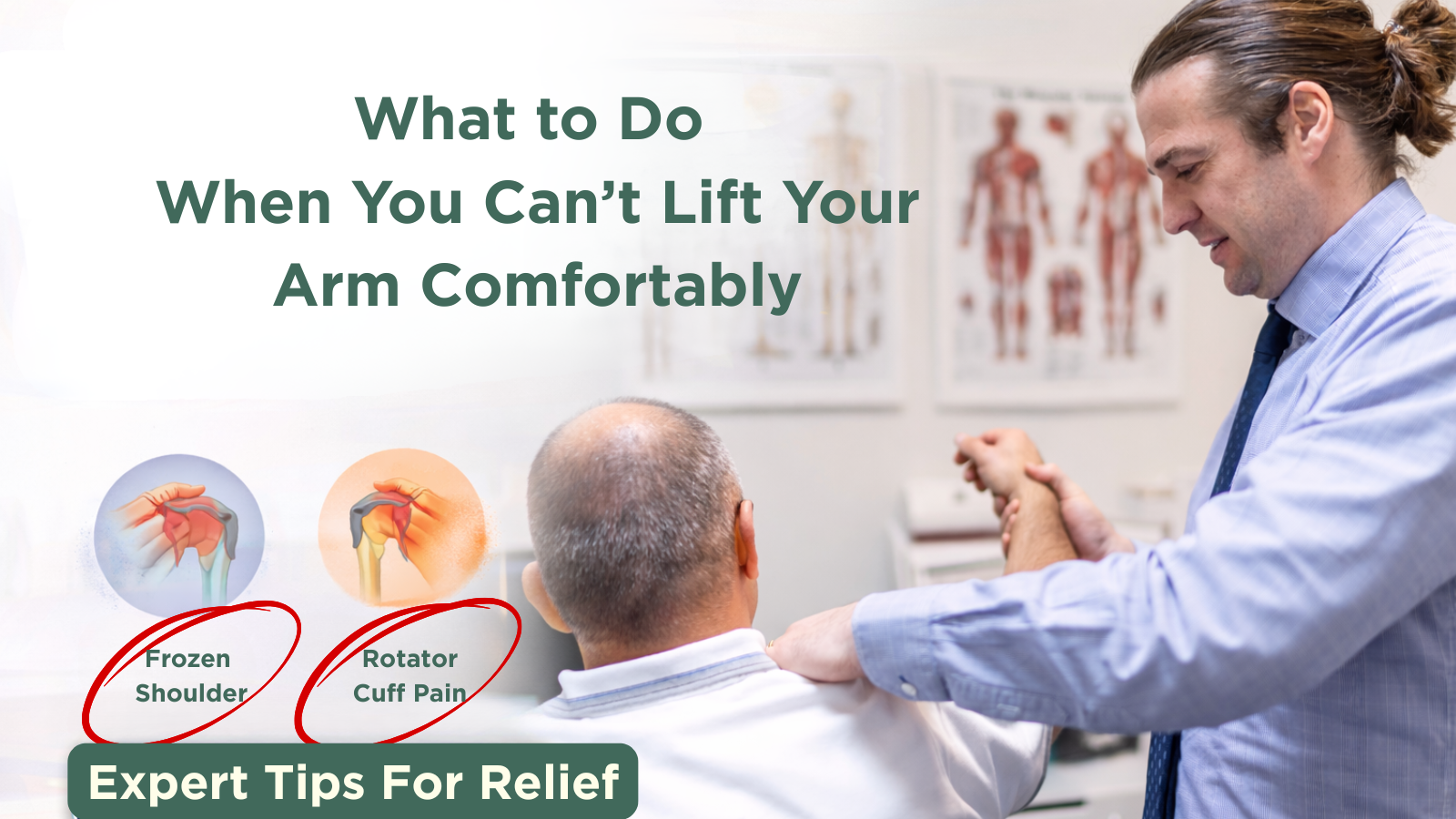
If you can’t lift your arm comfortably, it often points to irritation, weakness or dysfunction in the shoulder joint or surrounding structures. This may include the muscles, tendons, joints or even nerves that support arm movement.
For some people, the discomfort comes on suddenly. For others, it builds gradually over time. Either way, it can make everyday tasks like getting dressed, reaching overhead or even sleeping more difficult.
The good news is that there are practical steps you can take early on, and support is available if symptoms persist.
Common Reasons You Can’t Lift Your Arm Comfortably:
The shoulder is a complex joint with a wide range of motion. Because of this, several factors can contribute to pain or restriction.
Rotator cuff irritation or strain:
The rotator cuff is a group of muscles and tendons that stabilise your shoulder. Strain or irritation here can make lifting your arm painful, especially above shoulder height.
Shoulder impingement:
This occurs when the tissues in the shoulder become compressed during movement. It may feel like a sharp pinch when you raise your arm.
Frozen shoulder:
Also known as adhesive capsulitis, this condition can lead to stiffness and a gradual loss of movement. It often develops over time and can significantly limit arm mobility.
Long hours at a desk, poor posture or repetitive movements can place stress on the shoulder and upper back, contributing to discomfort when lifting your arm.
Neck-related referral:
Sometimes the issue is not just in the shoulder. The neck can refer pain or affect nerve function, leading to weakness or discomfort in the arm.
What You Can Do at Home:
If your symptoms are mild and recent, there are a few simple strategies that may help.
1. Modify aggravating movements:
Try to avoid movements that trigger sharp pain, particularly repeated overhead reaching.
2. Keep the shoulder gently moving:
Complete rest is not always helpful. Gentle, pain-free movement can support circulation and prevent stiffness.
3. Apply ice or heat:
Ice may help in the early stages if inflammation is present. Heat can be useful for muscle tightness.
4. Check your workstation setup:
Improving your desk ergonomics can reduce ongoing strain, especially if your symptoms are linked to posture.
5. Be mindful of sleep position:
Sleeping on the affected shoulder can aggravate symptoms. Try lying on your back or the opposite side with support.
When to Seek Professional Help:
It is worth getting assessed if:
- You cannot lift your arm past a certain point
- Pain has lasted more than a few days without improvement
- You feel weakness, numbness or tingling
- The pain is affecting your sleep or daily activities
- There was a recent injury or fall
A proper assessment helps identify the underlying cause and guides appropriate care.
Chiropractic care focuses on how your joints, muscles and nervous system work together.
After a thorough assessment, a chiropractor may:
- Assess shoulder and spinal movement
- Identify contributing factors such as posture or joint restriction
- Use hands-on techniques to improve mobility
- Provide tailored exercises to support recovery
- Offer advice on daily habits and ergonomics
Care is always individual and depends on your history, symptoms and examination findings.
For many people, addressing both the shoulder and surrounding areas such as the neck and upper back can support better movement and comfort.
One of the challenges with shoulder pain is how quickly it impacts normal routines. Simple tasks like reaching into a cupboard, putting on a shirt or lifting a child can become uncomfortable.
Early attention to symptoms often leads to better outcomes. Ignoring the issue may allow stiffness or compensation patterns to develop.
If you can’t lift your arm comfortably, it is usually a sign that something in the
shoulder or surrounding areas needs attention. Mild cases may improve with simple care, but ongoing or worsening symptoms should be assessed by a qualified professional.
FAQ Section
Why does my shoulder hurt when I lift my arm sideways?
This is commonly linked to shoulder impingement or rotator cuff irritation, where structures become compressed during movement.
Should I rest my shoulder completely?
Not usually. Gentle, pain-free movement is often recommended, but it is best to avoid movements that cause sharp pain.
Yes, posture can influence how your shoulder moves and loads, especially if you spend long periods sitting.
How long does it take to recover?
Recovery time varies depending on the cause, severity and how early it is addressed. Some cases improve in weeks, while others take longer.
If your symptoms are ongoing, limiting your movement or affecting your daily life, an assessment can help guide the next steps.
If you’re finding it difficult to lift your arm or shoulder comfortably, a personalised assessment can help identify what’s going on and what may support your recovery.
You can book an appointment with a Wellbeing Chiropractic clinic in Melbourne, Sydney or Brisbane to get started.