
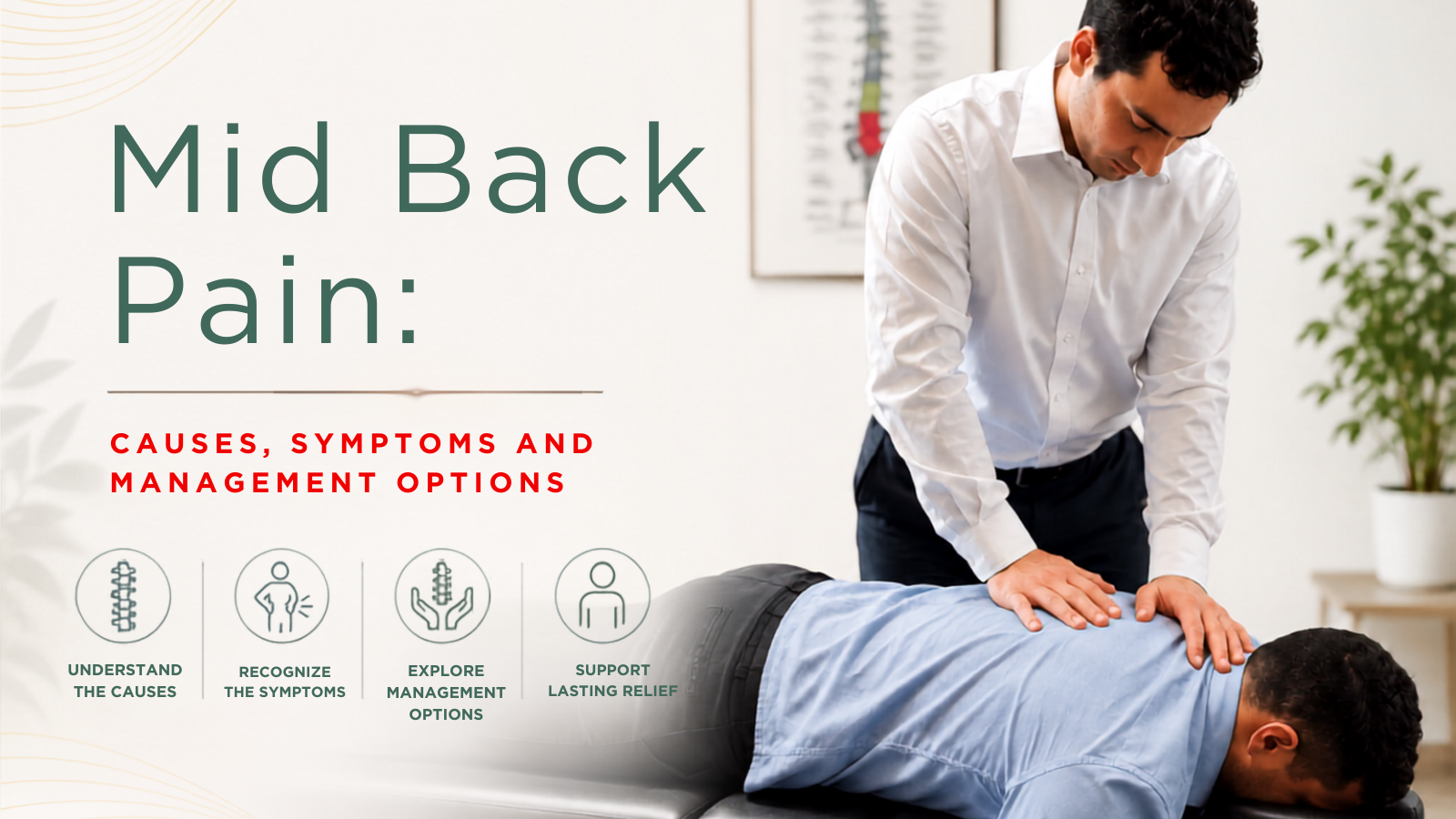
Mid Back Pain: Causes, Symptoms and Management Options

When people think about back pain, they often focus on the neck or lower back. However, discomfort in the mid back can also affect daily activities, posture and overall movement.
The mid back, also known as the thoracic spine, plays an important role in supporting the upper body, protecting vital structures and helping coordinate movement between the neck, shoulders and lower back.
While mid back pain is generally less common than neck or lower back pain, it can still impact work, exercise, sleep and quality of life. Understanding the possible causes, symptoms and management options may help people take appropriate steps towards improving comfort and mobility.
Mid back pain refers to discomfort felt in the thoracic region of the spine, typically between the base of the neck and the lower ribs.
Symptoms may be experienced:
The nature of the pain can vary from person to person.
Some people describe:
The underlying cause often influences how symptoms present.
The thoracic spine consists of twelve vertebrae located in the middle portion of the back.
Unlike the neck and lower back, the thoracic spine is connected to the rib cage, which provides additional stability.
This stability is important for protecting internal organs and supporting posture, but it also means the thoracic spine generally moves less than other spinal regions.
When mobility becomes restricted or surrounding muscles become overloaded, discomfort may develop.
There are several factors that may contribute to mid back pain.
Many people spend hours sitting at desks, driving or using digital devices.
Remaining in the same position for extended periods may contribute to:
This is one of the most common contributors to mid back discomfort in modern workplaces.
Slouched sitting and prolonged forward shoulder positioning may increase stress on muscles and joints in the thoracic spine.
Over time, these positions can contribute to stiffness and tension.
The thoracic spine needs adequate mobility to support healthy shoulder, neck and spinal movement.
When movement becomes restricted, surrounding regions may compensate.
This can increase physical demands on nearby muscles and joints.
Certain occupations and sports involve repetitive reaching, lifting or twisting movements.
Repeated loading may contribute to muscular tension and movement restrictions.
Many people hold tension through the shoulders, upper back and neck during periods of stress.
This may contribute to discomfort and muscle tightness in the mid back region.
Activities involving:
may place increased demands on the thoracic spine and surrounding muscles.
Mid back pain can present in different ways depending on the contributing factors.
Common symptoms may include:
Many people report feeling restricted when twisting or extending through the upper body.
Tension in the upper back muscles may create aching or fatigue throughout the day.
Symptoms may become more noticeable after working at a desk or driving for long periods.
Difficulty rotating or extending the upper body may indicate reduced thoracic mobility.
In some cases, stiffness around the rib joints and thoracic spine may contribute to discomfort during certain movements or deep breaths.
Management depends on the individual’s symptoms, goals and examination findings.
Appropriate movement is often important for maintaining mobility and supporting recovery.
Mobility exercises may help support movement through the mid back and surrounding structures.
Optimising workstation setup and reducing prolonged static positions may help reduce strain.
Strengthening the muscles that support posture and movement may help improve resilience.
Stress-management strategies may help reduce muscle tension in some individuals.
Sleep, activity management and recovery habits can influence musculoskeletal health.
Chiropractic care may form part of a broader management approach for people experiencing mid back pain.
Following an appropriate assessment, care may include:
The goal is often to support mobility, movement quality and physical function while addressing contributing factors identified during assessment.
Management recommendations are tailored to the individual and their presentation.
Mid back pain may be influenced by prolonged sitting, poor posture, reduced thoracic mobility, muscle tension, repetitive activities and lifestyle factors.
Postural habits may contribute to muscle tension and stiffness in the thoracic spine, particularly when combined with prolonged sitting and reduced movement.
Stress may contribute to increased muscle tension around the shoulders, neck and upper back, which can influence mid back discomfort.
Assessment may include reviewing symptom history, posture, mobility, movement patterns and functional activities to identify contributing factors.
After an appropriate assessment, chiropractic care may help support mobility, movement quality and musculoskeletal function depending on the individual’s presentation and goals.
Experiencing mid back pain, stiffness or discomfort between the shoulder blades? Book an appointment online with Wellbeing Chiropractic clinics across Melbourne, Sydney and Brisbane for a personalised assessment and care plan tailored to your movement, posture and lifestyle needs.
Author
Dr. Conrad Hor is an experienced and passionate chiropractor with strong clinical knowledge, having worked at clinics in Sydney and Melbourne. Conrad graduated from Macquarie University with a Master’s in Chiropractic and Sydney University with a Bachelor’s of Sport and Exercise Science. Conrad delivers manual chiropractic and lower-force chiropractic care for people of all ages and health backgrounds. He works closely with his patients to ensure they become active participants in their care.
Select a location to book your $49 May assessment
Select a location to book your $49 May assessment
Select a location to book your $49 May assessment
Select your Victoria clinic to book your $49 new patient visit.
$49 New Patient Assessment ● First Adjustment Included*
*Adjustment included when your chiropractor confirms care is clinically appropriate for you. If chiropractic isn’t the right fit, we’ll tell you that too.
Select your New South Wales clinic to book your $49 new patient visit.
$49 New Patient Assessment ● First Adjustment Included*
*Adjustment included when your chiropractor confirms care is clinically appropriate for you. If chiropractic isn’t the right fit, we’ll tell you that too.
Select your Queensland clinic to book your $49 new patient visit.
$49 New Patient Assessment ● First Adjustment Included*
*Adjustment included when your chiropractor confirms care is clinically appropriate for you. If chiropractic isn’t the right fit, we’ll tell you that too.