
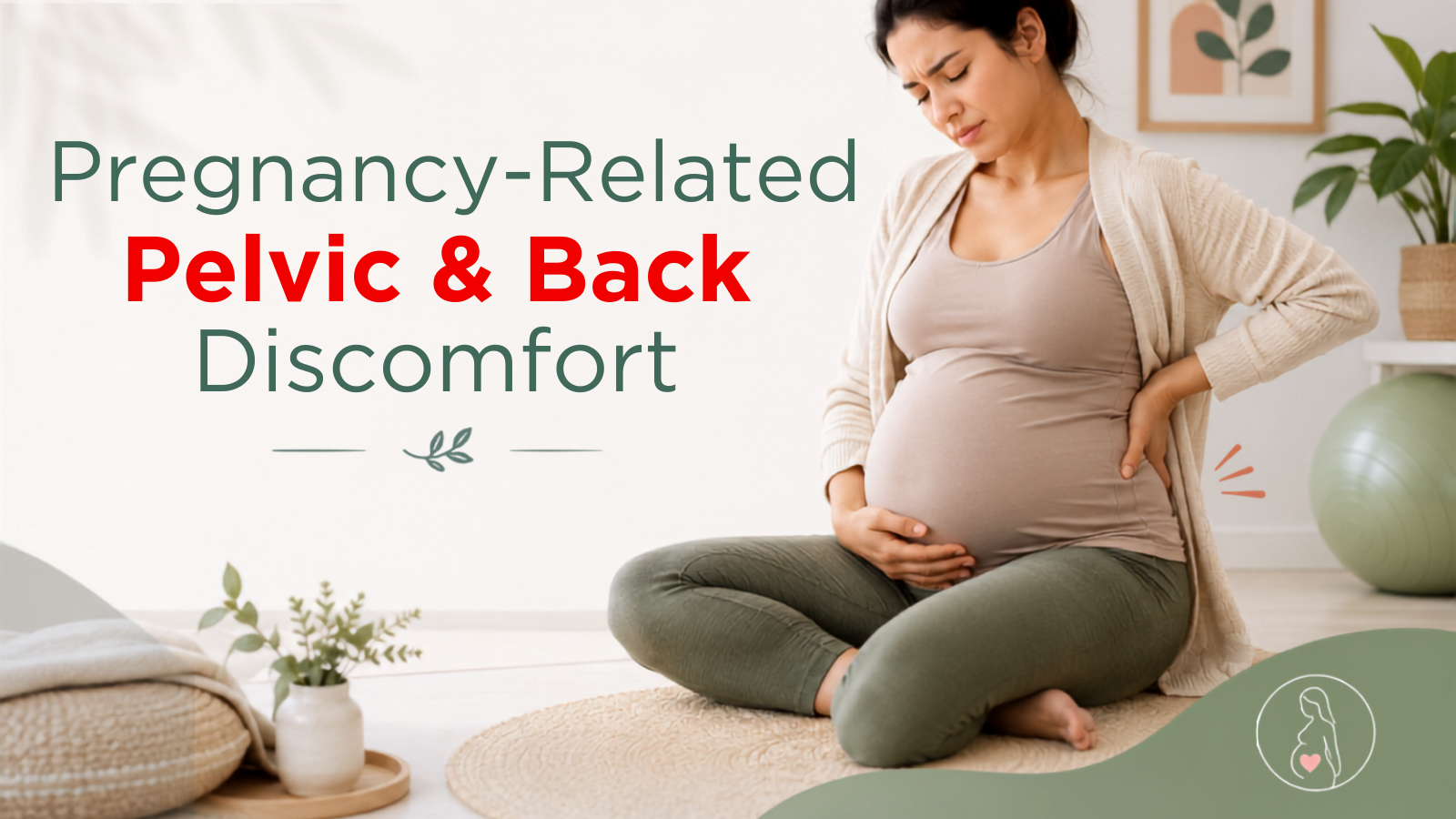
Pregnancy-Related Pelvic and Back Discomfort

Pregnancy is an exciting time, but it also places new demands on the body.
As your baby grows, your muscles, joints and ligaments work together to support changing posture, balance and movement. These natural changes are one reason why many women notice discomfort in their lower back, pelvis or hips during pregnancy.
For some, it’s a dull ache after a busy day. For others, turning over in bed, walking upstairs or standing on one leg becomes surprisingly uncomfortable.
Although pregnancy-related pelvic and back discomfort is common, understanding why it happens may help you make small changes that support greater comfort throughout your pregnancy.
No two pregnancies are the same.
Some women remain comfortable right through to delivery, while others notice discomfort early in the second trimester.
Symptoms may change from week to week as your body continues to adapt.
The intensity of discomfort doesn’t always relate to the stage of pregnancy, fitness level or previous pregnancies. Every woman’s experience is unique.
As your baby grows, your centre of gravity gradually shifts forward.
Without thinking about it, your body starts making small adjustments to help you stay balanced.
You might notice that you:
These changes are completely normal.
However, they also mean different muscles are working harder than they did before pregnancy.
Many people assume pregnancy back pain is simply caused by carrying extra weight.
While that can be part of the picture, there is much more happening.
During pregnancy, hormones help prepare your body for childbirth by allowing ligaments around the pelvis to become more flexible.
This is an important and natural process, but it can also mean your muscles need to work harder to provide stability during everyday activities.
For some women, this contributes to feelings of fatigue, stiffness or discomfort around the lower back and pelvis.
Every woman experiences pregnancy differently, but common areas include:
Some women describe the discomfort as an ache, while others notice sharp pain during certain movements.
One of the most common questions practitioners hear is:
“Why is it so painful to roll over in bed?”
Rolling over requires the pelvis, hips, abdominal muscles and lower back to work together.
During pregnancy, these movements can become more challenging because your body is adapting to new loads and changing movement patterns.
Many women also find discomfort is more noticeable after remaining in one position for several hours.
Walking is something we usually do without thinking.
During pregnancy, however, you may notice:
These changes often reflect the body’s natural adaptations rather than a specific injury.
Adjusting activity levels and taking regular breaks may help improve comfort.
Many women find that small adjustments have a noticeable impact.
For example:
Instead of standing on one leg while getting dressed, try sitting down.
When lifting objects, avoid twisting at the same time.
If you’re standing for long periods, changing positions regularly may help reduce stiffness.
Simple strategies like these can reduce unnecessary strain during daily activities.
It can be tempting to avoid movement when you’re uncomfortable.
However, unless advised otherwise by your healthcare provider, gentle movement is often beneficial during pregnancy.
Activities such as:
may help support mobility and overall wellbeing.
The most appropriate activity depends on your stage of pregnancy, medical history and individual circumstances.
Many pregnant women choose to see a chiropractor to help manage musculoskeletal discomfort during pregnancy.
Following an appropriate assessment, care may include pregnancy-specific techniques that are modified to suit each stage of pregnancy.
Depending on your needs, care may include:
The aim is to support comfortable movement and everyday function while taking into account the physical changes occurring throughout pregnancy.
Management is always tailored to the individual and their stage of pregnancy.
Pelvic discomfort is common during pregnancy as the body adapts to hormonal and physical changes. If symptoms are persistent or affecting daily activities, it’s worth discussing them with your healthcare provider.
Changes in posture, muscle demands, pelvic movement and hormonal changes may all contribute to lower back discomfort during pregnancy.
For many women, gentle walking may help maintain mobility and overall wellbeing. The most appropriate level of activity depends on your individual circumstances.
After an appropriate assessment, pregnancy-specific chiropractic care may help support mobility, movement and musculoskeletal comfort throughout pregnancy.
Seek professional advice if pain is persistent, worsening, affecting your sleep or making everyday activities difficult.
If pregnancy-related pelvic or back discomfort is affecting your daily life, book an appointment online with Wellbeing Chiropractic clinics across Melbourne, Sydney and Brisbane to help support your comfort, movement and wellbeing throughout your pregnancy.
Author
Dr Hayden Ford has a special passion for postural conditions, chronic pain and surgical prevention due to having competed at national level as an athlete and undergoing extensive rehabilitation for his our injuries.
Hayden’s history of chiropractic began over 12 years ago, his body could not handle the stress of his sport, gymnastics. Due to the physical nature of the sport, Hayden suffered 3 shoulder surgeries, 3 shoulder dislocation and a fracture. It was through discipline that Hayden was able to reach heights of a professional gymnast. Hayden reached his highest peak in gymnastics when he competed at national level, international level and in trials for the Commonwealth games.
Select a location to book your $49 May assessment
Select a location to book your $49 May assessment
Select a location to book your $49 May assessment
Select your Victoria clinic to book your $49 new patient visit.
$49 New Patient Assessment ● First Adjustment Included*
*Adjustment included when your chiropractor confirms care is clinically appropriate for you. If chiropractic isn’t the right fit, we’ll tell you that too.
Select your New South Wales clinic to book your $49 new patient visit.
$49 New Patient Assessment ● First Adjustment Included*
*Adjustment included when your chiropractor confirms care is clinically appropriate for you. If chiropractic isn’t the right fit, we’ll tell you that too.
Select your Queensland clinic to book your $49 new patient visit.
$49 New Patient Assessment ● First Adjustment Included*
*Adjustment included when your chiropractor confirms care is clinically appropriate for you. If chiropractic isn’t the right fit, we’ll tell you that too.