
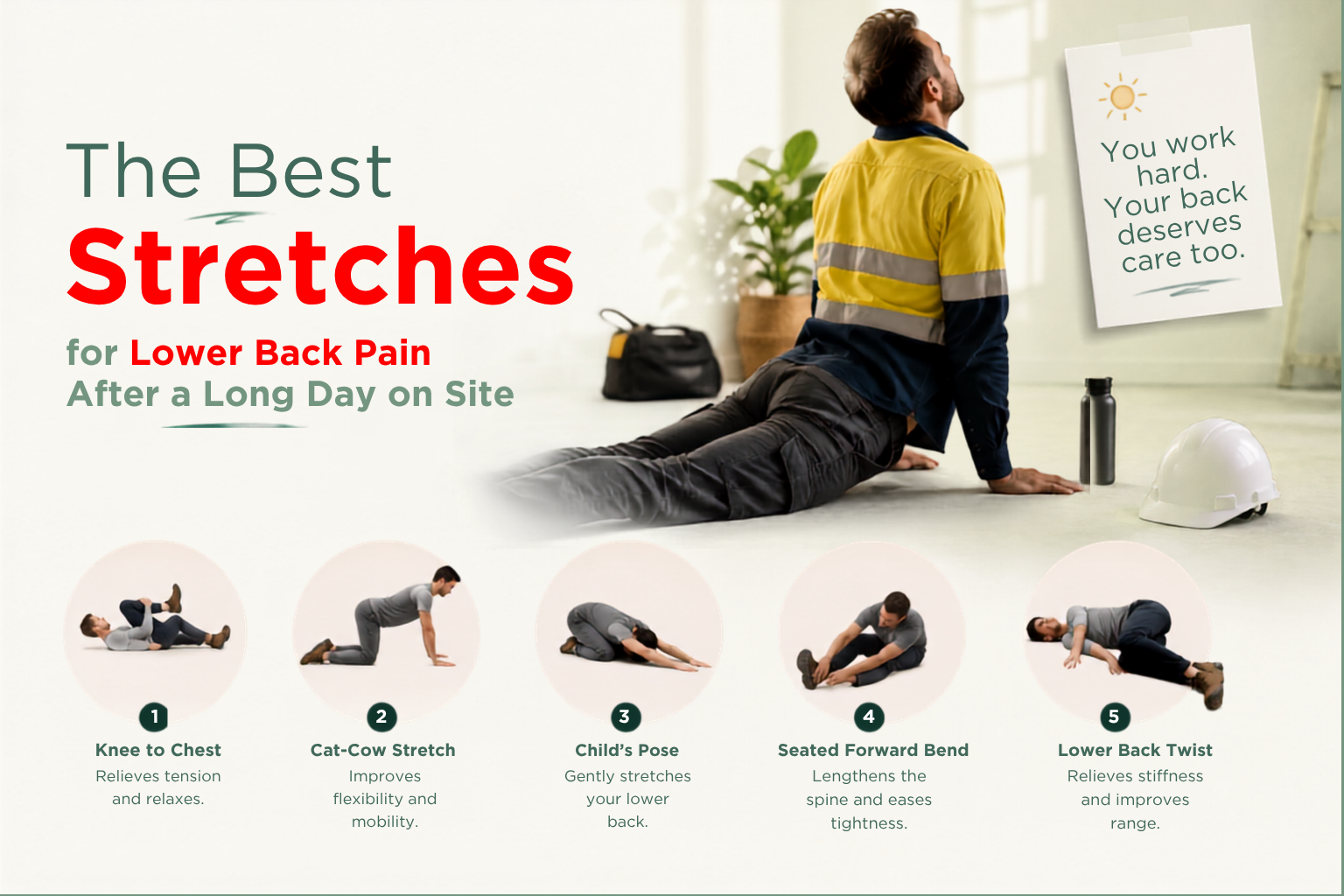
The Best Stretches for Lower Back Pain After a Long Day on Site

Whether you’re a builder, electrician, plumber, landscaper, carpenter or another tradesperson, your body works hard every day.
Climbing ladders, lifting materials, carrying tools, bending repeatedly and working in awkward positions all place physical demands on your muscles and joints.
It’s no surprise that many tradies finish the day with a stiff or aching lower back.
While some muscle fatigue is a normal response to physical work, persistent stiffness shouldn’t simply become something you expect every day. Incorporating a few simple stretches into your routine may help improve mobility, reduce feelings of tightness and support your recovery after work.
When people think about manual work, they often focus on heavy lifting.
In reality, it’s often the repetition that has the biggest impact.
Throughout the day you might:
Even if each movement feels manageable, the combined workload can leave your muscles feeling tired and tight by the time you head home.
Many people only stretch when they already feel sore.
Think of stretching instead as a way to help your body transition from a physically demanding workday into recovery.
Stretching won’t prevent every episode of back pain, nor does it replace strength, good lifting techniques or adequate recovery.
However, when performed regularly and comfortably, it may help improve flexibility, reduce muscle tension and support everyday movement.
This gentle stretch may help reduce tension through the lower back and hips.
Move within a comfortable range and avoid forcing the stretch.
This stretch is commonly used to help lengthen muscles through the back and hips.
How to do it:
If kneeling is uncomfortable, modify the position or try another stretch.
After a day spent lifting, climbing or driving, the muscles at the front of the hips can become tight.
How to do it:
Tight hips and gluteal muscles may contribute to lower back stiffness for some people.
How to do it:
Rather than being a static stretch, this gentle movement encourages mobility through the spine.
How to do it:
Avoid pushing into painful movements.
While stretching can feel great after a physically demanding day, recovery involves much more.
Other habits that may support your body include:
Looking after your body outside work is just as important as what you do on site.
Many tradies ignore minor stiffness because it’s considered “part of the job.”
However, recurring discomfort may be an early sign that your body is struggling to cope with repeated physical demands.
Pay attention if you notice:
Addressing these signs early may help prevent more persistent problems.
If lower back stiffness or pain continues despite stretching and self-care, a professional assessment may help identify contributing factors.
Following an appropriate assessment, chiropractic care may include:
Rather than simply treating the painful area, your chiropractor may assess how your hips, spine and surrounding muscles work together during everyday movement.
Arrange an assessment if:
Early assessment may help identify the underlying factors contributing to recurring back pain.
Gentle stretches such as knee-to-chest, child’s pose, hip flexor, figure four, cat-cow and hamstring stretches may help reduce muscle tightness after a physically demanding day.
Gentle stretching may be helpful for some people, provided it doesn’t increase pain. If you’re unsure which stretches are appropriate, seek professional advice.
Repeated lifting, bending, carrying and prolonged physical activity may contribute to muscle fatigue and stiffness, particularly if recovery is limited.
Stretching may support flexibility and recovery, but it’s only one part of maintaining back health. Strength, movement habits and recovery also play important roles.
Following an appropriate assessment, chiropractic care may help improve spinal mobility, movement quality and musculoskeletal function through an individualised care plan.
If lower back pain or stiffness is becoming a regular part of your working week, don’t ignore it. Book an appointment online with Wellbeing Chiropractic. With clinics across Melbourne, Sydney and Brisbane, our experienced chiropractors can assess your movement, identify contributing factors and create a personalised plan to help you recover well and keep doing the work you enjoy.
Author
Dr Josh Tyquin is an experienced & sought-after Chiropractor who is the principal Chiropractor at Wellbeing Chiropractic Hawthorn. He was first introduced to Chiropractic during childhood after suffering a sporting injury. It was after this positive personal experience Josh decided to pursue a career in Chiropractic.
Select a location to book your $49 May assessment
Select a location to book your $49 May assessment
Select a location to book your $49 May assessment
Select your Victoria clinic to book your $49 new patient visit.
$49 New Patient Assessment ● First Adjustment Included*
*Adjustment included when your chiropractor confirms care is clinically appropriate for you. If chiropractic isn’t the right fit, we’ll tell you that too.
Select your New South Wales clinic to book your $49 new patient visit.
$49 New Patient Assessment ● First Adjustment Included*
*Adjustment included when your chiropractor confirms care is clinically appropriate for you. If chiropractic isn’t the right fit, we’ll tell you that too.
Select your Queensland clinic to book your $49 new patient visit.
$49 New Patient Assessment ● First Adjustment Included*
*Adjustment included when your chiropractor confirms care is clinically appropriate for you. If chiropractic isn’t the right fit, we’ll tell you that too.