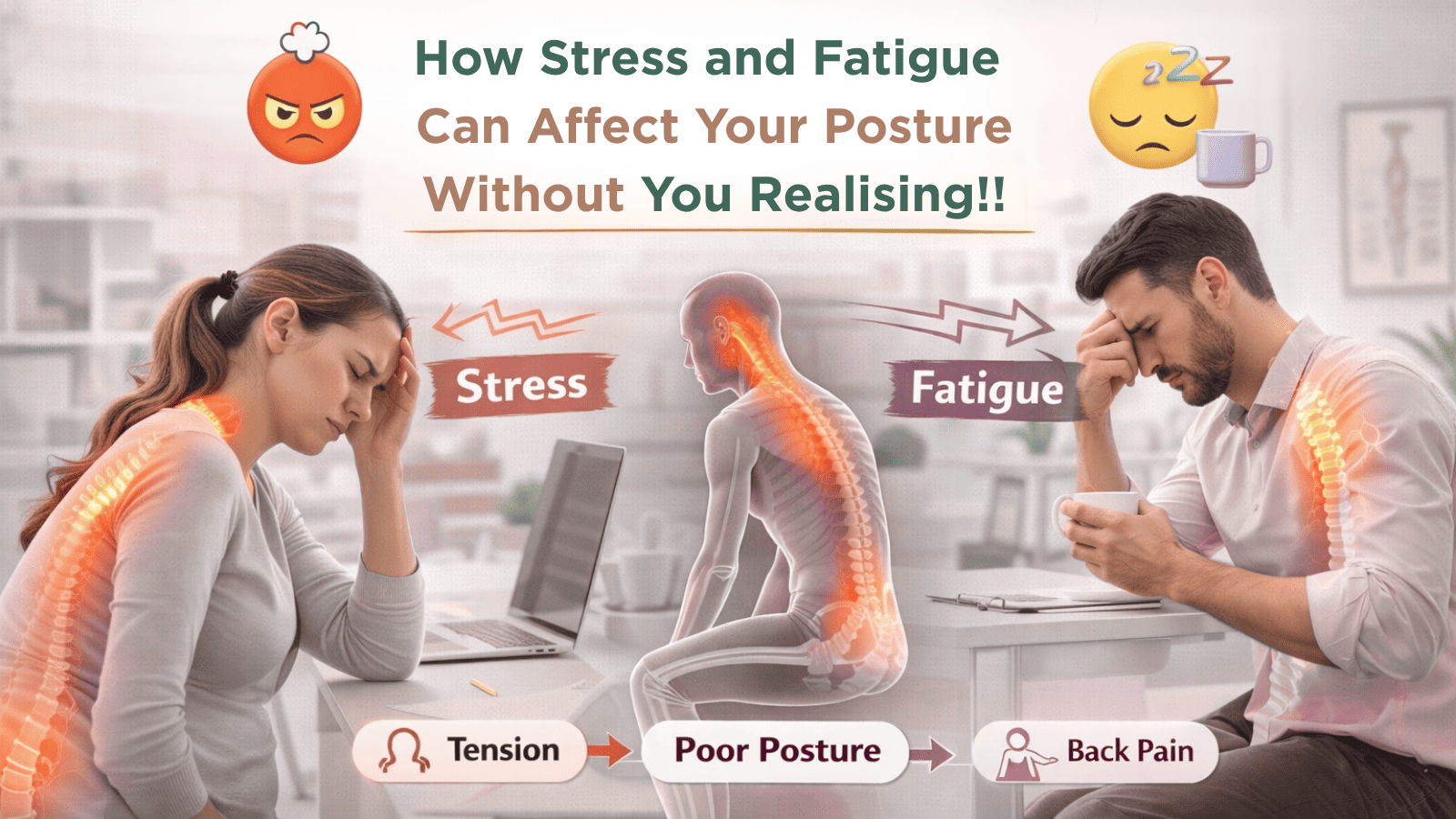
Most people associate poor posture with long hours at a desk or too much screen time. But one of the most overlooked contributors is stress and fatigue.
Stress and fatigue posture changes can happen gradually and often without you noticing. Over time, these subtle shifts can place extra strain on your muscles and joints, particularly around the neck, shoulders and lower back.
Understanding this connection can help you recognise early signs and take steps to support your body.
When you feel stressed, your body naturally shifts into a protective state. Muscles tighten, breathing may become shallow, and your body subtly changes position.
These changes are part of your body’s response to perceived pressure. While helpful in short bursts, staying in this state for long periods can lead to ongoing tension.
Why it matters?
When muscles remain tight, they can:
- Limit normal movement
- Increase strain on joints
- Contribute to discomfort or stiffness
Over time, this may affect how you sit, stand and move throughout the day.
How Fatigue Impacts Your Posture:
Fatigue affects posture in a different but equally important way.
When your body is tired, your muscles have less capacity to support your spine effectively. This can lead to a gradual “collapse” in posture.
You might notice:
- Slouching when sitting
- Leaning more heavily on one side
- Difficulty maintaining an upright position
- Reduced core engagement
Unlike stress, which often creates tension, fatigue tends to reduce muscular support.
The Combined Effect: Stress and Fatigue Together:
In real life, stress and fatigue often occur at the same time. This combination can be particularly challenging for posture.
For example:
- Stress tightens certain muscles
- Fatigue weakens others
- The body compensates by adopting less efficient positions
This can create an imbalance where some areas are overworking while others are under-supporting the body.
A common pattern is:
Over time, this may contribute to persistent discomfort, especially for people working at desks or using devices frequently.
Signs Your Posture May Be Affected
Because these changes happen gradually, they can be easy to overlook.
Some early signs include:
- Frequent neck or shoulder tension
- Feeling stiff after sitting
- Headaches linked to muscle tightness
- Needing to “stretch out” often
- Difficulty sitting upright for long periods
Recognising these signs early can help you take proactive steps.
Simple Ways to Support Better Posture:
While stress and fatigue are part of everyday life, there are practical ways to support your posture.
- Build awareness:
Check in with your posture throughout the day. Small adjustments can make a meaningful difference over time.
- Take regular breaks:
Short movement breaks can help reset muscle tension and reduce fatigue, especially during desk work.
- Manage stress where possible:
Gentle strategies such as breathing exercises, walking, or stretching may help reduce physical tension.
- Prioritise rest and recovery:
Adequate sleep and recovery support your muscles’ ability to function and stabilise your body.
- Consider professional assessment:
If posture-related discomfort persists, a chiropractor can assess your movement, posture habits and muscle balance.
Chiropractic care focuses on how your spine, joints and muscles work together.
After an appropriate assessment, care may include:
- Hands-on techniques to support joint movement
- Advice on posture and ergonomics
- Exercises tailored to your needs
- Strategies to manage muscle tension
Because every person is different, care is always based on your individual history, symptoms and examination findings.
Stress and fatigue don’t just affect how you feel mentally. They can also influence how your body holds itself throughout the day.
Small, repeated posture changes can add up over time. The earlier you recognise them, the easier it is to support better movement and comfort.
FAQ Section
Can stress really affect posture?
Yes. Stress can lead to increased muscle tension, particularly in the neck and shoulders, which may influence posture over time.
Does being tired make posture worse?
Fatigue can reduce muscle support, making it harder to maintain an upright posture and increasing the likelihood of slouching.
What are the most common posture changes from stress?
Common changes include rounded shoulders, forward head posture and upper back tightness.
When should I see a chiropractor for posture issues?
If you are experiencing ongoing discomfort, stiffness or posture-related concerns, it may be helpful to seek an assessment.
If you’ve been noticing tension, stiffness or changes in your posture, a personalised assessment may help you understand what’s going on.
Book an appointment with Wellbeing Chiropractic to explore a care approach tailored to your needs at our nearest clinic in Melbourne, Sydney or Brisbane to get started.