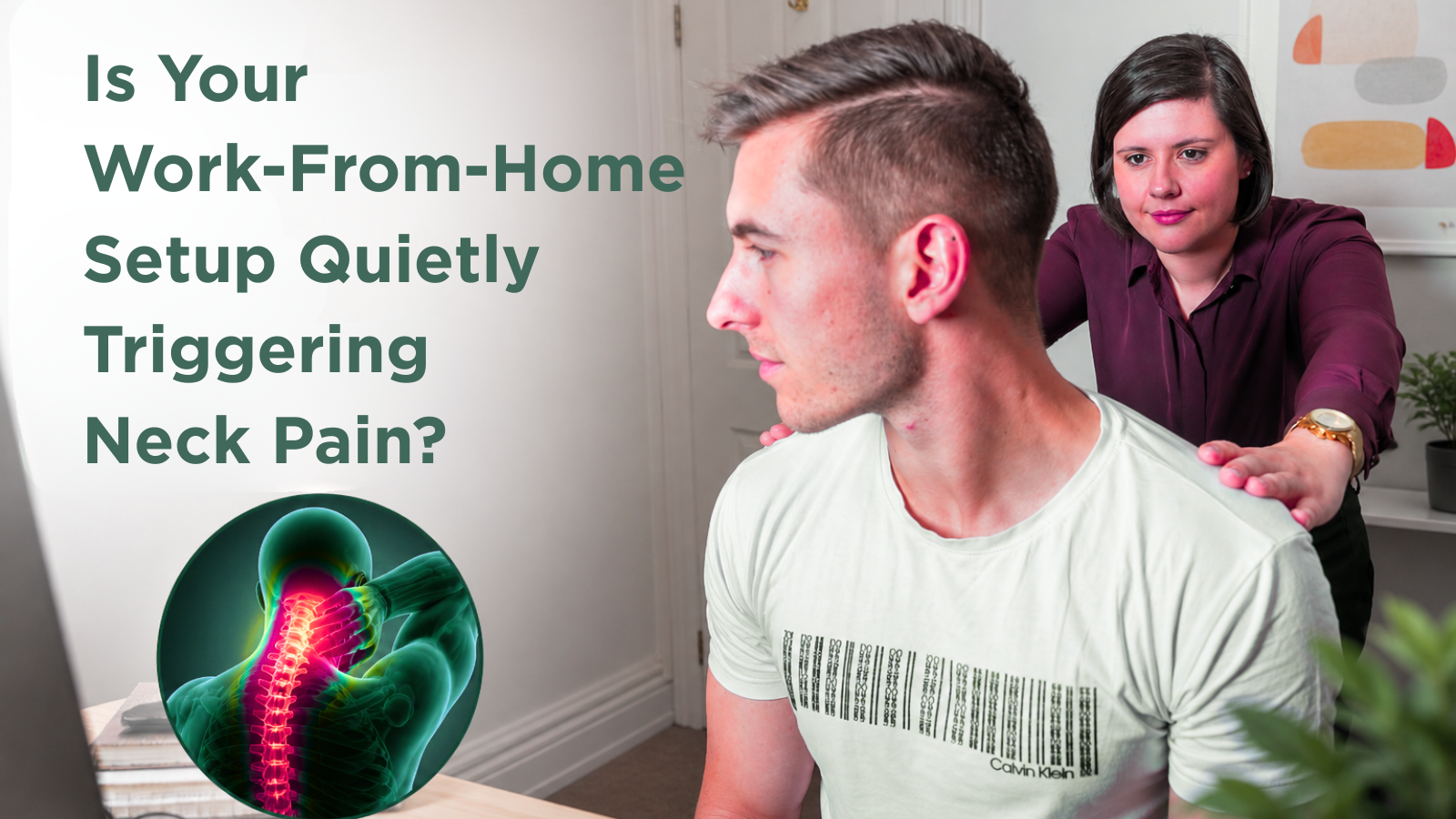
Working from home has become a normal part of life for many Australians. While it offers flexibility, it has also introduced a new set of physical challenges. One of the most common concerns people notice is increasing neck discomfort.
Work from home neck pain is often linked to how your workspace is set up. Unlike traditional office environments, many home setups are not designed with long-term posture in mind. Over time, small habits can quietly place strain on the neck and upper back.
The good news is that once you understand the causes, there are practical ways to reduce the load on your spine and support your comfort throughout the day.
Why working from home can lead to neck pain?
When you work at a desk, your neck and upper spine rely on balanced muscle support and proper alignment. At home, this balance is often disrupted.
Common contributing factors include:
- working from a laptop without external support
- sitting on couches or beds
- screens positioned too low
- lack of proper chair support
- longer, uninterrupted sitting periods
These factors may lead to sustained forward head posture, where the head drifts in front of the shoulders. This position can increase the load on the neck over time.
What is forward head posture?
Forward head posture occurs when your head moves ahead of your body’s centre of gravity. Even a small shift can increase the demand on neck muscles.
Over time, this may contribute to:
It is not about sitting perfectly all day. Rather, it is about avoiding long periods in positions that place unnecessary strain on the neck.
Signs your home setup may be contributing:
You may notice patterns that suggest your workspace is playing a role:
- neck stiffness at the end of the day
- discomfort that improves when you move around
- frequent need to stretch or crack your neck
- headaches that develop after screen time
- tightness between the shoulder blades
These signs can build gradually, which is why the connection to your setup is not always obvious at first.
Simple changes that may help reduce work from home neck pain:
Small adjustments can make a meaningful difference, especially when applied consistently.
Raise your screen to eye level:
Your screen should be positioned so your eyes look straight ahead, not down. This helps reduce forward head posture.
If you use a laptop:
- consider a laptop stand or a stack of books
use an external keyboard and mouse
Keep your keyboard and mouse close:
Reaching forward for long periods can pull your shoulders and head forward.
Aim to:
- keep your elbows close to your body
- position your keyboard so your forearms are roughly parallel to the floor
Be mindful of laptop habits outside work:
Neck strain is not limited to working hours. Time spent on phones or laptops after work can add to the total load.
Try to:
- bring your device up to eye level
- avoid long periods of looking down
A better setup can support long-term comfort:
Working from home is likely to remain part of modern life. While neck pain can develop gradually, it is often influenced by modifiable factors.
A well-considered setup, regular movement and awareness of posture can all support better spinal health over time.
The key takeaway is simple: your environment matters. Small changes today may help reduce discomfort and support how your neck feels in the long run.
FAQ
Can working from home cause neck pain?
It may contribute, particularly if your setup encourages poor posture or long periods of sitting without breaks.
Is a laptop bad for neck posture?
Using a laptop without adjusting screen height can encourage looking down, which may place extra strain on the neck.
How often should I take breaks?
Many people benefit from standing or moving every 30 to 60 minutes, though this can vary depending on your work.
Do I need an ergonomic chair?
A supportive chair can help, but overall setup and regular movement are just as important.
If your
neck discomfort is becoming a regular part of your workday, it may help to have your
posture and movement assessed.
Wellbeing Chiropractic offers care across Melbourne, Sydney and Brisbane. You can book an appointment to better understand your symptoms and support your recovery.