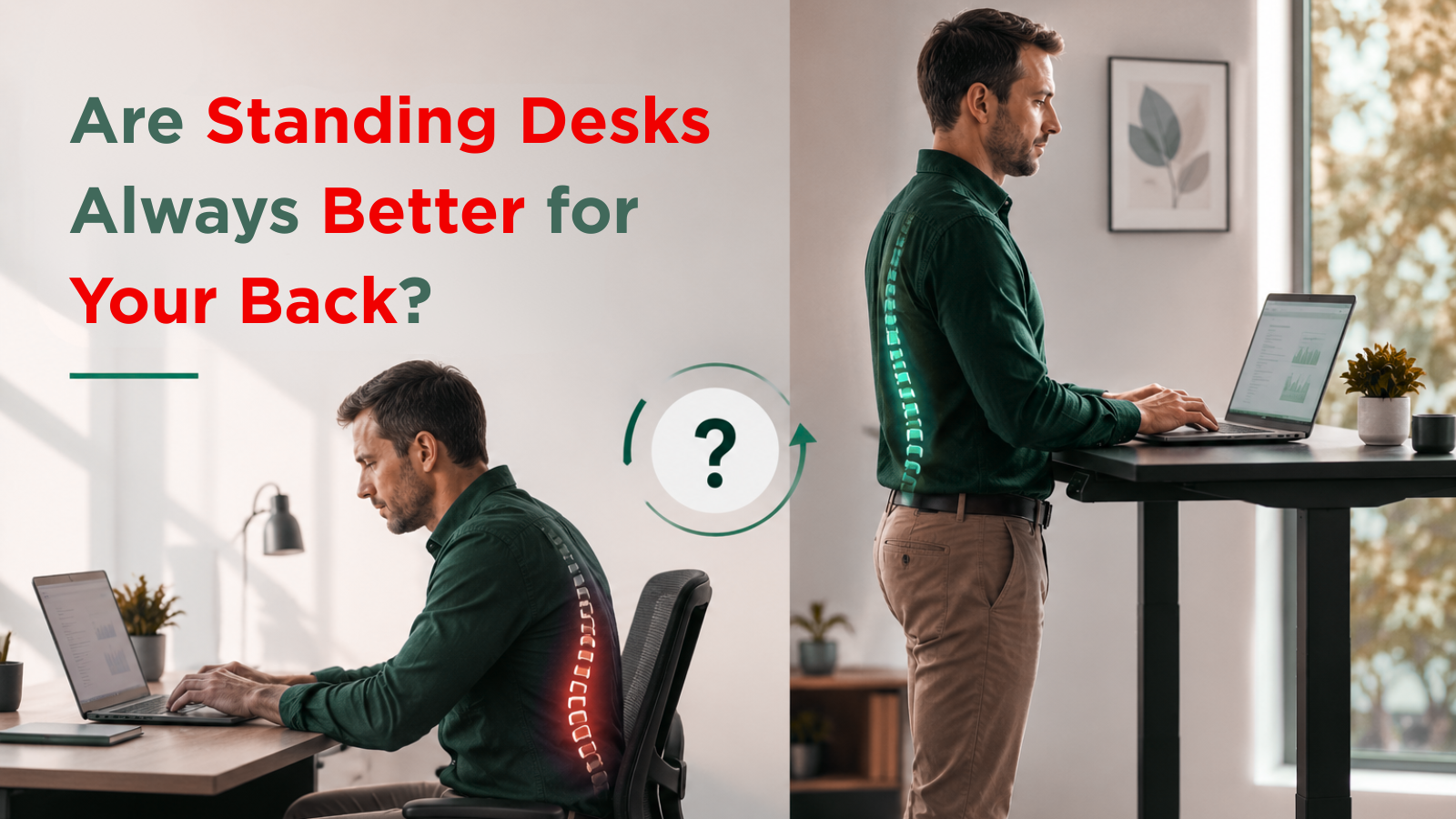
Standing desks have become increasingly popular in workplaces across Australia, particularly among office workers looking to reduce back pain, improve posture and move more throughout the day.
Many people switch to a standing desk expecting it to solve ongoing discomfort associated with prolonged sitting. While standing desks may offer benefits for some individuals, they are not always a complete solution for back pain or posture-related issues.
The reality is that both prolonged sitting and prolonged standing can place stress on the body. Often, the key factor is not whether you sit or stand, but how much movement variety you have throughout the day.
Understanding the role of standing desks may help you create healthier work habits and support better spinal comfort over time.
Why Prolonged Sitting Can Be Problematic:
Many office workers spend long hours seated at desks with limited movement.
Remaining in one position for extended periods may contribute to:
Poor workstation setup and reduced physical activity can sometimes worsen these issues.
This has led many workplaces to introduce standing desks as a way to encourage movement and reduce sedentary behaviour.
What Are the Potential Benefits of Standing Desks?
Standing desks may help some people reduce the amount of time spent sitting throughout the day.
Potential benefits may include:
Some people also report feeling more alert and less stiff when alternating between sitting and standing.
However, standing all day is not necessarily ideal either.
Can Standing Too Much Also Cause Problems?
Yes. Prolonged standing can also place stress on the body, particularly if posture and movement habits are poor.
Standing for long periods may contribute to:
Just like sitting, remaining static in one position for too long may increase muscle fatigue and stiffness.
Are Standing Desks Helpful for Back Pain?
For some individuals, standing desks may help reduce discomfort associated with prolonged sitting. Others may notice little difference or even increased discomfort if the setup is poor or standing time becomes excessive.
Back pain is complex and may involve factors such as:
- Physical workload
- Stress
- Activity levels
- Sleep quality
- Previous injuries
- Mobility restrictions
- Muscle conditioning
Because of this, standing desks are not a guaranteed solution for everyone.
Finding a Sustainable Approach to Desk Work:
Standing desks can be a useful tool for some people, but they are not a universal fix for back pain.
The most important factor is often maintaining regular movement throughout the day rather than staying in any one position for too long.
Creating a balanced workstation setup, staying physically active and listening to your body may help support long-term comfort during desk work.
Small habits, repeated consistently, can often make a meaningful difference over time.
FAQ Section
Are standing desks better for back pain?
Standing desks may help some people reduce discomfort associated with prolonged sitting, but they are not a guaranteed solution for everyone.
Can standing too long cause back pain?
Yes. Prolonged standing may contribute to lower back tension, leg fatigue and muscle stiffness in some individuals.
How often should I switch between sitting and standing?
Many people benefit from alternating positions every 30 to 60 minutes, depending on comfort and work demands.
What is the best posture for a standing desk?
A comfortable and relaxed posture with the screen at eye level and shoulders relaxed is generally recommended.
Can chiropractic care help with desk-related discomfort?
Chiropractic care may help support mobility and musculoskeletal function depending on the individual and their presentation.
If you are experiencing ongoing back pain, neck tension or posture-related discomfort during desk work, the team at Wellbeing Chiropractic can provide an individual assessment tailored to your work environment and lifestyle.
With clinics across Melbourne, Sydney and Brisbane, our chiropractors work with office workers and professionals to better understand posture habits, spinal movement and workstation factors that may be contributing to discomfort. Appropriate care may include hands-on treatment, ergonomic advice and mobility support based on your individual needs.