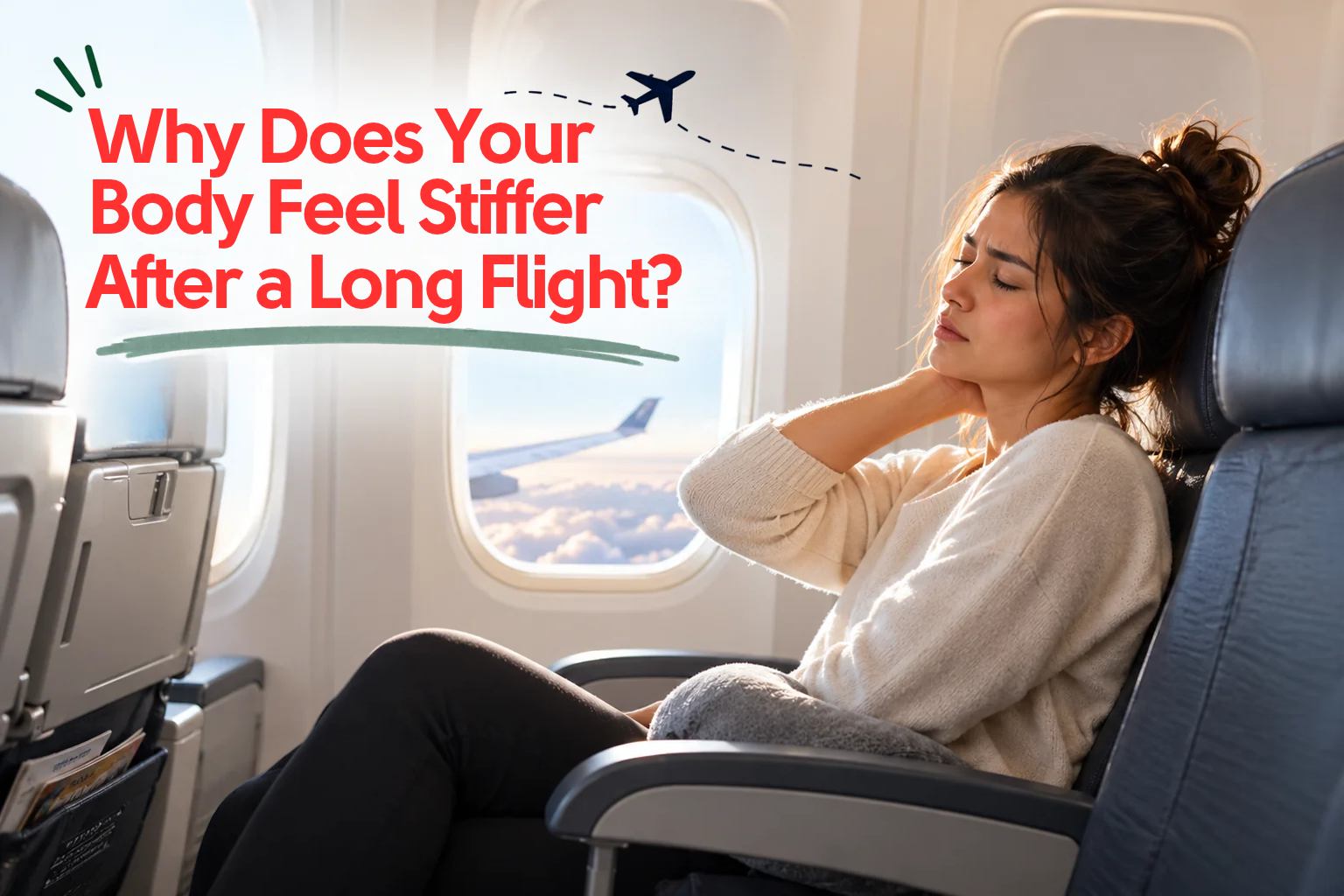
Why Does Your Body Feel Stiffer After a Long Flight?
You finally arrive at your destination, collect your luggage and stand up after several hours in the same aeroplane seat.
But instead of feeling ready to explore, your lower back feels tight, your hips are stiff and your neck seems reluctant to turn.
Sound familiar?
Body stiffness after a long flight is commonly associated with prolonged sitting, limited movement and the physical demands of travelling. Staying in one position for hours can make your muscles and joints feel uncomfortable, particularly if you already experience back, neck or hip problems.
The good news is that post-flight stiffness is often temporary. Understanding why it happens can help you make long journeys more comfortable and know when symptoms deserve further attention.
What happens to your body when you sit on a plane for hours?
Air travel creates an unusual environment for your body.
You are sitting in a relatively confined space, often with limited legroom and few opportunities to change position. Even if you are normally active throughout the day, a long-haul flight can involve several consecutive hours of restricted movement.
Your body is not necessarily designed to remain in one position for that long.
During a flight, you may experience:
reduced opportunities to stand and walk
prolonged hip and knee bending
limited space to stretch or change posture
muscle fatigue from maintaining relatively fixed positions
disrupted sleep and changes to your usual routine
None of these factors automatically means you have injured yourself.
However, together they can help explain why you feel noticeably different when you finally get off the plane.
Why does your back hurt after a long flight?
Back discomfort after flying is particularly common among people who already have a history of lower back symptoms.
One contributing factor may be the length of time spent sitting.
When you remain seated, your spine and surrounding muscles experience sustained loading. The amount and distribution of that load depend on your sitting position, seat design and individual movement preferences.
The journey may also involve several stages:
Sitting at the airport before boarding.
Remaining seated during the flight.
Sitting again while waiting for luggage or transport.
Spending another hour or more in a car or taxi.
By the time you reach your accommodation, you may have spent a large part of the day sitting.
It is therefore not always the flight itself that explains your discomfort. The total amount of sitting across the entire travel day can matter.
Why does stiffness sometimes feel worse the day after flying?
You might expect to feel stiff immediately after landing, but sometimes the discomfort becomes more noticeable the following morning.
There are several possible reasons.
You may have gone straight from the airport to a hotel, spent the evening sitting down and then slept in an unfamiliar bed.
Your usual movement and sleep routines may also have been disrupted.
By the next morning, you have experienced an extended period of relatively limited movement.
This does not necessarily mean something serious has happened.
However, if symptoms are persistent, worsening or significantly affecting your ability to move, they should be assessed rather than automatically attributed to travel.
How can you reduce stiffness during a long flight?
You cannot always avoid prolonged sitting when travelling, but you can make some practical adjustments.
Move when it is safe and practical:
When the seatbelt sign is off and conditions allow, get up and walk along the aisle periodically.
Even a short walk gives your body an opportunity to change position.
If you cannot stand, you can still move your ankles, change your leg position and gently move your shoulders while seated.
For people at increased risk of DVT, individual travel advice may be particularly important. Some travellers may need medical advice about compression stockings or other preventive measures.
Avoid staying in one position for the entire journey:
You do not need to maintain one perfect sitting posture.
Try changing your position occasionally rather than remaining in the same position for several hours.
You might adjust your back support, reposition your feet or change how you rest your arms.
Small adjustments can make a long journey feel more manageable.
Support your lower back if needed:
If you regularly experience lower back discomfort when travelling, you may find a small lumbar cushion or rolled-up jumper comfortable.
The aim is to provide support that suits your body, not force your spine into a rigid position.
When should you be concerned about pain after flying?
Most mild post-flight stiffness should gradually improve as you return to normal movement.
However, not every symptom after flying should be dismissed as a result of sitting.
Seek appropriate medical assessment if you experience:
persistent or worsening back or neck pain
new numbness or tingling
significant weakness
severe restriction in movement
pain following an injury while travelling
unexplained swelling or pain in one leg
As mentioned earlier, one-sided calf or thigh swelling, tenderness, warmth or redness after a long flight can indicate DVT and requires prompt medical assessment.
Seek emergency medical attention for sudden breathlessness, chest pain, coughing blood or fainting.
Can a chiropractor help with stiffness after a long flight?
If you regularly experience musculoskeletal stiffness or discomfort after travelling, a chiropractic assessment may help explore possible contributing factors.
Depending on your symptoms, an assessment may consider:
your history of back or neck discomfort
spinal and joint movement
muscle function
your usual sitting and travel habits
previous injuries
activities that aggravate or relieve your symptoms
Recommendations will depend on your individual presentation.
Some people may benefit from movement advice, exercise recommendations or other conservative management options. Chiropractic treatment is not appropriate for every cause of post-flight discomfort, particularly when symptoms suggest a circulation problem or another medical condition requiring investigation.
FAQ
Is it normal to feel stiff after a long flight?
Yes, temporary stiffness is common after prolonged sitting. Your hips, lower back, neck and shoulders may feel uncomfortable after spending several hours in a relatively fixed position.
Why does my lower back hurt after flying?
Extended sitting can contribute to lower back discomfort, particularly if you already have back pain. Limited movement, seat positioning and additional sitting before and after the flight may all contribute.
How long does stiffness after a flight last?
Mild travel-related stiffness may improve over several hours or a day or two as you return to normal movement. Persistent, worsening or unusual symptoms should be assessed.
Should I stretch after a long flight?
Gentle, comfortable movement may help you feel less stiff. Avoid aggressive stretching or forcing movements, particularly if you experience pain, numbness or unusual symptoms.
Can flying make sciatica worse?
Prolonged sitting during a flight may aggravate sciatic symptoms in some people, particularly when sitting already increases their discomfort. Regular position changes and appropriate movement breaks may help, but persistent or worsening symptoms should be assessed.
Can a long flight cause a blood clot?
Yes. Prolonged immobility during air travel can increase the risk of DVT, particularly in people with additional risk factors. New pain or swelling in one leg after flying requires prompt medical assessment.
If you regularly experience neck, back or joint discomfort after travelling, an individual assessment may help you understand what is contributing to your symptoms. Wellbeing Chiropractic has clinics across Melbourne, Sydney and Brisbane. You can book an appointment to discuss your concerns and explore appropriate options based on your health history and examination findings.

Author
Dr. Raj Sandhu
I’m Dr Rajan Sandhu, an AHPRA registered chiropractor at our Tarneit and Truganina clinics, consulting in English or Punjabi. I know your side of this chair: a long stretch of debilitating back pain and the painkillers that came with it are what led me into the profession, through training at the AECC in the United Kingdom and years at Europe’s largest chiropractic clinic, where the caseload sharpens you fast. Diversified care, sports rehabilitation and injury management became my staples there and remain them here. Your first visit starts with the full story and a thorough examination, and you will walk out knowing what I found and the plan for it.