
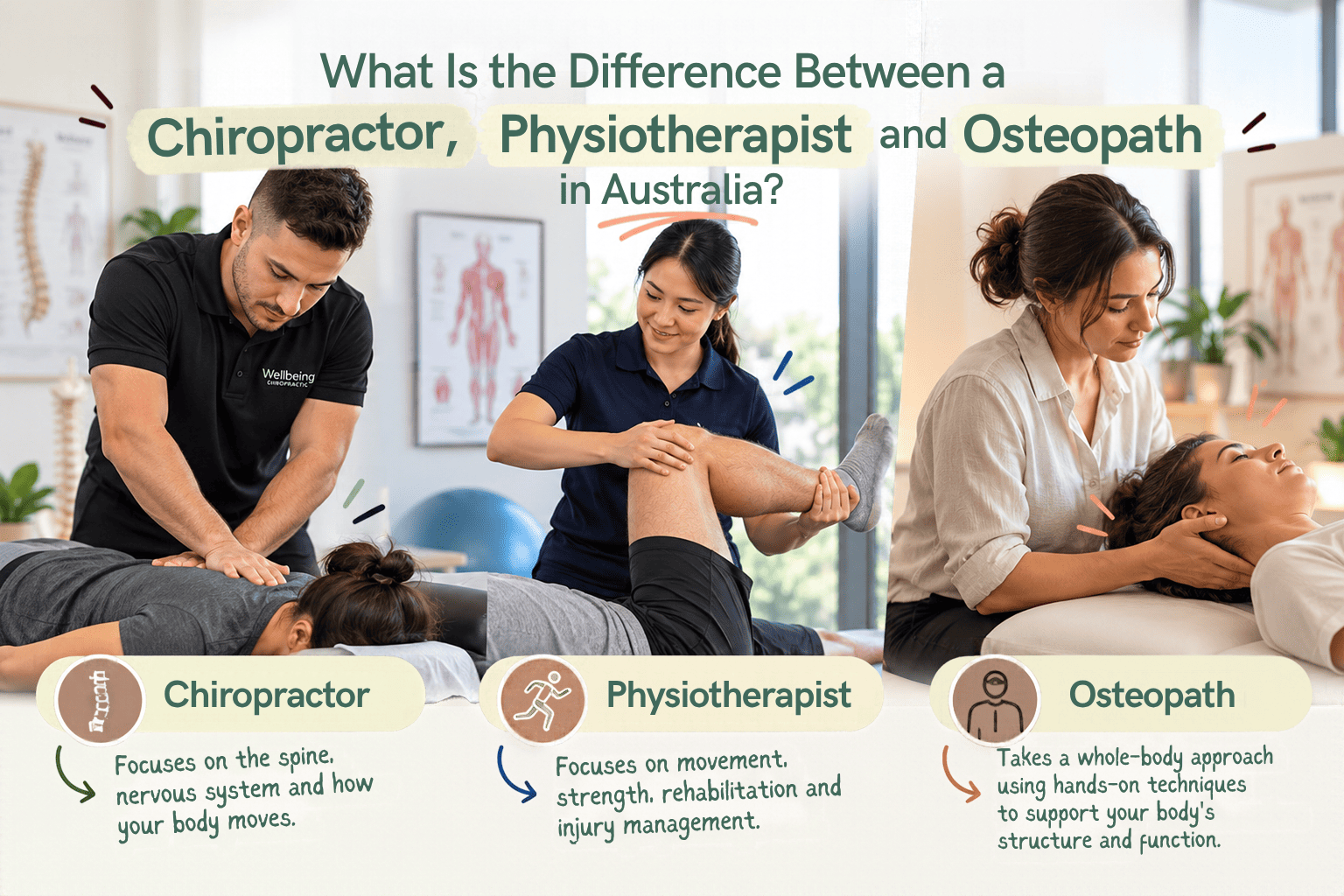
What Is the Difference Between a Chiropractor, Physiotherapist and Osteopath in Australia?
You’ve developed back pain, your shoulder has been bothering you for weeks, or you’ve picked up an injury that is making exercise difficult.
You decide to seek professional help, but then comes the question: should you book a chiropractor, physiotherapist or osteopath?
In Australia, all three are registered health professions that can assess and manage certain musculoskeletal conditions. Their approaches can overlap, particularly when it comes to back pain, neck pain, joint discomfort and movement difficulties. However, their training pathways, areas of focus and individual treatment methods can differ.
The main difference between a chiropractor, physiotherapist and osteopath is their professional training and approach to assessment and care, rather than a strict division of the conditions they treat.
The most appropriate practitioner depends on your symptoms, health needs, treatment preferences and the experience of the individual clinician.
What is the difference between a chiropractor, physiotherapist and osteopath?
Here is a quick comparison to help you understand the three professions.
| Profession | General focus | Approaches that may be used |
|---|---|---|
| Chiropractor | Musculoskeletal conditions, including problems affecting the spine, joints and surrounding tissues | Manual therapy, joint mobilisation or manipulation, exercise advice and movement education |
| Physiotherapist | Movement, physical function, rehabilitation and recovery across a broad range of conditions | Exercise-based rehabilitation, strength and mobility work, manual therapy and functional training |
| Osteopath | Musculoskeletal pain, movement and physical function, often considering how different parts of the body interact | Hands-on treatment, massage, stretching, joint techniques, exercise and activity advice |
These are broad descriptions, not rigid boundaries. All three professions can use hands-on treatment and exercise advice, and the specific services offered depend on the practitioner’s training, experience and scope of practice.
For more information, see the Australian Government’s Healthdirect guide to chiropractors, physiotherapy and osteopathy.
What does a chiropractor do?
Chiropractors assess and manage problems involving the musculoskeletal system, including the spine, joints, muscles and surrounding tissues.
People may consult a chiropractor for concerns such as lower back pain, neck discomfort, certain types of headaches and movement-related symptoms.
What happens during a chiropractic appointment?
An initial appointment will generally involve discussing your symptoms, medical history, previous injuries, daily activities and treatment goals.
Depending on your presentation, the chiropractor may assess your posture, movement, joint function, strength and other relevant physical findings.
If chiropractic care is appropriate, recommendations may include:
Manual therapy or joint mobilisation.
Spinal or other joint manipulation, where suitable.
Exercises and movement advice.
Guidance on modifying activities that aggravate symptoms.
Strategies to support everyday function and physical activity.
Not every patient requires the same treatment. The approach should be based on your history, symptoms, examination findings and preferences.
Chiropractic care is not suitable for every condition. A chiropractor should recognise when further medical investigation or referral to another healthcare professional is needed.
What does a physiotherapist do?
Physiotherapists focus on movement, physical function, rehabilitation and helping people manage a broad range of health conditions.
They work with people recovering from injuries, managing musculoskeletal pain, rebuilding strength after surgery and addressing certain neurological, respiratory and other health-related difficulties.
What happens during a physiotherapy appointment?
A physiotherapist will usually ask about your symptoms, daily activities, medical history and goals.
Your assessment may examine your strength, flexibility, balance, movement control and ability to perform particular tasks.
Depending on your needs, treatment may involve:
Individualised exercise programmes.
Strength and mobility training.
Rehabilitation after an injury or surgery.
Balance and coordination exercises.
Manual therapy.
Advice about returning to work, sport or everyday activities.
Physiotherapy can be particularly relevant when your goals involve rebuilding physical capacity, improving function or progressing through a structured rehabilitation programme.
However, physiotherapists also use hands-on treatment when appropriate. Their work is not limited to prescribing exercises.
What does an osteopath do?
Osteopaths assess and manage musculoskeletal problems, including pain and difficulties with movement.
Osteopathic care often considers how different parts of the body interact during everyday activities. For example, when assessing knee discomfort, an osteopath may also consider hip and ankle movement, strength and the demands of your usual activities.
What happens during an osteopathy appointment?
An osteopath will generally discuss your symptoms, health history, previous injuries and lifestyle before performing an appropriate physical examination.
Depending on the assessment, care may include:
Hands-on treatment of muscles and joints.
Massage and soft tissue techniques.
Joint mobilisation or manipulation, where appropriate.
Stretching and mobility exercises.
Advice about physical activity and everyday habits.
Osteopaths may consider factors beyond the exact location of your pain, although this is not unique to osteopathy. Chiropractors and physiotherapists can also assess the broader factors that may influence a person’s symptoms.
As with any healthcare profession, treatment should be tailored to the individual and informed by the available evidence.
Do chiropractors, physiotherapists and osteopaths use the same treatments?
There can be considerable overlap.
All three professions may use hands-on techniques, joint mobilisation, exercise advice and education about movement. The techniques used by an individual practitioner will depend on their training, clinical judgement, the condition being assessed and the patient’s preferences.
For example, a person with back pain might receive manual therapy and exercise advice from a chiropractor, physiotherapist or osteopath.
The treatment itself does not necessarily identify which profession is providing it.
What matters is whether the recommended approach is appropriate for your condition, whether the potential benefits and risks have been explained, and whether progress is reviewed.
No treatment approach should be presented as guaranteed to work for everyone.
FAQ
Is a chiropractor the same as a physiotherapist?
No. They are separate registered health professions with different training pathways and professional identities. However, both may assess and manage certain musculoskeletal conditions, and their treatment methods can overlap.
What is the difference between a chiropractor and an osteopath?
Both may assess musculoskeletal pain and movement difficulties and use hands-on techniques, exercise advice and other approaches. Their professional training and individual clinical approaches can differ, but there is no absolute division between the conditions they manage.
Should I see a chiropractor or physiotherapist for lower back pain?
Either may be appropriate for some types of lower back pain. Consider the nature of your symptoms, your treatment goals and the practitioner’s relevant experience. Persistent, severe or unusual symptoms may require medical assessment.
Is physiotherapy only about exercise?
No. Exercise and rehabilitation are important parts of physiotherapy, but physiotherapists may also use manual therapy and other appropriate techniques. The treatment plan depends on the person’s condition and goals.
Can I see a chiropractor, physiotherapist and osteopath at the same time?
It may be appropriate in some circumstances, but coordinating care is important. Tell each practitioner about the other treatments you are receiving so they can avoid unnecessary duplication and work towards consistent goals.
Are all three professions covered by private health insurance?
Depending on your policy, private health insurance may provide benefits for eligible services from these professions. Coverage, annual limits and waiting periods vary between policies, so check directly with your insurer.
If you’re experiencing back pain, neck discomfort or another musculoskeletal concern and are unsure where to start, an individual assessment can help you understand your options. Wellbeing Chiropractic has clinics across Melbourne, Sydney and Brisbane. You can book an appointment to discuss your symptoms, understand the assessment process and determine whether chiropractic care is appropriate for your needs.

Author
Dr Conrad Hor
Dr. Conrad Hor is an experienced and passionate chiropractor with strong clinical knowledge, having worked at clinics in Sydney and Melbourne. Conrad graduated from Macquarie University with a Master’s in Chiropractic and Sydney University with a Bachelor’s of Sport and Exercise Science. Conrad delivers manual chiropractic and lower-force chiropractic care for people of all ages and health backgrounds. He works closely with his patients to ensure they become active participants in their care.