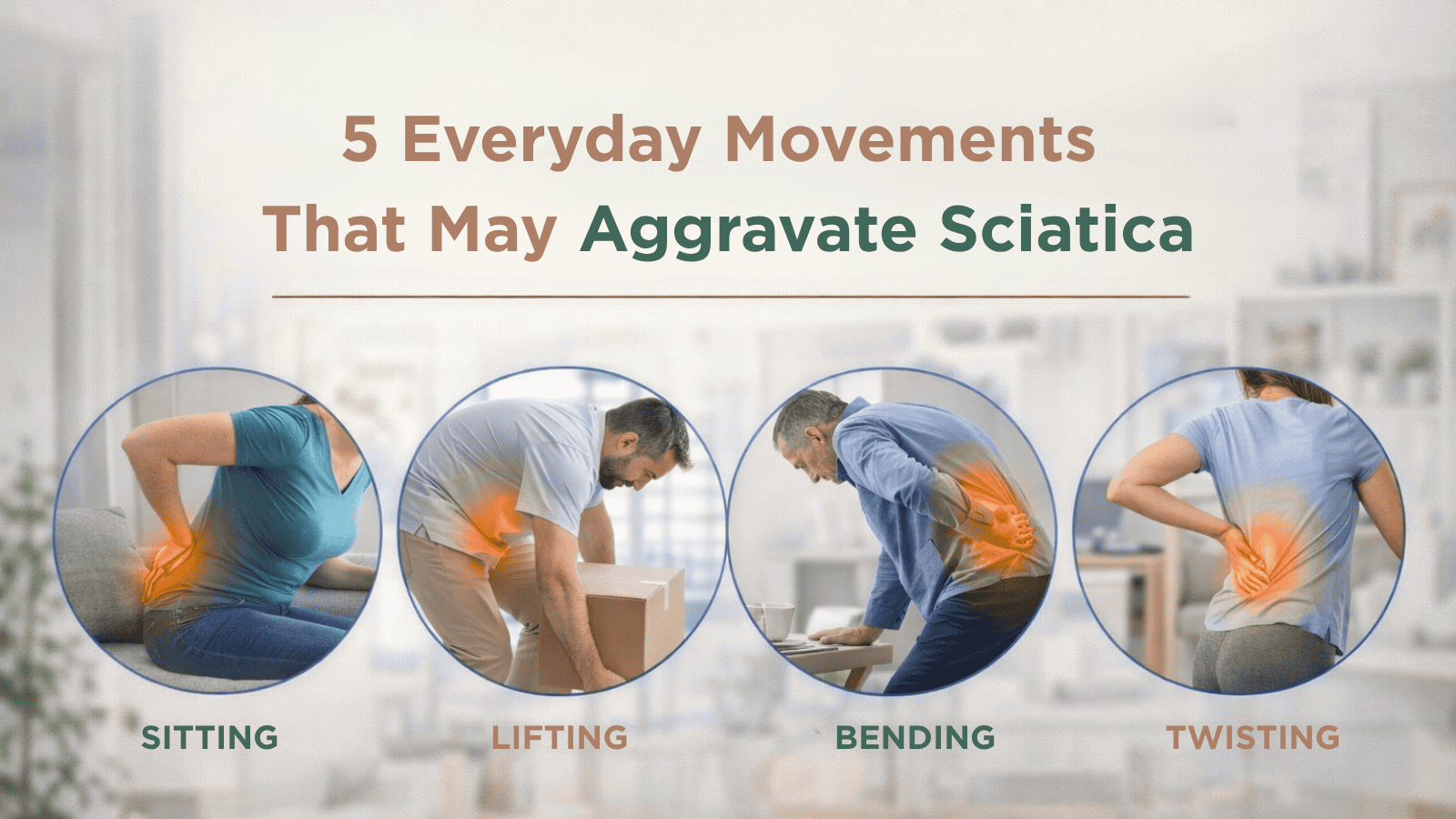
Sciatica can make even simple, everyday movements feel uncomfortable. If you have ever noticed a sharp, radiating pain down your leg when sitting, bending, or getting out of bed, you are not alone.
Understanding the everyday movements that aggravate sciatica is an important step in managing symptoms. While each person’s experience can differ, certain habits and positions are commonly linked with increased irritation of the sciatic nerve.
The good news is that small adjustments to how you move throughout the day may help reduce strain and support your recovery.
Sciatica refers to irritation or compression of the sciatic nerve, which runs from your lower back through your hips and down each leg.
Symptoms can include:
- Pain that radiates down the leg
- Tingling or pins and needles
- Numbness
- Muscle weakness in the affected leg
These symptoms can be influenced by posture, movement patterns, and daily habits.
- Prolonged Sitting
Sitting for long periods is one of the most common triggers for sciatica discomfort, especially for people working at a desk.
When you sit:
What you can do instead?
- Stand up and move every 30 to 45 minutes
- Use a chair with proper lower back support
- Keep your feet flat and avoid crossing your legs for long periods
If you are working in Melbourne, Sydney or Brisbane, many patients find that workstation setup plays a significant role in how their back feels day to day.
2. Bending Forward Incorrectly
Bending at the waist, especially with straight legs, can increase pressure on the lower spine and aggravate sciatic symptoms.
This often happens during:
- Picking something up off the floor
- Making the bed
- Reaching into low cupboards
What you can do instead
- Bend through your knees and hips rather than your back
- Keep objects close to your body
- Move slowly and avoid sudden jerking motions
- Lifting with Poor Technique
Lifting heavy or awkward items without proper form can place significant strain on the lower back and surrounding structures.
Even everyday tasks like lifting groceries or children can contribute if technique is not ideal.
What you can do instead
- Engage your legs rather than your back
- Keep your chest upright
- Avoid twisting while lifting
If something feels too heavy or uncomfortable, it is best to get assistance.
4. Twisting Movements
Twisting through the spine, particularly when combined with bending or lifting, may irritate the sciatic nerve.
Common examples include:
- Reaching behind you while seated
- Twisting to grab something from the back seat of the car
- Sports or gym movements with rotation
What you can do instead
- Turn your whole body instead of twisting your spine
- Keep movements controlled and within a comfortable range
- Be mindful during gym or sporting activities
- Getting In and Out of Bed or the Car
Transitions are often overlooked, but they can be surprisingly aggravating for sciatica.
Movements like swinging your legs out of bed or stepping out of a low car seat can place uneven pressure on the lower back.
What you can do instead
- Use a “log roll” technique when getting out of bed
- Move both legs together when getting in and out of the car
- Take your time rather than rushing the movement
Why these movements matter?
These everyday actions may not seem significant on their own, but repeated strain throughout the day can contribute to ongoing irritation.
It is important to remember:
- Not all movements will affect everyone the same way
- Symptoms depend on your specific condition and history
- Small changes, done consistently, can make a meaningful difference over time
When to consider professional support?
If your symptoms are persistent, worsening, or interfering with daily life, it may be helpful to seek an assessment.
Chiropractic care in Melbourne may help support people with sciatica by:
- Assessing movement patterns and posture
- Identifying contributing factors
- Providing tailored care based on your individual presentation
At Wellbeing Chiropractic, care is always based on your history, symptoms, and examination findings. Recommendations are personalised and designed to support your comfort and function.
FAQ Section
What movements should I avoid with sciatica?
Movements that involve prolonged sitting, bending forward incorrectly, heavy lifting, and twisting may aggravate symptoms. However, this can vary depending on the individual.
Is walking good for sciatica?
Gentle walking may help some people stay mobile and reduce stiffness. It is important to stay within a comfortable range and avoid pushing through sharp pain.
Can sitting make sciatica worse?
Yes, prolonged sitting may increase pressure on the lower back and contribute to symptoms, particularly if posture is not well supported.
Should I rest or stay active?
In many cases, gentle movement is preferred over complete rest. The right balance depends on your symptoms and should be guided by a healthcare professional if needed.
If you are experiencing ongoing sciatic discomfort, a personalised assessment may help you better understand what is contributing to your symptoms.
The team at Wellbeing Chiropractic can provide a personalised assessment and guide you towards a more sustainable approach to care. Book an appointment at your nearest clinic in Melbourne, Sydney or Brisbane to get started.