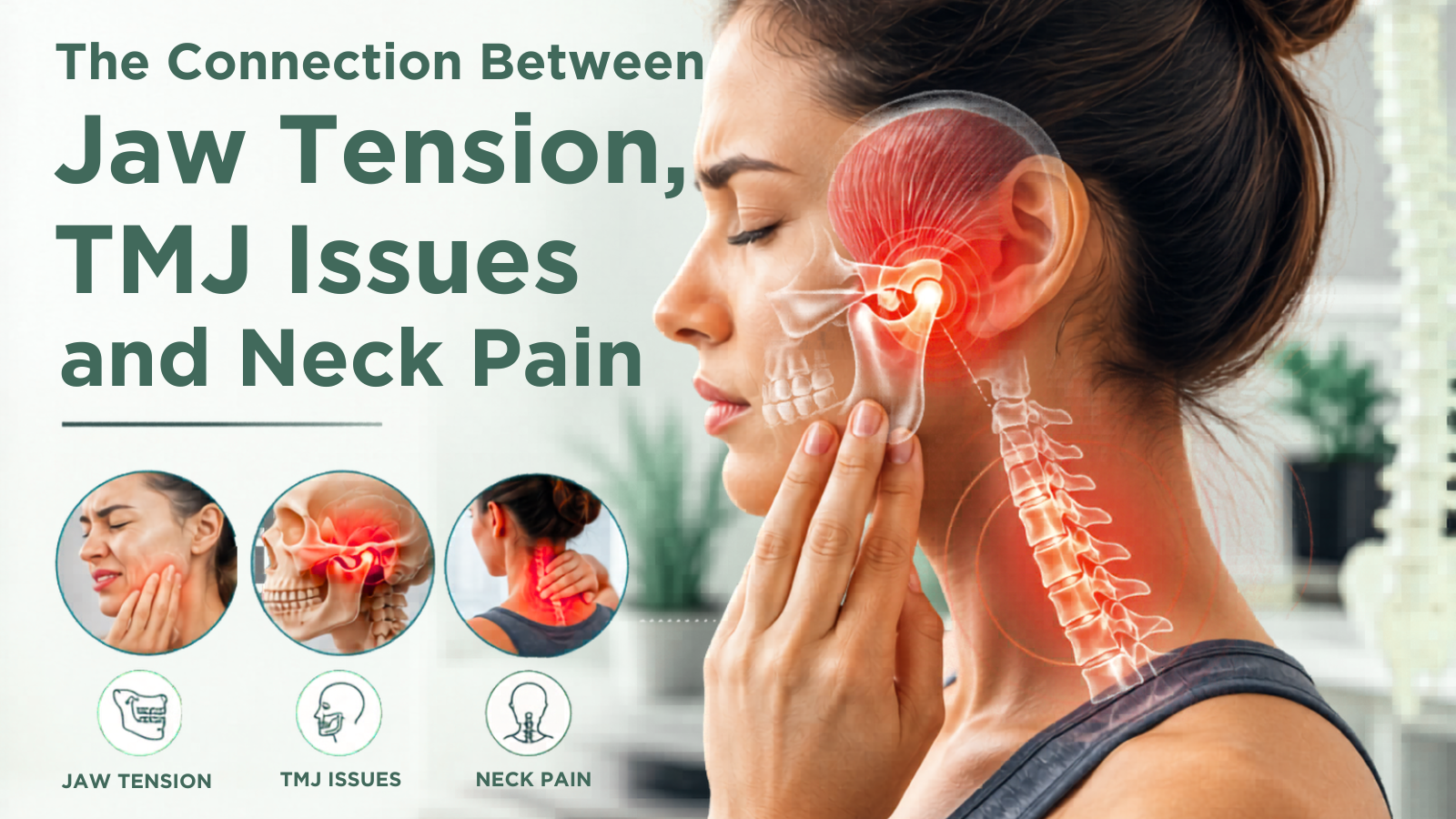
Many people think of jaw pain and neck pain as separate problems. However, the jaw and neck are closely connected through muscles, joints and the nervous system. When one area is not functioning well, the other may also be affected.
This is why people experiencing jaw tension often report neck stiffness, headaches or upper shoulder discomfort. Similarly, some individuals with ongoing neck tension may notice symptoms around the jaw or face.
Understanding the relationship between jaw tension, temporomandibular joint (TMJ) issues and neck pain can help explain why symptoms sometimes occur together and why a comprehensive assessment is often important.
What Is the TMJ?
The temporomandibular joint, commonly known as the TMJ, is the joint that connects the lower jaw to the skull.
It is one of the most frequently used joints in the body and plays an important role in everyday activities such as:
- Speaking
- Chewing
- Swallowing
- Yawning
- Facial movements
Because the TMJ is used so often, it relies on coordinated movement between muscles, joints and surrounding structures.
When this balance is disrupted, symptoms may develop.
What Is Jaw Tension?
Jaw tension refers to increased muscle tightness or discomfort around the jaw and surrounding areas.
People may experience:
- Tightness in the jaw muscles
- Facial soreness
- Difficulty opening the mouth comfortably
- Clicking or popping sensations
- Jaw fatigue while chewing
- Tenderness around the temples
Jaw tension may occur occasionally or become an ongoing issue depending on the underlying contributing factors.
The jaw and neck do not function independently.
Several muscles involved in jaw movement attach to structures in the head, neck and upper shoulders. These regions work together to support posture, head position and movement.
When tension develops in the jaw muscles, the neck may compensate.
Similarly, neck dysfunction may influence the way the jaw moves and functions.
This close relationship is one reason why symptoms often overlap.
Why TMJ Issues May Contribute to Neck Pain:
When the TMJ is not moving efficiently, surrounding muscles may work harder to support jaw function.
This increased muscular demand may contribute to:
Some people notice neck discomfort develops alongside jaw symptoms, while others experience neck pain first and later develop jaw tension.
Because movement patterns vary between individuals, symptom presentations can differ significantly.
Why Headaches Often Occur Alongside Jaw Tension:
The muscles involved in jaw movement share connections with areas around the temples, face and neck.
When these muscles become tight or overactive, some people may experience:
Because headaches can have many potential causes, a thorough assessment is important when symptoms are persistent or recurring.
Chiropractic care may form part of a broader approach to managing musculoskeletal symptoms associated with jaw tension and neck discomfort.
Following an appropriate assessment, care may include:
The goal is often to support movement, mobility and physical function while addressing contributing factors identified during assessment.
Management approaches are tailored to the individual and their specific presentation.
FAQ Section
Can TMJ issues cause neck pain?
Yes. The jaw and neck share muscular and neurological connections, which means TMJ dysfunction may contribute to neck tension or discomfort in some individuals.
What are common symptoms of TMJ dysfunction?
Symptoms may include jaw pain, clicking or popping sounds, headaches, facial tension, neck stiffness and discomfort while chewing.
Can stress cause jaw tension?
Stress is a common contributor to jaw clenching and muscle tension, which may affect both the jaw and neck.
Why do I have headaches with jaw pain?
Tight jaw muscles can sometimes contribute to tension-type headaches, particularly around the temples and sides of the head.
Can chiropractic care help with jaw tension and neck pain?
After an appropriate assessment, chiropractic care may help support mobility, movement quality and musculoskeletal function depending on the individual’s symptoms and contributing factors.
Experiencing jaw tension, TMJ discomfort or recurring neck pain? Book an appointment online with Wellbeing Chiropractic clinics across Melbourne, Sydney and Brisbane for a personalised assessment designed to identify the factors contributing to your symptoms and movement patterns.