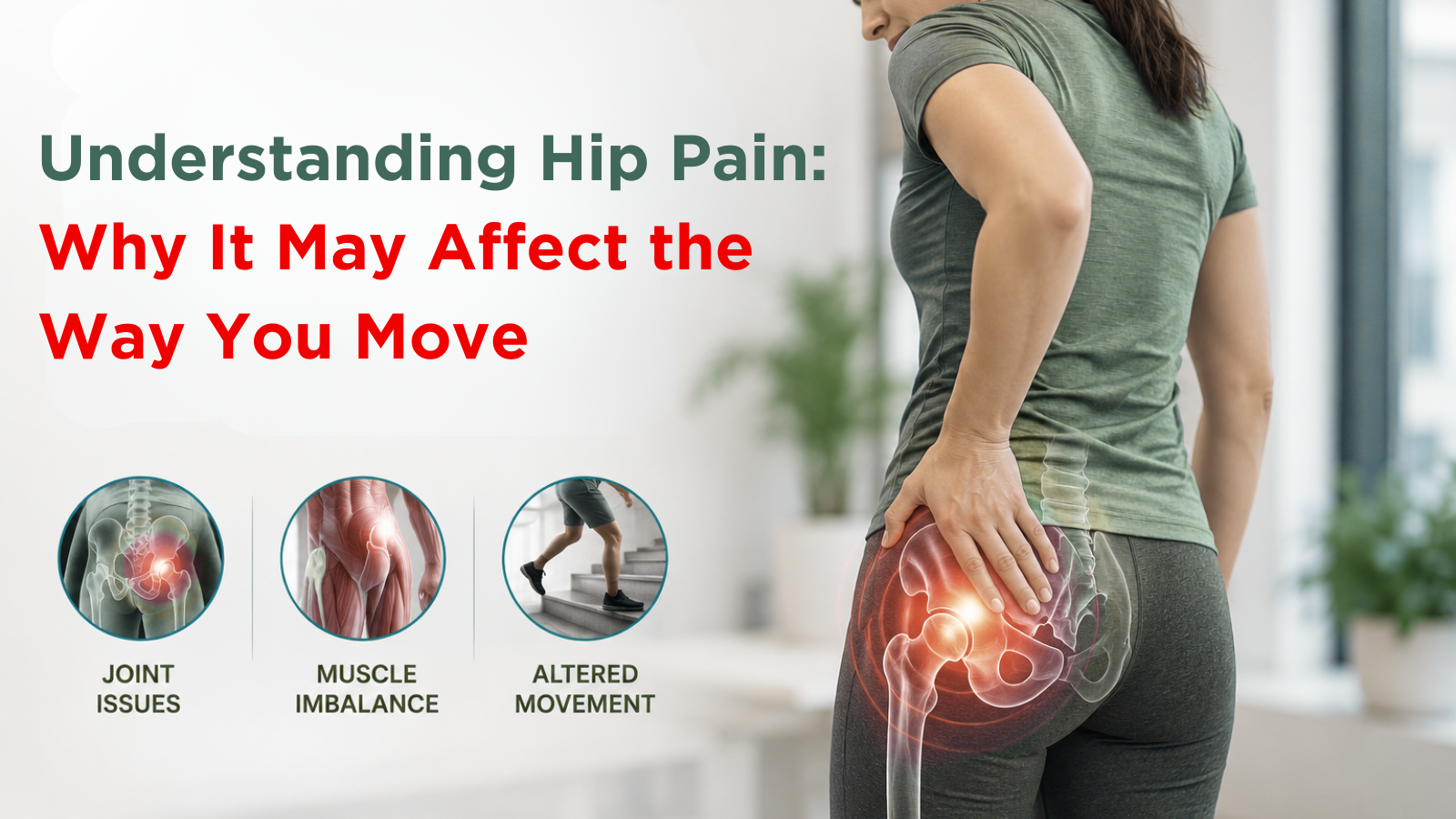
Hip pain can make everyday activities more challenging than many people realise. Walking, climbing stairs, getting out of a chair, exercising and even standing for long periods may become uncomfortable when the hip is not moving or functioning well.
Because the hips play a central role in movement, discomfort in this area can influence how the entire body moves. In some cases, hip pain may lead people to unconsciously change the way they walk, sit or exercise, potentially affecting other areas such as the lower back, knees or ankles.
Understanding hip pain and how it may affect movement can help people recognise the importance of early assessment and appropriate management.
Why the Hip Is Important for Movement:
The hip is one of the body’s largest and most important joints.
It connects the pelvis to the thigh and plays a key role in:
- Walking
- Running
- Climbing stairs
- Standing balance
- Lifting
- Squatting
- Changing direction during movement
Because the hip transfers forces between the upper and lower body, restrictions or discomfort in this region may influence movement throughout the kinetic chain.
Even relatively mild hip discomfort can alter the way a person moves without them realising it.
What Can Cause Hip Pain?
Hip pain can have many potential causes.
Some common contributors include:
Muscle and Soft Tissue Strain:
Overuse, repetitive activity or sudden increases in physical demands may place stress on muscles and soft tissues surrounding the hip.
This can sometimes lead to discomfort, tightness or reduced mobility.
Joint Irritation:
The hip joint itself may become irritated due to physical strain, repetitive loading or age-related changes.
Symptoms may vary depending on the structures involved and the individual’s overall health.
Reduced Mobility:
Limited movement through the hip can affect how forces are distributed during everyday activities.
Over time, this may contribute to stiffness, altered movement patterns and discomfort.
Sports and Exercise Demands:
Activities involving running, kicking, jumping or rapid changes of direction may place additional demands on the hip region.
Without adequate recovery, mobility or strength, some individuals may develop symptoms.
Lifestyle and Occupational Factors:
Prolonged sitting, repetitive workplace movements and reduced physical activity may also influence hip mobility and function over time.
How Hip Pain Can Change the Way You Walk:
One of the most common effects of hip pain is a change in walking mechanics.
When movement becomes uncomfortable, the body often adapts to reduce stress on the painful area.
This may include:
- Shortening stride length
- Shifting weight to one side
- Walking more slowly
- Avoiding certain movements
- Changing foot placement
While these adaptations may provide temporary relief, they can sometimes increase physical demands elsewhere in the body.
Common Signs of Hip-Related Movement Problems:
People experiencing hip pain may notice:
- Stiffness after sitting
- Pain during walking or exercise
- Difficulty climbing stairs
- Reduced flexibility
- Discomfort when standing from a seated position
- Changes in walking patterns
- Pain when getting in or out of a car
- Reduced balance or stability
The severity and presentation of symptoms vary considerably between individuals.
Chiropractic care may form part of a broader management approach for people experiencing hip-related discomfort.
Following an appropriate assessment, care may include:
The aim is often to support movement quality, mobility and physical function while addressing contributing factors identified during assessment.
Management approaches are tailored to the individual and their goals.
FAQ Section
What causes hip pain?
Hip pain can be influenced by muscle strain, joint irritation, reduced mobility, sports-related demands, lifestyle factors and a range of other musculoskeletal conditions.
Can hip pain affect the way I walk?
Yes. Hip discomfort may lead people to alter their walking pattern to avoid pain, which can sometimes affect other areas of the body.
Can hip problems cause lower back pain?
Reduced hip mobility or altered movement patterns may contribute to increased demands on the lower back in some individuals.
How is hip pain assessed?
Assessment may involve reviewing symptom history, movement patterns, mobility, strength and functional activities to identify potential contributing factors.
Can chiropractic care help with hip pain?
After an appropriate assessment, chiropractic care may help support mobility, movement quality and musculoskeletal function depending on the individual’s presentation and goals.
Experiencing hip pain or stiffness that is affecting the way you move? Book an appointment online with Wellbeing Chiropractic clinics across Melbourne, Sydney and Brisbane for a personalised assessment and care plan tailored to your needs and lifestyle.