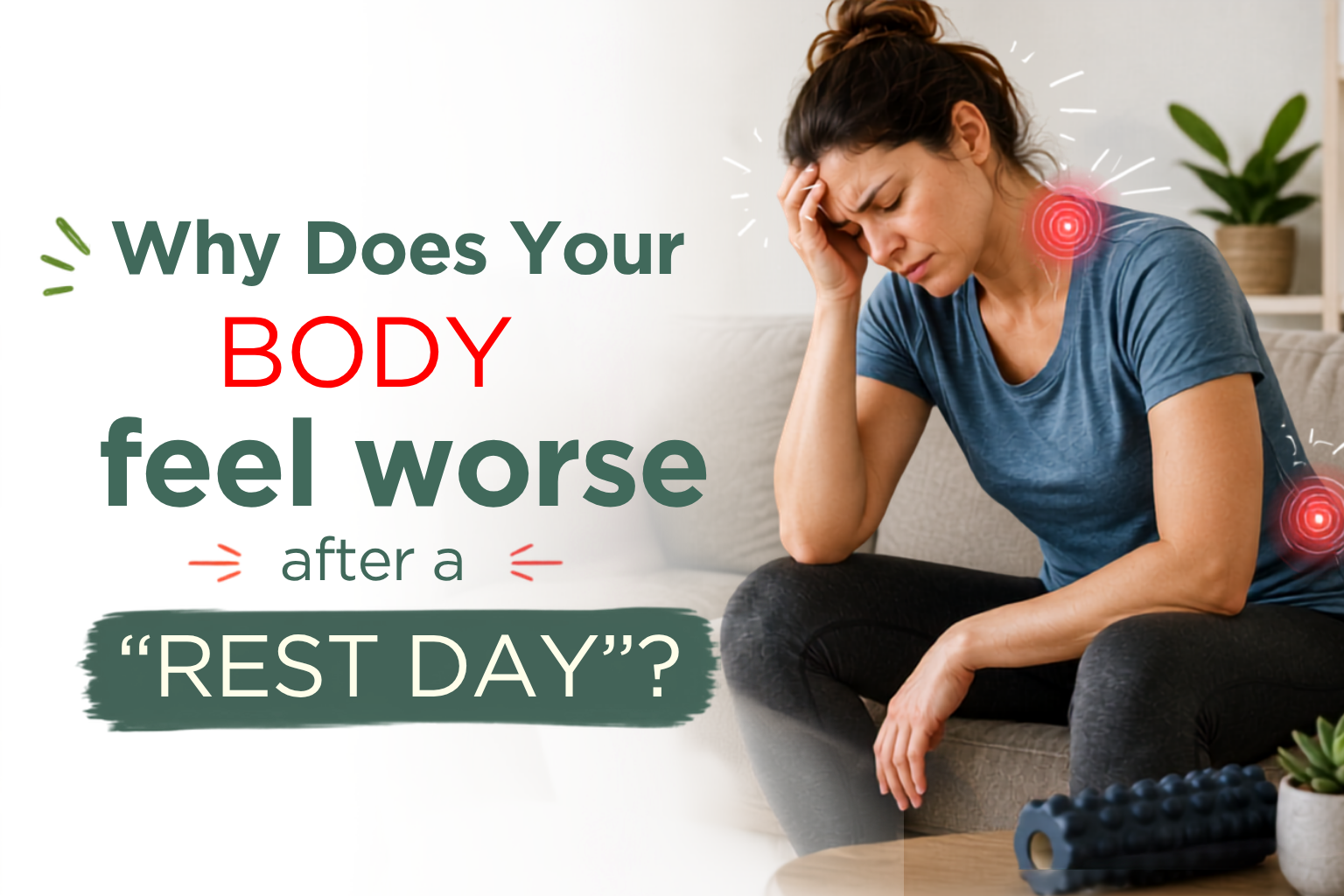
You take a day off from exercise because you think your body needs a break.
You spend more time on the couch, sleep in, catch up on television and avoid your usual workout.
Yet the following morning, you feel worse.
Your back is stiff. Your hips feel tight. Your shoulders are uncomfortable and your legs don’t seem as loose as they normally do.
So why can your body sometimes feel worse after a “rest day”?
The answer may be that rest and inactivity aren’t always the same thing.
Your body needs recovery, but it also needs regular movement. For some people, spending an entire day being unusually inactive can leave them feeling stiffer than a day that includes gentle activity.
Rest Doesn’t Have to Mean Doing Nothing:
Recovery is an important part of physical health.
Your muscles and other tissues need time to adapt after exercise, particularly following demanding training.
But there is a difference between:
Taking a break from intense exercise
and
barely moving for an entire day.
You can recover without spending the whole day sitting or lying down.
Gentle walking, light mobility work and normal household activities can provide movement without placing the same demands on your body as a hard training session.
Why Does Inactivity Make You Feel Stiff?
Your joints and muscles generally feel better when they are moved regularly.
When you remain still for extended periods, you may notice:
- reduced joint mobility
- muscle stiffness
- a feeling of heaviness
- discomfort when standing up
- reduced confidence when moving
This doesn’t necessarily mean you’ve damaged anything.
It may simply be your body’s response to spending more time stationary than usual.
Your “Rest Day” May Involve More Sitting Than You Realise:
Think about what your typical rest day looks like.
You might:
- sleep longer
- have a slow breakfast
- watch television
- use your phone
- drive somewhere
- sit at a café
- spend the afternoon on the couch
None of these activities is inherently problematic.
The issue is the cumulative amount of time spent in one position.
Even comfortable sitting can become uncomfortable when you don’t move for several hours.
Active Recovery Can Be Different:
Active recovery doesn’t mean turning your rest day into another workout.
It can be as simple as:
- going for an easy walk
- swimming gently
- doing light mobility exercises
- stretching comfortably
- walking the dog
- doing some gardening
The goal is to keep your body moving without adding significant training stress.
Your Muscles May Feel Tight After Hard Training:
Another reason you may feel stiff the day after exercise is delayed muscle soreness.
After unfamiliar or demanding exercise, muscles can become sore and stiff for a period of time.
This is particularly common after:
- lifting heavier weights
- trying a new exercise
- increasing running distance
- returning to training after a break
- completing a particularly demanding session
Rest is still important in these situations, but gentle movement may help you feel less stiff.
Stress Can Make Stiffness Feel Worse:
Rest days don’t necessarily mean stress-free days.
You may still be thinking about work, family responsibilities or upcoming commitments.
Stress can influence muscle tension, sleep and how you experience discomfort.
If you notice that you feel particularly tight during stressful periods, it’s worth considering your overall recovery rather than focusing only on exercise.
How Much Movement Is Enough?
There isn’t a universal amount of movement that everyone needs on a rest day.
Your ideal recovery routine depends on:
- your age
- fitness level
- training load
- injury history
- current symptoms
- overall health
A professional can help you determine what level of activity is appropriate if you’re unsure.
Following an appropriate assessment, chiropractic care may form part of a broader approach to managing some musculoskeletal conditions affecting movement and recovery.
Depending on your presentation, care may include:
- manual therapy where appropriate
- soft tissue techniques
- mobility exercises
- strengthening recommendations
- movement education
- activity modification
- advice around recovery habits
The focus is on understanding your individual symptoms and helping you find a sustainable balance between activity and recovery.
FAQ
Why do I feel stiff after a rest day?
Spending more time sitting or lying down than usual can contribute to temporary stiffness. Post-exercise muscle soreness, sleep, stress and your usual activity levels may also play a role.
Is a rest day supposed to involve no movement?
Not necessarily. A rest day can involve gentle movement and normal daily activities without demanding exercise.
Is walking good on a rest day?
For many people, an easy walk can be a useful form of active recovery. The appropriate level of activity depends on your fitness, symptoms and overall health.
Why do my muscles hurt more the day after exercise?
Delayed muscle soreness can occur after unfamiliar or demanding exercise. It often improves with time and doesn’t necessarily indicate an injury.
Can chiropractic care help with stiffness after exercise?
Following an appropriate assessment, chiropractic care may help support mobility and musculoskeletal function as part of an individualised management plan.
If stiffness or recurring pain is making it difficult to stay active, book an appointment online with Wellbeing Chiropractic. With clinics across Melbourne, Sydney and Brisbane, our experienced chiropractors can assess your movement, activity levels and recovery habits to develop a personalised care plan.