You’ve probably heard the advice: “Sit up straight.”
But what if trying too hard to maintain perfect posture is actually creating more tension?
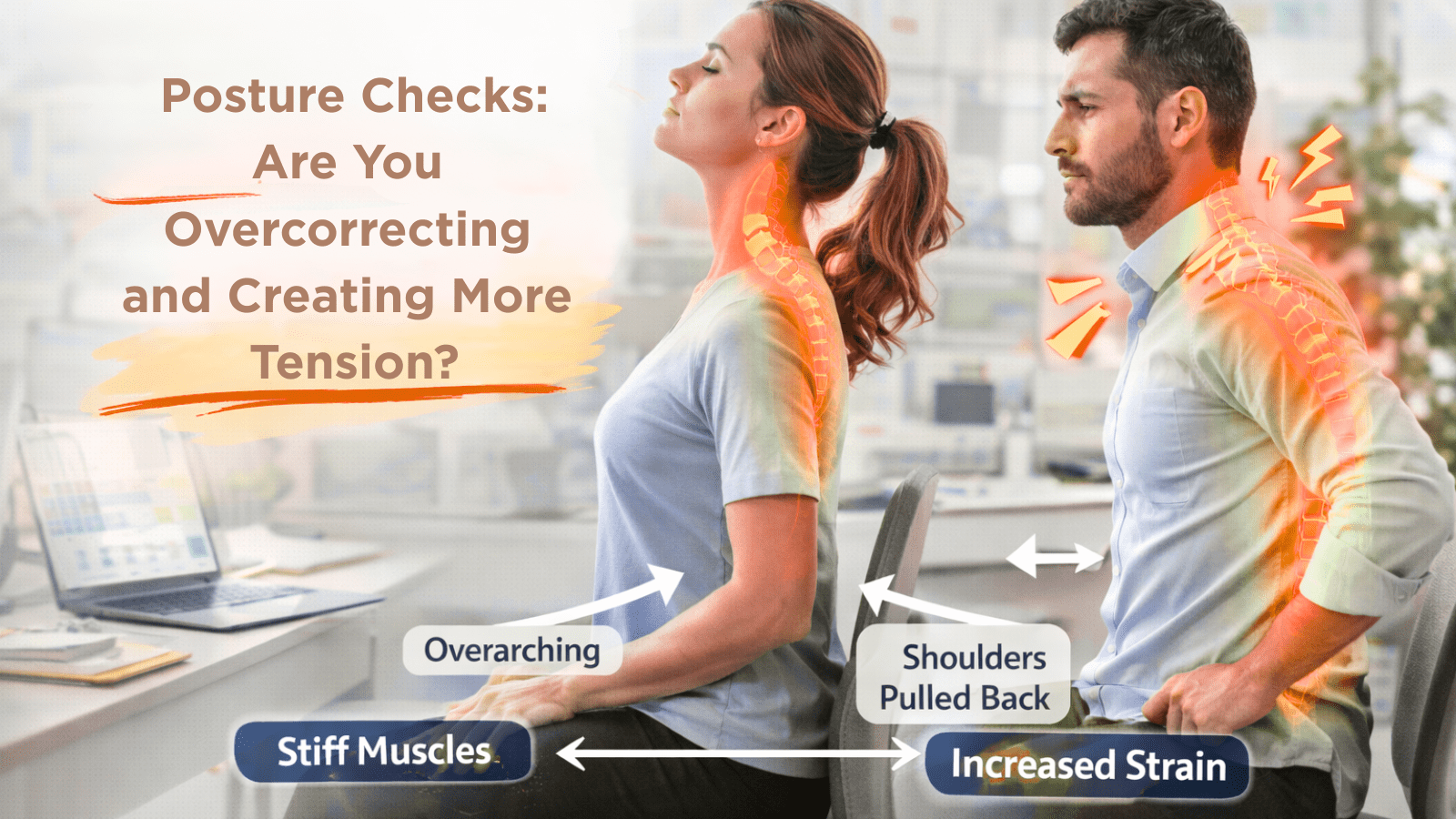
Overcorrecting posture tension is a common issue, especially for people who are actively trying to “fix” their posture throughout the day. While awareness is helpful, forcing your body into a rigid position can sometimes do more harm than good.
A balanced approach is often more effective.
What Does “Overcorrecting” Posture Mean?
Overcorrecting posture usually happens when you hold yourself in an exaggerated “upright” position for long periods.
This might look like:
Instead of feeling relaxed and supported, your body may feel tight, strained or fatigued.
Why Trying Too Hard Can Backfire:
Posture is not about holding one perfect position all day. Your body is designed to move and adapt.
When you overcorrect:
- Muscles may stay switched on for too long
- Breathing can become restricted
- Natural movement patterns may be reduced
- Fatigue can set in more quickly
Over time, this can lead to discomfort, particularly in the neck, shoulders and lower back.
The Myth of “Perfect Posture”
There is no single perfect posture that works for everyone.
Research and clinical experience suggest that:
- The best posture is one that is comfortable and sustainable
- Movement and variation are just as important as alignment
- Different positions can be healthy when used appropriately
Instead of aiming for perfection, it can be more helpful to focus on reducing strain and staying adaptable.
Signs You May Be Overcorrecting:
If you’re unsure whether you’re overdoing it, here are some common signs:
- You feel tense when trying to “sit properly”
- Your shoulders or upper back become tight quickly
- You feel fatigued from holding posture
- You constantly remind yourself to “pull back” or “sit up”
- Discomfort improves when you relax your posture
These can indicate that your body is working harder than it needs to.
What a More Balanced Posture Looks Like:
Rather than forcing a position, think of posture as a range.
A more balanced approach may include:
The goal is to feel supported, not stiff.
Movement Matters More Than Stillness:
One of the most important aspects of posture is movement.
Even a well-aligned position can become uncomfortable if held for too long.
Try to:
- Change positions regularly
- Stand up and move every 30 to 60 minutes
- Adjust your setup throughout the day
- Incorporate light stretches or walking breaks
This helps reduce build-up of tension and supports overall comfort.
If you’re experiencing ongoing tension or discomfort, it may be helpful to have your posture and movement assessed.
Chiropractic care may include:
- Evaluating how you sit, stand and move
- Identifying areas of tension or restriction
- Providing tailored exercises and advice
- Supporting joint and muscle function
Care is always based on your individual needs, rather than a one-size-fits-all posture model.
Posture awareness is helpful, but more is not always better.
Overcorrecting posture tension can create unnecessary strain. A relaxed, adaptable approach that includes regular movement is often more sustainable and comfortable.
FAQ Section
Can sitting too straight cause pain?
Yes, holding a rigid upright position for long periods can create muscle tension and fatigue.
What is the best posture to sit in?
A comfortable, supported posture that allows natural movement is generally more helpful than a forced “perfect” position.
How often should I check my posture?
It can be useful to check in periodically, but focusing on regular movement is just as important.
Can a chiropractor help with posture issues?
A chiropractor may assess your posture and movement patterns and provide tailored advice based on your individual needs.
If you’re feeling more tension despite trying to improve your posture, you’re not alone.
A personalised assessment at Wellbeing Chiropractic can help you find a more natural, sustainable approach to posture and movement. Book an appointment in Melbourne, Sydney or Brisbane locations to better understand what’s contributing to your symptoms and explore a care approach tailored to you.