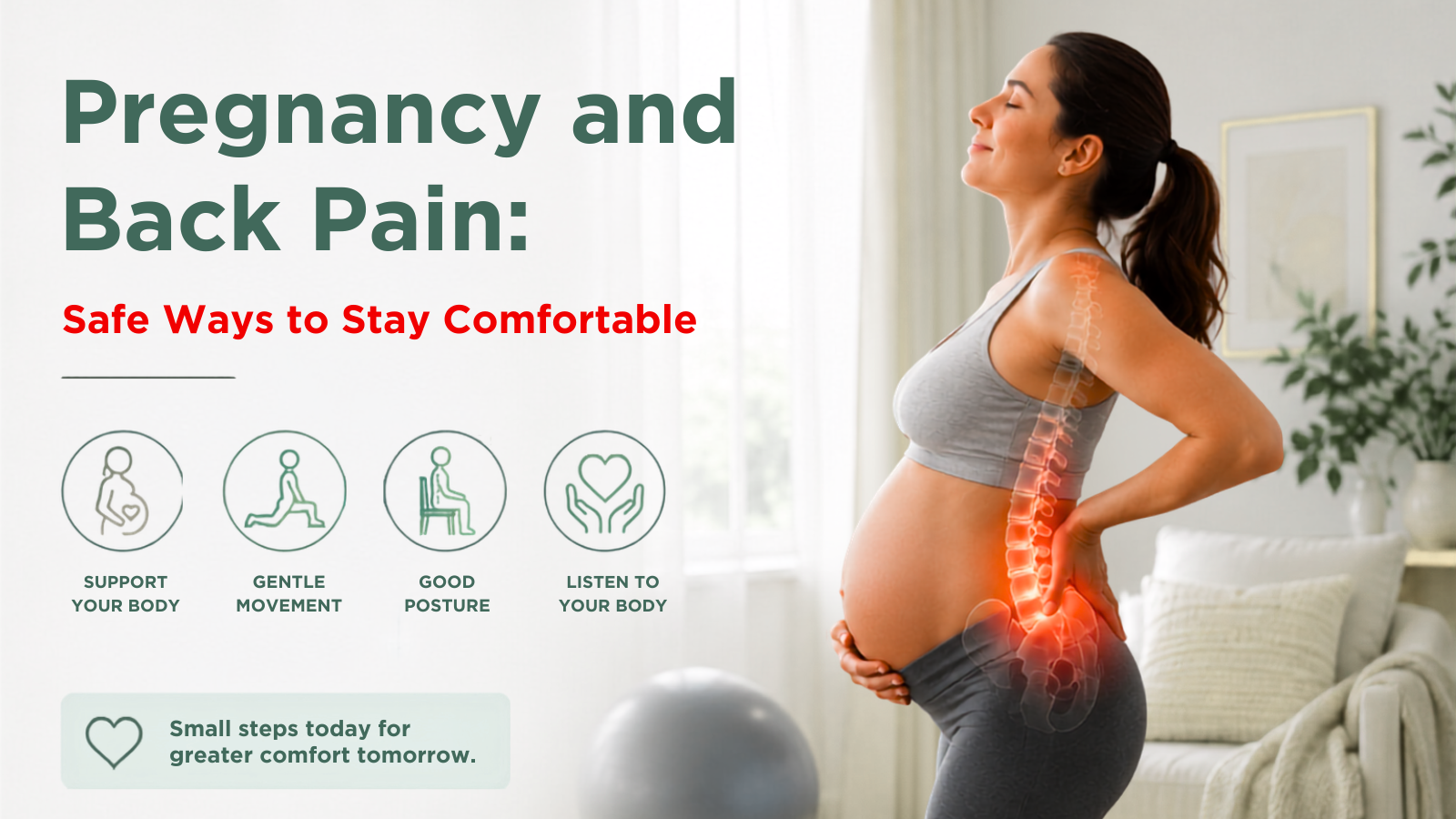
Pregnancy and Back Pain: Safe Ways to Stay Comfortable

Pregnancy is a time of significant physical change. As the body adapts to support a growing baby, many women experience new aches, pains and movement challenges. Among the most common complaints is back pain.
While some degree of discomfort is common during pregnancy, it should not simply be dismissed as something you must “just put up with”. Understanding why pregnancy-related back pain occurs and learning safe strategies to manage it may help improve comfort and support day-to-day wellbeing throughout pregnancy.
Every pregnancy is unique, and symptoms can vary considerably from person to person. However, there are several common factors that contribute to back pain during this important stage of life.
Pregnancy creates a range of physical and hormonal changes that affect how the body moves and functions.
As the baby grows, the body naturally adapts to accommodate these changes. This can influence posture, balance, joint mobility and muscle function.
Common contributors to pregnancy-related back pain include:
For many women, these changes become more noticeable as pregnancy progresses.
As the abdomen grows, the body’s centre of gravity gradually shifts forward.
To maintain balance, many women naturally adjust their posture by:
These adaptations are normal, but they can increase physical demands on the lower back, hips and surrounding muscles.
Over time, this may contribute to tension, fatigue and discomfort.
Hormonal changes during pregnancy play an important role in preparing the body for childbirth.
Certain hormones help increase flexibility in ligaments and joints, particularly around the pelvis.
While these changes are essential, they may also affect joint stability and movement control.
As a result, some women notice:
The degree of these changes varies between individuals.
Pregnancy discomfort can affect different regions of the body.
This is one of the most common complaints during pregnancy.
It may feel like:
Some women experience discomfort around the pelvis, buttocks or hips.
This may become more noticeable during:
As posture changes and breast size increases, some women also notice tension through the upper back, shoulders and neck.
Physical discomfort is not influenced solely by posture and movement.
Stress, fatigue and poor sleep can also affect how the body feels.
Many women notice increased muscle tension during periods of stress, particularly around the neck, shoulders and lower back.
Supporting overall wellbeing through relaxation, gentle activity and adequate rest may contribute to greater comfort.
Many pregnant women seek chiropractic care to help manage musculoskeletal discomfort during pregnancy.
After an appropriate assessment, chiropractors may use techniques modified specifically for pregnancy.
The goal is often to support movement, mobility and physical comfort while taking into account the unique changes occurring during pregnancy.
Care recommendations are always tailored to the individual and their stage of pregnancy.
While pregnancy-related discomfort is common, there are often practical steps that may help improve comfort and support movement.
These may include:
Small adjustments made consistently can often have a positive impact over time.
Back pain is common during pregnancy due to physical and hormonal changes. However, persistent or significant discomfort should be assessed by a healthcare professional.
Common contributing factors include changes in posture, increased body weight, shifting centre of gravity, hormonal changes and reduced stability around the pelvis.
Appropriate exercise may help support mobility, strength and overall wellbeing during pregnancy. Exercise recommendations should be individualised and guided by your healthcare provider where appropriate.
Chiropractors may use pregnancy-specific techniques after an appropriate assessment. Care is modified to suit the individual’s stage of pregnancy and presentation.
Using supportive pillows, sleeping on your side when appropriate and creating a comfortable sleep environment may help improve comfort during pregnancy.
Experiencing back pain, pelvic discomfort or movement challenges during pregnancy? Book an appointment online with Wellbeing Chiropractic clinics across Melbourne, Sydney and Brisbane for a personalised assessment and pregnancy-friendly care tailored to your needs.Author
Dr Hayden Ford has a special passion for postural conditions, chronic pain and surgical prevention due to having competed at national level as an athlete and undergoing extensive rehabilitation for his our injuries.
Hayden’s history of chiropractic began over 12 years ago, his body could not handle the stress of his sport, gymnastics. Due to the physical nature of the sport, Hayden suffered 3 shoulder surgeries, 3 shoulder dislocation and a fracture. It was through discipline that Hayden was able to reach heights of a professional gymnast. Hayden reached his highest peak in gymnastics when he competed at national level, international level and in trials for the Commonwealth games.
Select a location to book your $49 May assessment
Select a location to book your $49 May assessment
Select a location to book your $49 May assessment
Select your Victoria clinic to book your $49 new patient visit.
$49 New Patient Assessment ● First Adjustment Included*
*Adjustment included when your chiropractor confirms care is clinically appropriate for you. If chiropractic isn’t the right fit, we’ll tell you that too.
Select your New South Wales clinic to book your $49 new patient visit.
$49 New Patient Assessment ● First Adjustment Included*
*Adjustment included when your chiropractor confirms care is clinically appropriate for you. If chiropractic isn’t the right fit, we’ll tell you that too.
Select your Queensland clinic to book your $49 new patient visit.
$49 New Patient Assessment ● First Adjustment Included*
*Adjustment included when your chiropractor confirms care is clinically appropriate for you. If chiropractic isn’t the right fit, we’ll tell you that too.