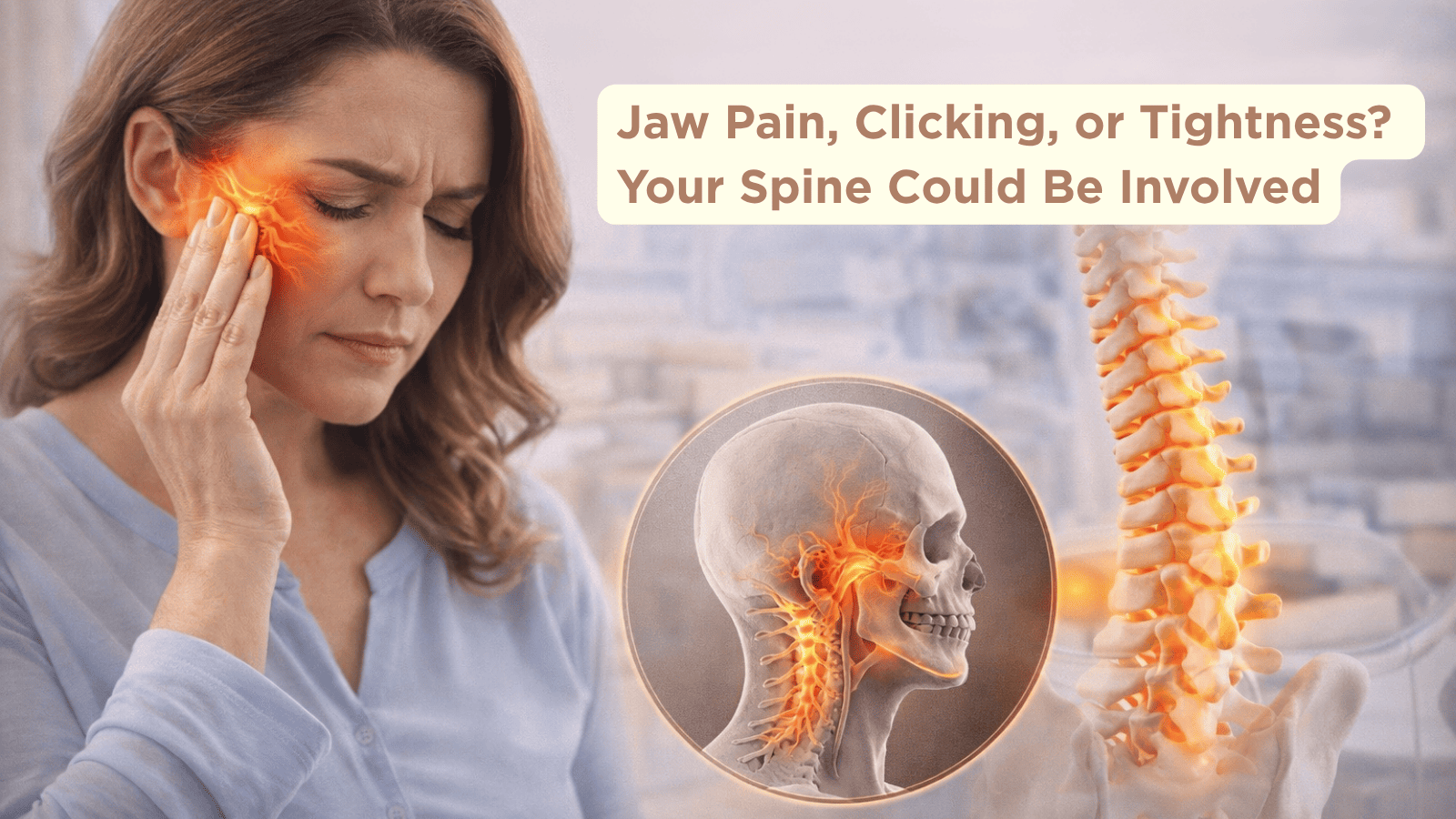
If you’ve noticed jaw pain, clicking when you chew, or a feeling of tightness around your face, you’re not alone. These symptoms are often linked to the temporomandibular joint, or TMJ. What many people don’t realise is that the spine, particularly the neck, can play an important role in how the jaw functions.
In some cases, addressing spinal alignment and posture may help reduce strain on the jaw and surrounding muscles.
What Is TMJ Dysfunction?
The temporomandibular joint connects your jaw to your skull and allows you to speak, chew, and yawn. When this joint or the muscles around it become irritated or imbalanced, it can lead to:
- Jaw pain or tenderness
- Clicking or popping sounds
- Difficulty opening or closing the mouth
- Tightness in the face or temples
- Headaches or ear-related discomfort
This is often referred to as TMJ dysfunction.
The Overlooked Link Between the Jaw and Spine
Your jaw doesn’t work in isolation. It is closely connected to the muscles, nerves, and joints of your neck and upper spine.
How posture affects your jaw
Forward head posture, which is common with desk work and phone use, can place extra strain on the neck. Over time, this may:
- Alter how your jaw sits and moves
- Increase tension in the muscles that control the jaw
- Contribute to uneven loading of the TMJ
Even small postural changes can influence how the jaw opens and closes.
Muscle and nerve connections
The muscles that control jaw movement are closely linked with those in the neck. If the neck is stiff or restricted, it can affect muscle coordination and tension patterns around the jaw.
This is why some people notice jaw symptoms alongside:
Signs Your Spine May Be Contributing
Jaw symptoms can have multiple causes, but your spine may be involved if you also experience:
- Ongoing neck pain or reduced movement
- Poor posture during work or study
- Headaches that start at the base of the skull
- Jaw discomfort that worsens after long periods sitting
A thorough assessment is important to understand what is contributing in your specific case.
Chiropractic care focuses on the relationship between the spine, nervous system, and overall movement.
For patients with jaw pain or clicking, care may involve:
Your chiropractor will look at how your neck and upper back are moving and whether there are areas of restriction.
2. Improving joint mobility
Gentle adjustments or mobilisation techniques may help improve movement in the cervical spine, which can reduce strain on surrounding structures.
3. Addressing muscle tension
Soft tissue techniques may be used to release tight muscles in the neck, shoulders, and jaw region.
4. Providing tailored advice
You may be given guidance on posture, workstation setup, and simple exercises to support long-term improvement.
It’s important to note that outcomes vary between individuals. Care is always based on your history, symptoms, and examination findings.
Simple Habits That May Reduce Jaw Strain
Alongside professional care, small daily changes can make a difference:
- Be mindful of clenching or grinding your teeth
- Keep your screen at eye level to avoid forward head posture
- Take regular breaks from sitting
- Avoid chewing gum excessively
- Practice gentle jaw relaxation exercises
These strategies may help reduce unnecessary tension on the jaw.
When to Seek Help
If your jaw pain, clicking, or tightness is persistent or affecting your daily life, it’s worth getting it assessed.
Early support may help prevent symptoms from becoming more complex over time.
FAQ Section
Yes, in some cases. The neck and jaw are closely connected through muscles and nerves, so dysfunction in the neck may contribute to jaw discomfort.
Is jaw clicking always a problem?
Not always. Some people experience clicking without pain or restriction. However, if it is accompanied by discomfort or limited movement, it’s best to have it assessed.
Can a chiropractor help with TMJ issues?
Chiropractic care may help support jaw function by addressing contributing factors such as neck stiffness, posture, and muscle tension.
Should I see a dentist or chiropractor for jaw pain?
It depends on the cause. Dentists often assess bite and teeth-related issues, while chiropractors focus on musculoskeletal contributors like posture and spinal movement. In some cases, a combined approach may be helpful.
If you’re experiencing jaw pain, clicking, or tightness, a personalised assessment can help identify what’s contributing to your symptoms.
The team at Wellbeing Chiropractic can provide a personalised assessment and guide you towards a more sustainable approach to care. Book an appointment at your nearest clinic in Melbourne, Sydney or Brisbane to get started.