
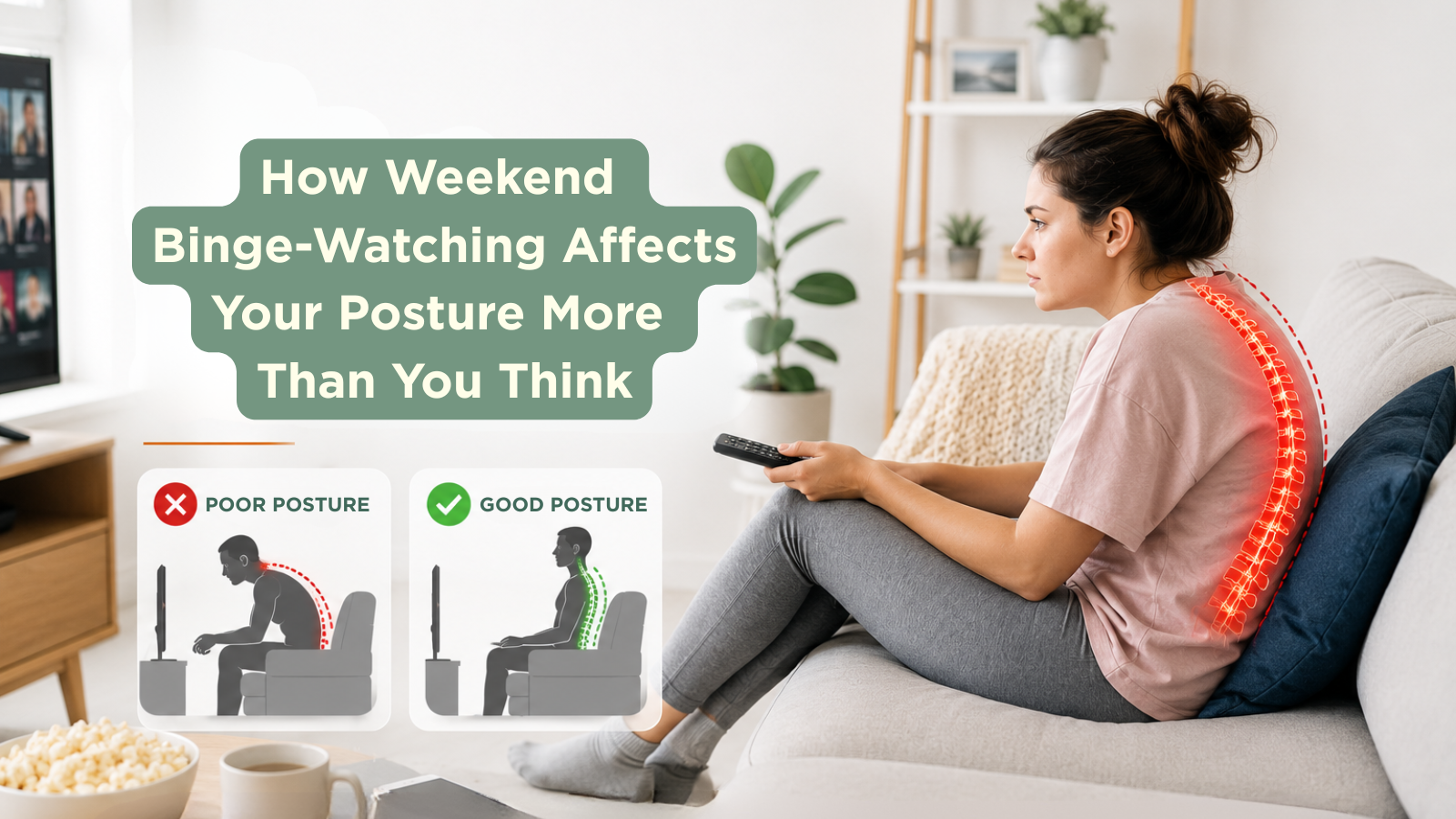
How Weekend Binge-Watching Affects Your Posture More Than You Think

There’s nothing wrong with settling in for a relaxing weekend TV marathon. Whether it’s a new streaming release, a sports weekend or catching up on your favourite series, many Australians spend long stretches sitting on the couch without realising the impact it may have on posture.
The issue is not necessarily the occasional movie night. It’s the combination of prolonged sitting, awkward couch positions and reduced movement over several hours that can place extra strain on the spine, neck and shoulders.
Over time, these habits may contribute to stiffness, muscle tension and discomfort that lingers well after the credits roll.
When people think about posture problems, they often picture office desks and computer screens. But couch posture can sometimes be even less supportive.
Unlike an ergonomic office chair, lounges are designed for relaxation rather than spinal support. Many people end up:
These positions may increase stress on the neck, upper back and lower back, especially when maintained for long periods.
The longer the body stays static, the harder muscles have to work to support joints and spinal structures.
One of the most common posture patterns associated with screen time is forward head posture.
This happens when the head drifts in front of the shoulders instead of sitting in a more balanced position above the spine.
During binge-watching, this often occurs when:
Even small changes in head position can increase the load placed on the neck muscles.
Over time, this may contribute to:
Not everyone will experience symptoms in the same way, but prolonged poor posture can gradually become harder for the body to tolerate.
Many people notice lower back stiffness after a long weekend of sitting.
This is partly because prolonged sitting may reduce movement through the hips and pelvis. When the hips remain flexed for extended periods, surrounding muscles can become tight and less supportive.
Soft couches may also encourage the pelvis to roll backwards, flattening the natural curve of the lower back.
Combined with inactivity, this may place additional stress on spinal joints and supporting muscles.
Some people also unconsciously tense their muscles while concentrating on a show, especially during stressful or emotionally engaging scenes.
One of the biggest issues with binge-watching is not just posture itself, but the lack of movement.
The body generally responds well to regular variation in position. Muscles, joints and circulation all benefit from movement throughout the day.
Long periods of uninterrupted sitting may contribute to:
Even standing up briefly between episodes can help reduce sustained stress on the body.
You may notice:
These symptoms do not automatically mean there is a serious problem, but they may indicate your body is not tolerating certain posture habits particularly well.
You do not need to stop enjoying your favourite shows. Small changes can make a meaningful difference.
Try not to stay in one position for hours at a time.
Stand up between episodes, stretch or walk around briefly. Frequent movement may help reduce stiffness and muscular tension.
Where possible:
Many people spend entire episodes alternating between the TV and their phone.
Repeatedly looking down at a device may place extra strain on the neck and upper back.
Balancing screen time with walking, exercise or outdoor activities may help support better mobility and posture overall.
Chiropractic care may help some people manage posture-related tension and stiffness after appropriate assessment.
At Wellbeing Chiropractic, chiropractors assess factors such as:
Care recommendations depend on the individual, their symptoms and examination findings.
Management may include:
For many people, improving posture is less about sitting perfectly and more about creating healthier movement habits throughout the day.
A single weekend on the couch is unlikely to cause major long-term problems for most people.
However, repeated habits over months and years can gradually influence how the body feels and moves.
Modern lifestyles already involve significant screen time through work, commuting and mobile devices. Weekend binge-watching can add several more hours of sustained sitting on top of that.
Paying attention to posture, movement and recovery may help reduce unnecessary strain and support better physical comfort over time.
Long periods of sitting in unsupported positions may contribute to neck, shoulder and back discomfort. The impact varies between individuals and often depends on posture habits, movement and overall activity levels.
For some people, prolonged sitting on soft couches may place added stress on the lower back, particularly when posture becomes slouched or unsupported.
Many health professionals recommend standing or moving regularly during long sitting periods. Even short movement breaks may help reduce stiffness.
Chiropractors may help assess posture-related discomfort and provide personalised care recommendations based on the individual’s symptoms, movement and examination findings.
If you’ve been dealing with neck stiffness, back tension or posture-related discomfort after long periods of sitting, the team at Wellbeing Chiropractic can provide an individual assessment and tailored recommendations based on your needs. Whether you’re looking for a chiropractor in Melbourne, Sydney or Brisbane, our team is here to help support your posture, mobility and overall spinal health with personalised care. Book an appointment at your nearest clinic to get started.Author
Dr Josh Tyquin is an experienced & sought-after Chiropractor who is the principal Chiropractor at Wellbeing Chiropractic Hawthorn. He was first introduced to Chiropractic during childhood after suffering a sporting injury. It was after this positive personal experience Josh decided to pursue a career in Chiropractic.
Select a location to book your $49 May assessment
Select a location to book your $49 May assessment
Select a location to book your $49 May assessment
Select your Victoria clinic to book your $49 new patient visit.
$49 New Patient Assessment ● First Adjustment Included*
*Adjustment included when your chiropractor confirms care is clinically appropriate for you. If chiropractic isn’t the right fit, we’ll tell you that too.
Select your New South Wales clinic to book your $49 new patient visit.
$49 New Patient Assessment ● First Adjustment Included*
*Adjustment included when your chiropractor confirms care is clinically appropriate for you. If chiropractic isn’t the right fit, we’ll tell you that too.
Select your Queensland clinic to book your $49 new patient visit.
$49 New Patient Assessment ● First Adjustment Included*
*Adjustment included when your chiropractor confirms care is clinically appropriate for you. If chiropractic isn’t the right fit, we’ll tell you that too.