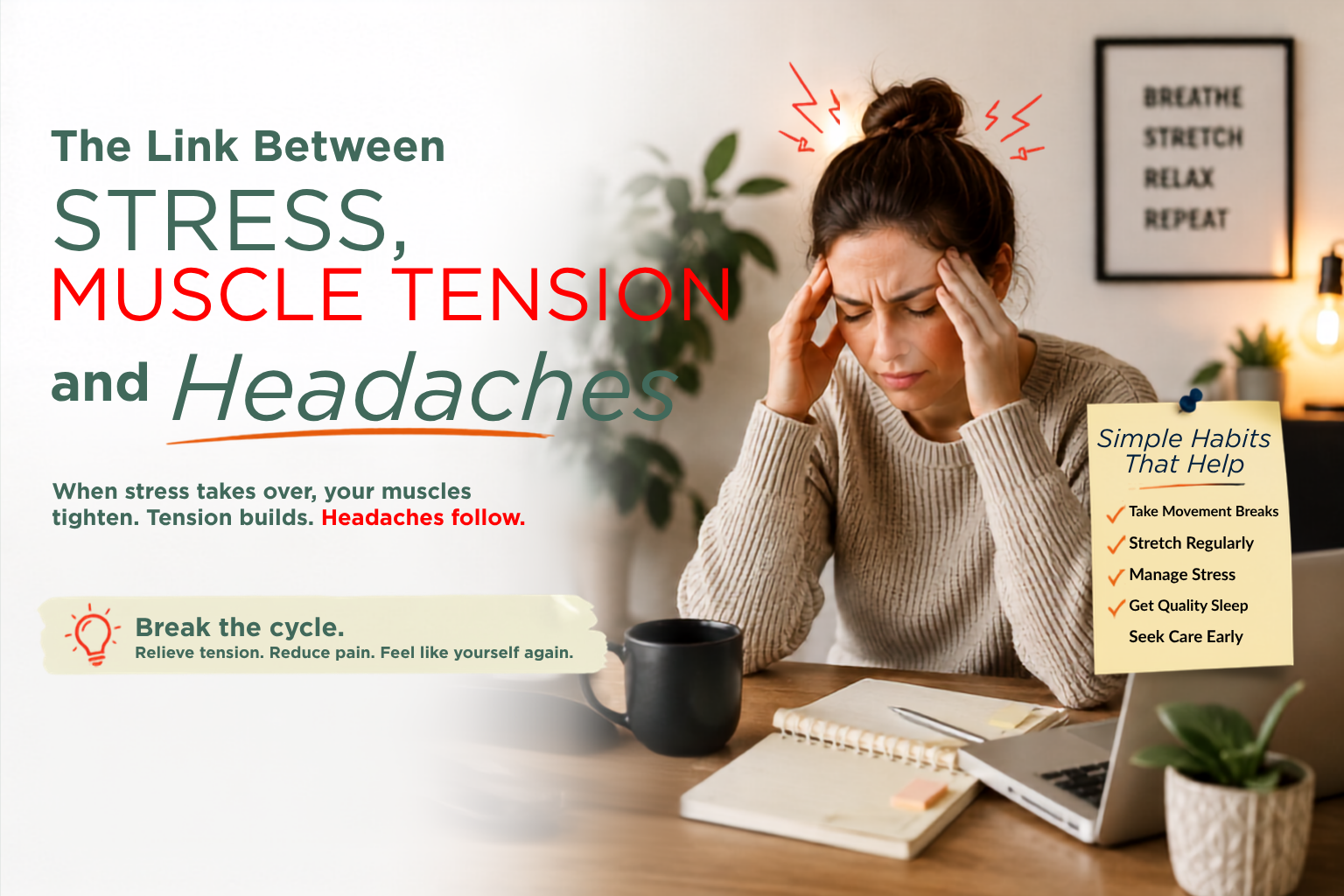
Have you ever noticed a headache appearing after a particularly stressful day?
Perhaps you’ve spent hours meeting deadlines, sitting in front of a computer or juggling family responsibilities, only to develop a dull ache around your forehead, temples or the back of your head by the evening.
You’re not imagining it.
While headaches can have many different causes, stress is one of the most common factors associated with recurring tension-type headaches. Often, it’s not stress itself that causes the pain, but the way your body responds to it.
Understanding this connection can help you recognise early warning signs and take steps to support your overall wellbeing.
Stress Doesn’t Just Affect Your Mind:
When you’re under pressure, your body naturally prepares to respond.
This response may include:
- tightening muscles
- faster breathing
- increased heart rate
- reduced movement
- changes in sleep patterns
These reactions are completely normal in the short term.
However, when stress continues for days or weeks, muscles may remain tense for longer than they should, particularly around the neck, shoulders and upper back.
Why Muscle Tension Can Lead to Headaches:
The muscles supporting your head work constantly throughout the day.
When these muscles become tight or fatigued, some people experience headaches that feel like:
- a dull ache across the forehead
- pressure around the temples
- tightness at the back of the head
- discomfort beginning in the neck and spreading upwards
These are common features of tension-type headaches, although every person’s experience is different.
The Neck and Shoulders Often Play a Role:
Stress rarely affects one muscle alone.
Many people unconsciously raise their shoulders, clench their jaw or tighten the muscles around their neck without realising it.
Over time, this ongoing muscle tension may contribute to:
It’s one reason headaches are often accompanied by soreness in other parts of the upper body.
Sitting Under Stress Can Make Things Worse:
Stressful days often involve long periods at a desk.
When you’re focused on work, it’s easy to forget to move.
You might spend hours:
- looking at a computer
- answering emails
- attending online meetings
- using your phone
- driving between appointments
Remaining in one position for extended periods may increase muscle fatigue, particularly when combined with emotional stress.
Poor Sleep Can Add to the Cycle:
Stress and sleep often influence each other.
When you’re stressed, sleep quality may decline.
Poor sleep can reduce your body’s ability to recover, leaving muscles feeling tighter and making headaches more likely for some people.
Breaking this cycle often involves supporting both physical and mental recovery.
Small Habits Can Help Reduce Muscle Tension:
You can’t eliminate every source of stress, but you can change how your body responds to it.
Simple strategies may include:
- taking regular movement breaks
- stretching your neck and shoulders
- practising deep breathing
- staying physically active
- managing screen time
- prioritising sleep
- maintaining good hydration
Small changes performed consistently often have a greater impact than occasional large efforts.
Not Every Headache Is Caused by Stress:
Although stress-related headaches are common, not every headache has the same cause.
Headaches may also be associated with:
- migraine
- sinus conditions
- eye strain
- dehydration
- certain medical conditions
This is why recurring or unusual headaches should always be professionally assessed rather than self-diagnosed.
If recurring headaches are associated with neck pain, muscle tension or posture-related discomfort, a professional assessment may help identify contributing factors.
Following an appropriate assessment, chiropractic care may include:
- gentle manual therapy where appropriate
- soft tissue techniques
- mobility exercises
- posture and ergonomic advice
- strengthening recommendations
- education about movement and recovery
Care is tailored to your symptoms, medical history and examination findings.
FAQ
Can stress cause headaches?
Stress is commonly associated with tension-type headaches and may contribute to muscle tightness around the neck, shoulders and head.
What does a stress headache feel like?
Many people describe a stress-related headache as a dull ache or feeling of pressure around the forehead, temples or back of the head.
Can muscle tension in the neck cause headaches?
Tight muscles around the neck and shoulders may contribute to headaches for some individuals, particularly during periods of prolonged stress or poor posture.
How can I reduce stress-related muscle tension?
Regular movement, stretching, exercise, good sleep, hydration and stress management strategies may help reduce muscle tension and support overall wellbeing.
Can chiropractic care help with tension headaches?
Following an appropriate assessment, chiropractic care may help improve neck mobility, reduce muscle tension and support musculoskeletal function as part of an individualised management plan.
If recurring headaches, neck tension or muscle tightness are affecting your daily life, book an appointment online with Wellbeing Chiropractic. With clinics across Melbourne, Sydney and Brisbane, our experienced chiropractors can assess your movement, identify contributing factors and develop a personalised plan to help you move more comfortably and confidently.